Get Full Government Meeting Transcripts, Videos, & Alerts Forever!
Get email alerts on the Renewable Siting topic
No spam. Unsubscribe anytime.
Supporters say HB 4031s temporary county siting pathway will help Oregon projects meet federal tax-credit deadlines
Summary
Proponents told the committee HB 4031 would create a time-limited option to use county land-use approvals instead of the state site-certificate process for qualifying renewables that begin construction by Dec. 31, 2028, helping projects capture federal tax credits without reducing environmental review or public input.
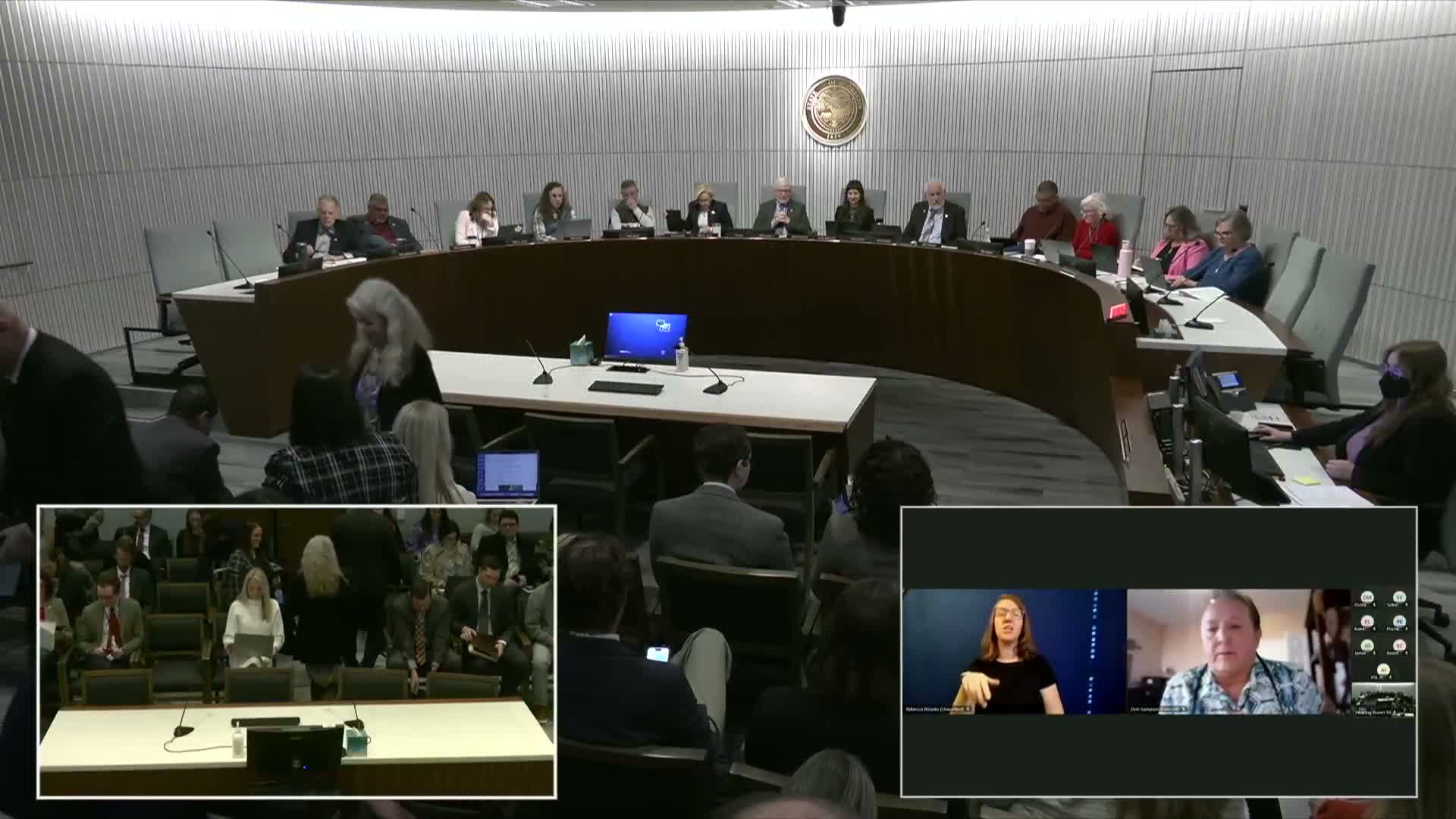
House Bill 4,031 drew broad support Feb. 3 from developers, clean-energy advocates, utilities and county officials who argued that a temporary county siting pathway is a narrowly targeted remedy to help certain renewable projects meet federal tax-credit timing requirements.
Amy Schlesser, a climate and energy policy adviser representing the governor, said the bill provides an alternative path for projects that would otherwise miss construction deadlines tied to recently restructured federal tax incentives and that the option is temporary and not intended to supplant the statewide siting process.
Industry witnesses and advocates including Angela Crowley Cook (OSEA), Katie Chamberlain (Renewable Northwest), Stephanie Williams (Emanate Energy) and Sydney Villanueva (NIPSI) told the committee the county process is typically faster (panelists described county review as roughly 312 months compared with state siting that can take up to 13 years for some projects) and that the bill maintains local control and existing environmental and public-participation standards. Renewable Northwest said qualifying projects would still need to meet federal treasury criteria for start of construction and demonstrate a path to energize within four years.
Several members raised questions about local impacts on farmland and cumulative siting effects. Representative Levy, who farms in Umatilla County, pressed witnesses on how the county process would account for cumulative impacts and high-value farm ground; witnesses responded that counties retain discretion to deny projects and that transmission proximity and county standards act as practical limits on where projects can land.
Testimony included tribal and county support: Don Sampson, a hereditary chief of the Walla tribe, said county pathways can align implementation with the states clean-energy intent while preserving review rigor; Brandon Persinger (Association of Oregon Counties) noted prior statutes that already allow some county siting authority and said HB 4031 would expand size thresholds in limited circumstances. The committee closed the hearing on HB 4031 with no immediate action taken.