Get Full Government Meeting Transcripts, Videos, & Alerts Forever!
Get email alerts on the Tribal Affairs topic
No spam. Unsubscribe anytime.
Committee hears testimony on bill to clarify Indian child placement and court notification
Summary
Witnesses told the committee HB 4,058 aims to fix a statutory interaction between Oregon law and the Indian Child Welfare Act by clarifying placement prioritization and adding notification/reporting back to courts; OJD offered proposed language and Disability Rights Oregon urged the committee to move the bill forward.
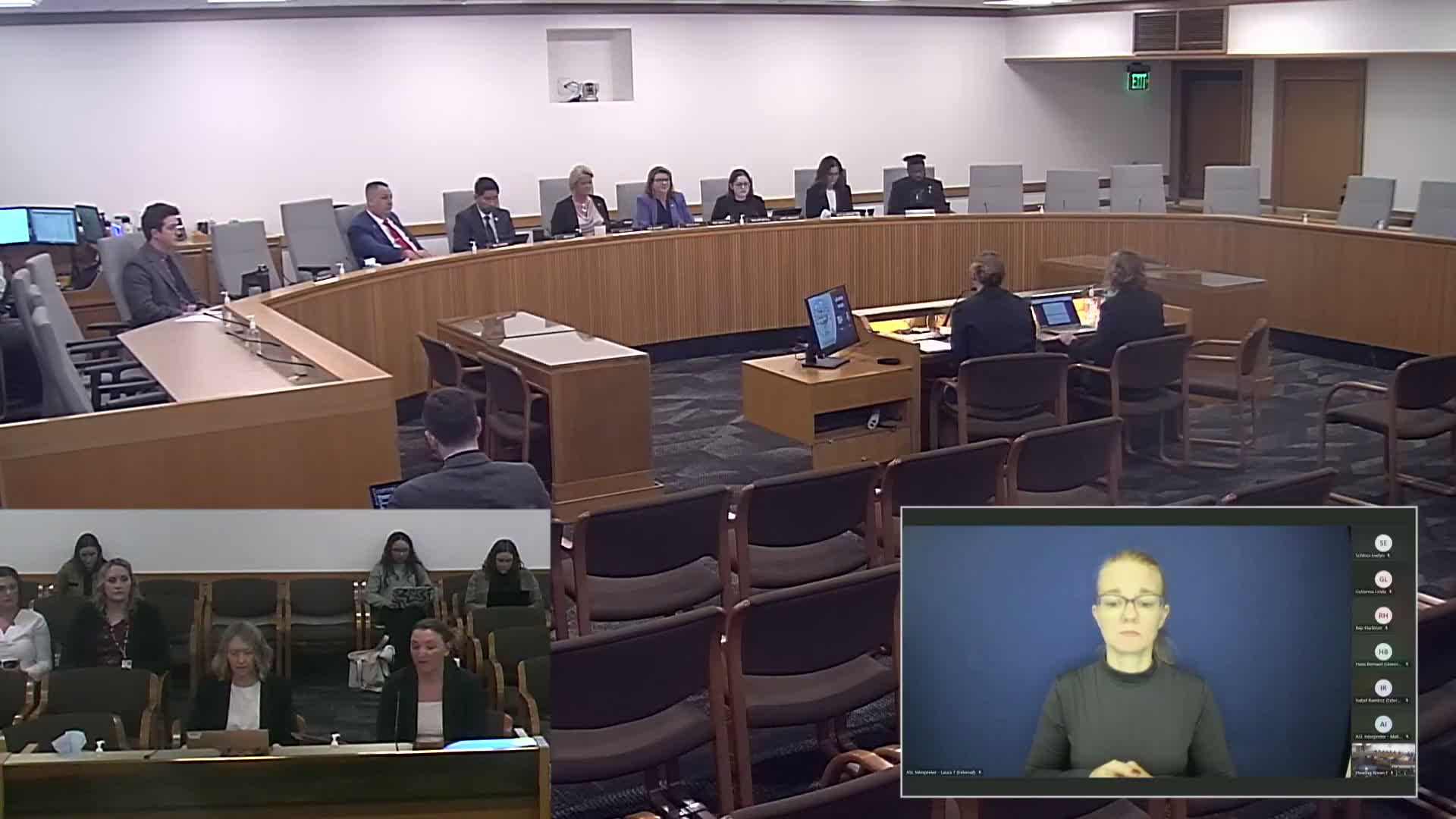
House Bill 4,058 drew testimony Feb. 3 from the Oregon Judicial Department and child-welfare advocates seeking clarification of how state placement rules interact with the federal Indian Child Welfare Act.
Chana Newell, government-relations staff for the Oregon Judicial Department, testified neutrally on the -3 amendment and said the bill’s current drafting references Oregon’s ICWA placement preferences (statutory citations discussed in testimony) in a way that could leave courts unclear about which prioritization applies. Newell requested clearer language to indicate the order of preference and a report or notification mechanism to the court when departures from statutory placement preferences are proposed.
Emily Hawkins Quentin, an Indian Child Welfare consultant for the Oregon Department of Human Services Office of Tribal Affairs, told the committee that roughly two-thirds of Indian children served in the child-welfare system are affiliated with tribes located outside Oregon and that, because Oregon lacks many culturally appropriate in-state placements, honoring tribal placement preferences could require out‑of‑state placement. Hans Bernard, testifying for Disability Rights Oregon, said HB 4,058 will make clear that tribes have a say when affiliated children are sent out of state and urged the committee to advance the bill.
Committee members asked whether the department intended to propose an amendment or address the issue through rulemaking; OJD representatives said they have proposed language and are willing to work with the department and committee on a relatively straightforward fix. Lawmakers acknowledged broader placement-capacity issues but noted HB 4,058 addresses a narrow statutory catch-22 under ICWA.