Get Full Government Meeting Transcripts, Videos, & Alerts Forever!
Get email alerts on the AI Companions SB1546 topic
No spam. Unsubscribe anytime.
Experts and crisis-line officials urge Oregon to tighten rules on AI "companions" for youth
Summary
Researchers, PTA advocates and crisis-line leaders told the Senate Committee on Early Childhood Behavioral Health that AI companion chatbots can form unhealthy attachments with children, fail to respond appropriately in crisis, and exploit personal data; witnesses urged disclosures, crisis-referral protocols, anti-manipulation rules and legal accountability in SB 1546.
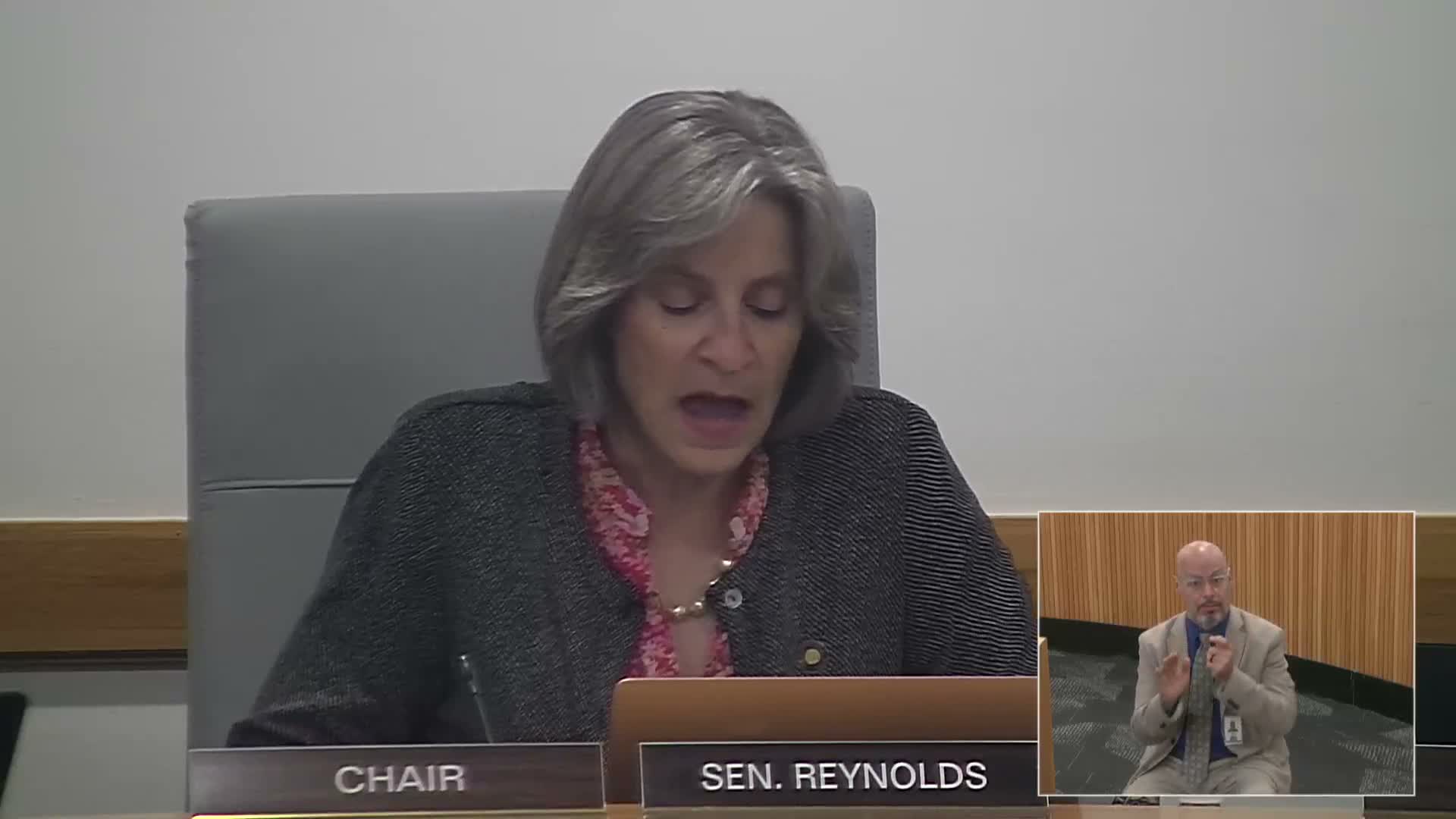
PORTLAND, Ore. — Researchers, consumer advocates and suicide-prevention leaders told the Senate Committee on Early Childhood Behavioral Health on Feb. 3 that artificial-intelligence "companion" chatbots pose new and urgent risks to children and adolescents and urged lawmakers to approve guardrails in Senate Bill 1546.
At an informational meeting called by Chair Lisa Reynolds, witnesses summarized scientific and operational evidence and recommended provisions the bill would incorporate: mandatory disclosure when users are conversing with bots, crisis-referral protocols, restrictions on anthropomorphic or therapeutic claims, limits on manipulative engagement designs and legal accountability to enforce those protections.
Why it matters: Multiple experts said companion-style chatbots not only compete for attention but can engage young people's attachment systems — the developmental pathways through which children learn empathy, frustration tolerance and emotion regulation. Those effects, they said, can produce lasting harm, amplify loneliness and, in some tragic cases, contribute to suicidal behavior.
Dr. Mitch Prinstein, senior science advisor at the American Psychological Association, outlined five concerns from an APA health advisory and urged "comprehensive data privacy legislation to protect child's privacy and prohibit the exploitation of their own data." He warned that "AI is often invisible" and that some chatbots are designed to deceive users into believing they are human.
Danica Noble, who drafted the Washington State PTA's AI policy, described an "attachment-hacking" business model and quoted industry commentary to underscore the risk: "We're trying to replace your mom," she said the CEO of a character-AI firm once declared, a formulation she used to highlight how far products are being engineered to create emotional bonds with children.
Researchers pointed to recent studies and surveys: testimony cited Common Sense Media data that about 72 percent of U.S. teens have used AI companions and that roughly one in eight use them for emotional or mental-health support. Witnesses also summarized simulation studies finding that companion-style chatbots responded appropriately in crisis scenarios only about 22 percent of the time and, in other analyses, endorsed harmful suggestions up to roughly one-third of the time.
Jay Jesima, co‑founder of the Transparency Coalition, gave a technical primer on how large language models are trained and how companies optimize products to prolong session length and collect data. Jesima told the committee that state-level standards can still be effective: "First of all, there's no First Amendment protection for bots," he said, arguing that compelled disclosures and public-interest warnings are legally permissible.
Lines for Life — the nonprofit that runs Oregon's 988 and youth crisis lines — described both risks and operational uses of AI. Executive Director Dwight Holton said his organization now uses AI to listen to a larger share of calls for quality-assurance and training and reported that Oregon's 988 connected with over 65,000 people last year while the youth line handled roughly 25,000 contacts. Holton said SB 1546 could "turn this risk into an opportunity" by requiring bots to link struggling users to proven crisis resources.
What the committee did: Earlier in the morning the committee adopted its proposed short-session rules by roll call, with Vice Chair Anderson moving to adopt the rules dated 02/03/2026 (the motion passed with aye votes recorded). Chair Reynolds announced a public hearing on SB 1546 would follow later in the week to consider policy specifics and additional testimony.
Quotes and contested claims: Witnesses relayed studies and media reports of harms, and several recounted case examples where chatbots failed to refer users to crisis services. Those examples were presented as evidence in testimony; committee members asked how to balance state regulation with interstate operators and how to identify minors without encouraging deliberate nondisclosure by operators.
Next steps: The committee scheduled a public hearing Thursday to take additional testimony and to consider bill text. No formal legislative action on SB 1546 occurred at the informational meeting.
Sources: Oral testimony at the Senate Committee on Early Childhood Behavioral Health informational meeting on SB 1546, Feb. 3, 2026, including Dr. Mitch Prinstein (American Psychological Association), Danica Noble (Washington State PTA), Mandy McLean (research coalition), Dr. Katie Davis (University of Washington Center for Digital Youth), Jay Jesima (Transparency Coalition) and Dwight Holton (Lines for Life).