Get Full Government Meeting Transcripts, Videos, & Alerts Forever!
Get email alerts on the Revenue Forecasting topic
No spam. Unsubscribe anytime.
Public overwhelmingly supports Revenue Forecast Modernization Act (HB 41 25) at House Revenue hearing; business groups oppose
Summary
The House Committee on Revenue heard wide public testimony on HB 41 25, a bill to modernize Oregon's revenue forecasting and change how the 'kicker' is calibrated; testimony from educators, housing advocates, think tanks, and legislators supported the bill while business groups including OBI and the Taxpayers Association opposed it.
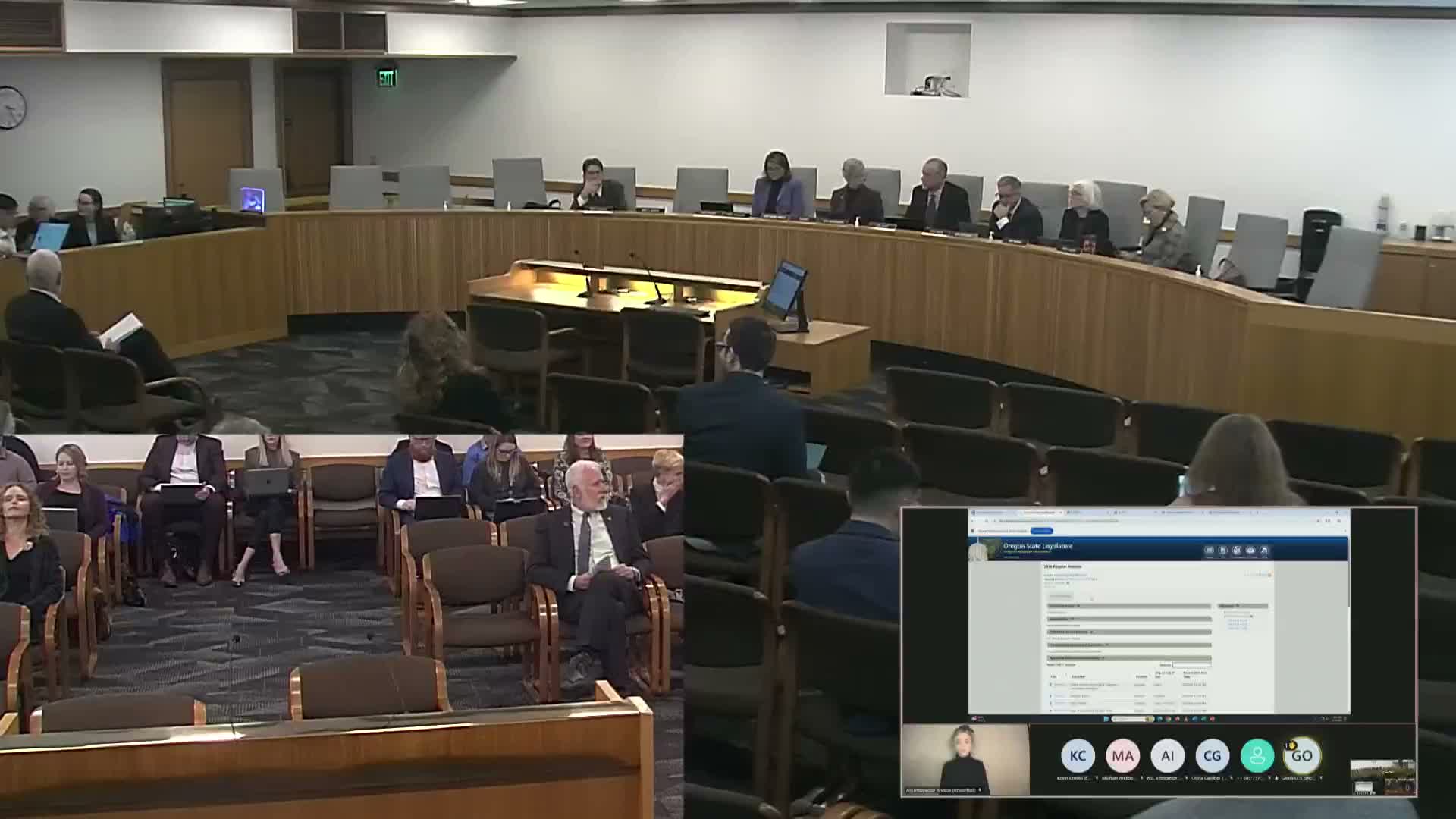
The House Committee on Revenue held a long public hearing on House Bill 41 25, the Revenue Forecast Modernization Act, which would require state economists to report a forecast range (high and low), allow the legislature to budget to a conservative lower end and make specified one-time uses available for the delta between high and low projections (examples given in testimony included PERS payments, debt reduction, and emergency response). The sponsor described the bill as setting overdue expectations for how forecasting should function and as a tool to reduce volatile budget swings caused by inaccurate single-point forecasts.
Supporters included state legislators, nonprofit organizations, local governments, tenant groups, and education stakeholders. Testimony in favor highlighted that forecasting uncertainty has produced large budget swings that harm schools and community services; witnesses argued that budgeting to a lower, conservative estimate and reserving delta dollars for capital or emergency uses would produce more stability. Representative Rob Noss, Senator Iskhan Pham and others cited past very large kickers as evidence that a new approach could permit one-time investments in housing, education and infrastructure when revenue is unusually high.
Opponents included Oregon Business and Industry and the Taxpayers Association of Oregon, which argued the bill would reduce the likelihood of future kicker payments to taxpayers and remove an important check on government growth. Testimony from business groups warned about statutorily constraining forecast methods and about potential long-term impacts on taxpayer refunds and the incentive structure behind the kicker.
Committee members asked detailed questions about how the low and high ends of the forecast would be determined, why the bill specifies budgeting to the lower end of the range, and how the delta would be allocated. The sponsor said the approach preserves economist discretion in modeling while providing legislators with a conservative anchor and a transparent, limited set of permitted one-time uses. Chair Nathanson closed the hearing with no committee vote recorded; the committee will meet again Wednesday.