Get Full Government Meeting Transcripts, Videos, & Alerts Forever!
Get email alerts on the HB4096 topic
No spam. Unsubscribe anytime.
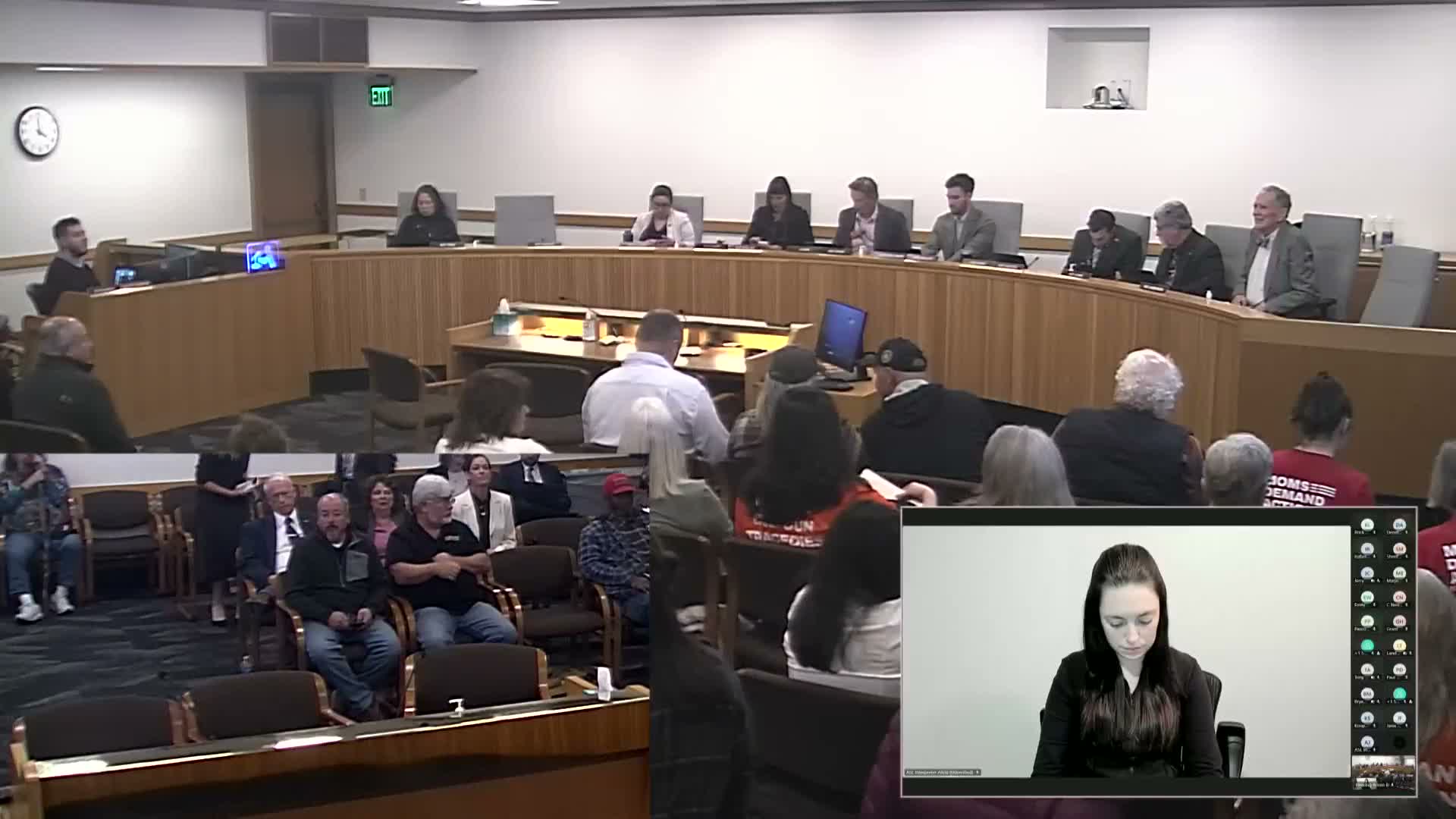
Committee hears arguments for and against tougher penalties for prohibited persons with multiple firearms
Summary
Supporters including prosecutors and sheriffs told the committee HB 4096 targets highest‑risk individuals who accumulate multiple firearms; public defenders warned the changes would worsen racial disparities and increase prison population and costs.
Chair Kropf opened the public hearing on House Bill 4,096, which would create a narrowed aggravated felony for prohibited persons possessing multiple firearms or for repeat felon‑in‑possession offenders to allow stronger sentencing in higher‑risk cases.
Representative Vicki Ruiz, who introduced the measure, said the bill is ‘‘focused, practical, and responsive to real world public safety challenges’’ and emphasized it does not expand prohibitions on lawful gun owners but distinguishes higher‑risk accumulation of multiple firearms. She said the bill provides a clearer charging framework and proportional sentencing.
A prosecutor described Oregon’s firearm fatality rates and the volume of illegal firearms recovered in recent years, urging the committee to provide prosecutors and judges with tools to target repeat or high‑risk offenders. ‘‘We have the highest rate of firearm fatalities on the West Coast,’’ one prosecutor told the panel.
Sheriff Lane McGill (Wasco County) and the Oregon State Sheriffs Association supported the bill, describing it as narrowly tailored to situations where a person with a felony conviction possesses three or more firearms or repeats the offense, thereby justifying elevated classification.
Opponents, including Grant Hartley representing the Oregon Criminal Defense Lawyers Association, warned the bill would disproportionately affect communities of color. Hartley cited data from 2020–2024 showing a larger share of felon-in-possession charges involving BIPOC defendants in Multnomah County and cautioned that increasing severity will raise prison use and fiscal costs.
The committee asked questions about how sentencing guidelines would change and how the bill accounts for different prior convictions; counsel and witnesses noted the Oregon Sentencing Guidelines and judicial discretion would continue to apply.
The public hearing closed without a committee vote in the transcript. Chair Kropf announced the committee would reconvene later in the day.
Ending: HB 4,096 drew support from law‑enforcement and prosecutorial witnesses who called it a targeted accountability measure, while defense and civil‑rights witnesses raised concerns about disparate impacts and prison population growth; no vote was recorded in the transcript.