Get Full Government Meeting Transcripts, Videos, & Alerts Forever!
Get email alerts on the HB4088 topic
No spam. Unsubscribe anytime.
Oregon lawmakers hear wide testimony on bill to shield lawful reproductive and gender‑affirming care
Summary
Supporters told the House Judiciary Committee that HB 4088 would protect patients and providers from out‑of‑state and federal investigations by strengthening privacy and limiting cooperation; opponents warned it could impede oversight and accountability in cases of harm.
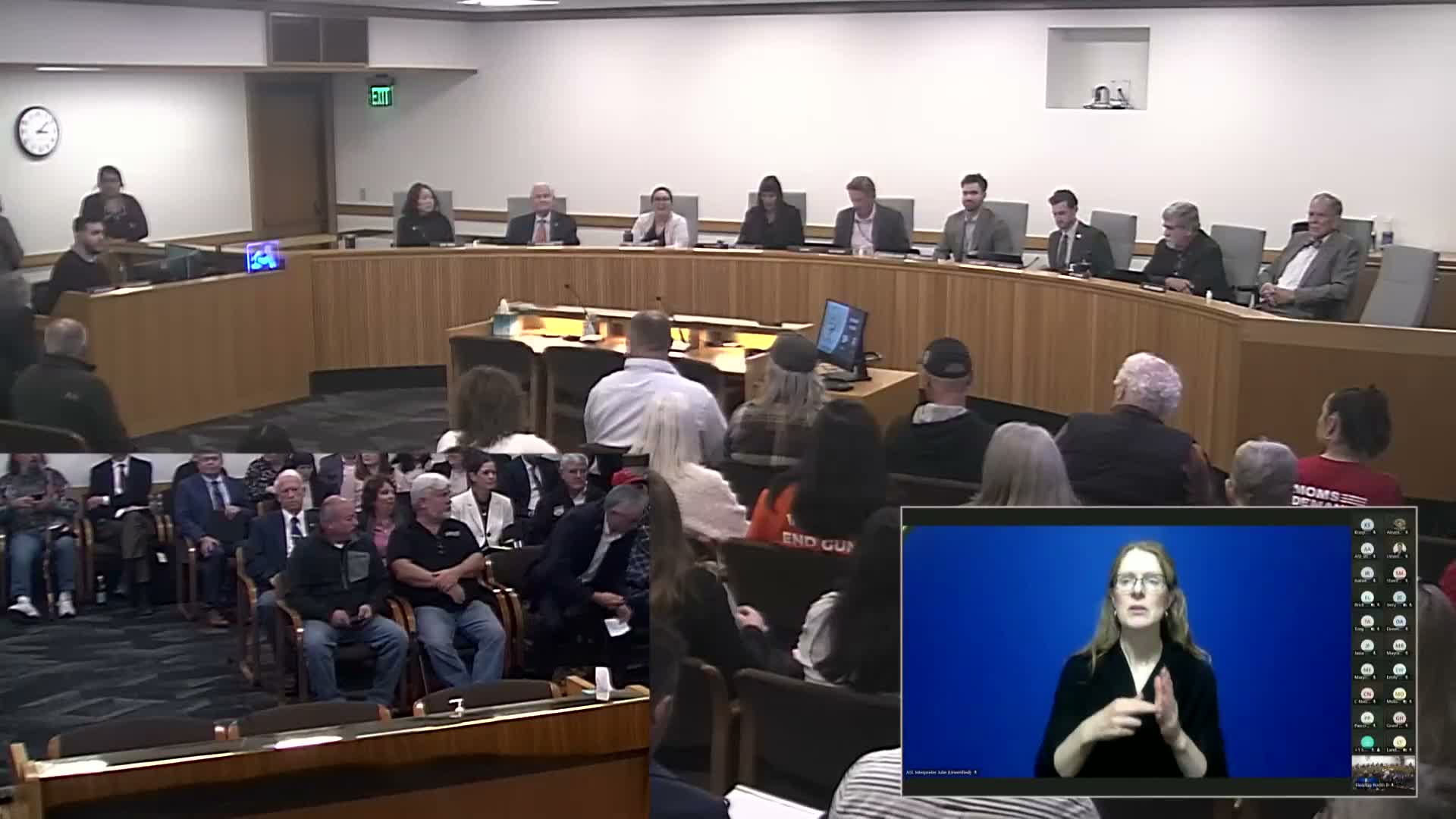
Chair Kropf opened a public hearing on House Bill 4,088 on Feb. 2, saying the measure would address privacy, extradition, court records and licensing in relation to reproductive and gender‑affirming health care.
Representative Lisa Bridal, sponsor of the bill, said Oregon must safeguard ‘‘personal health care decisions belong to patients and their health care providers’’ and described HB 4,088 as closing gaps that leave providers and patients vulnerable to ‘‘federal government and out of state investigations or prosecutions of lawful essential healthcare.’'
Proponents — including Representative Willie Choatsen and Senator Lisa Reynolds, a practicing pediatrician — told the House Judiciary Committee the bill does not change what health care is legal in Oregon but establishes procedural and privacy protections so providers can deliver care without fear. ‘‘This bill does not change any policy about what types of health care are legal or not legal in Oregon,’’ Choatsen said. Reynolds added that ‘‘patient trust depends on the confidentiality of their private and personal health information’’ and that stronger privacy protections will help preserve access.
Medical witnesses described operational impacts. Dr. Kara Connolly, medical director of Doernbecher’s Gender Clinic, said threats, doxxing and death threats have caused clinics to remove information or curtail services, increasing travel times and wait lists for families; ‘‘providers are terrified,’’ she said.
Advocacy groups including Basic Rights Oregon and Planned Parenthood Action Oregon urged passage. Seth Johnstone of Basic Rights Oregon said the bill would fortify protections ‘‘against efforts to investigate, punish, or penalize individuals and providers providing legal health care in the state.’'
Opponents raised concerns about patient safety and oversight. Sherilyn Smith of Oregon Right to Life argued HB 4,088 would ‘‘completely remove oversight and accountability for providers of abortion and gender services’’ and could block cooperation with investigators in cases of coercion or criminal conduct. Melissa Oden of the Abortion Survivors Network said restrictions on access to medical records could make it harder for patients to seek answers after complications.
Paul Bridal, testifying in support with recommended changes, urged the committee to narrow language in Section 3 so it applies to federal and interstate investigations rather than ‘‘private citizen’’ subpoenas, and to add a limited research exception consistent with HIPAA (citing 45 CFR 164.514). He also suggested a sunset in 2030 to evaluate effects.
The committee did not take a vote on HB 4,088 during the hearing. Chair Kropf closed the public hearing and invited written testimony via OLIS within 48 hours.
Ending: The committee heard extensive expert and public testimony for and against HB 4,088; proponents emphasized privacy and provider protection, while opponents emphasized potential barriers to oversight. No committee vote was recorded in the transcript.