Get Full Government Meeting Transcripts, Videos, & Alerts Forever!
Get email alerts on the HB 4061 topic
No spam. Unsubscribe anytime.
Committee hears bill to update trade strategy, reform procurement and support microenterprise relief
Summary
HB 4,061 would update Oregon's unified trade strategy, direct a procurement roadmap to better direct the state's $7.1 billion purchasing power to Oregon businesses, establish a small task force on business retention, and (via a proposed amendment) reallocate initial funds toward microenterprise tariff-adjustment grants.
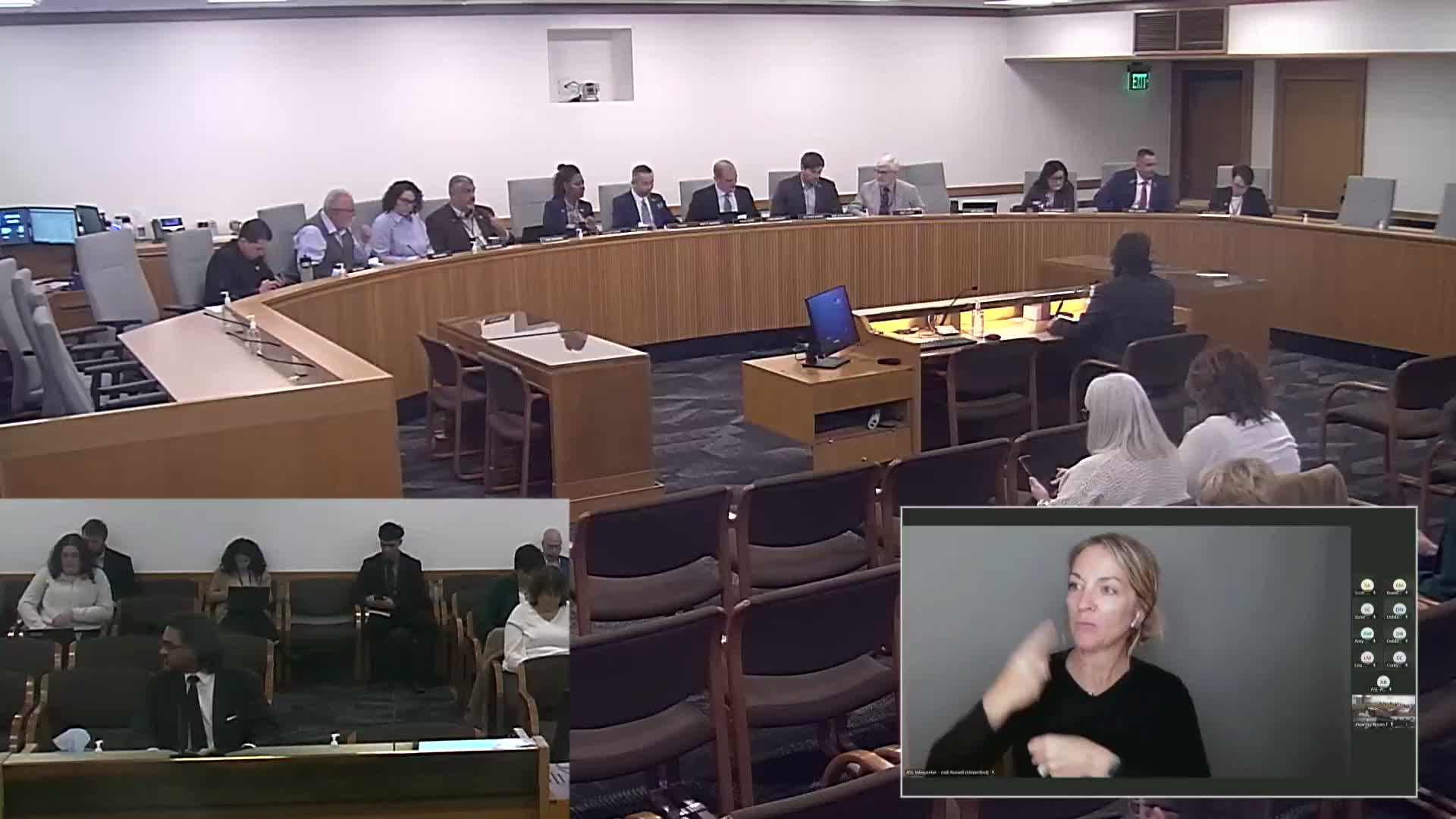
The House Committee on Economic Development, Small Business and Trade held a public hearing on HB 4,061 on Feb. 2, 2026. Committee sponsor Representative Daniel Wynn described the bill as a three-part approach to economic resilience: updating the state's unified trade strategy, producing a procurement reform roadmap for the Department of Administrative Services, and establishing a lean task force to recommend business retention strategies for the 2027 session.
A staff summary said the measure directs Business Oregon, the Port of Portland, the Department of Agriculture, Travel Oregon and other agencies as needed to update Oregon's unified trade strategy. Representative Wynn said the 2023 unified trade strategy needs an update to reflect recent federal trade-policy changes. The procurement section seeks to identify how the state's $7.1 billion in purchasing can capture more business for Oregon firms and workers.
Representative Wynn described an amendment that would reallocate funds originally identified for the trade strategy. He said the amendment would channel funding to Vista Oregon to provide tariff-adjustment grants for micro enterprises (defined in the presentation as businesses with annual revenues under $250,000) of up to $5,000. In committee questioning, Representative Wynn later said he proposed increasing the grant pool from the originally noted $300,000 to $950,000 to reach more micro businesses; he described the grants as "a lifeline" to help vulnerable businesses absorb tariff shocks.
Committee members asked how the bill would help communities with high unemployment and whether the task force would produce new analysis beyond prior work. Representative Wynn said the bill is intended to coordinate existing work and convert it into implementable policy given the governor's prioritization of economic development. A legislative fiscal official said LFO would assess any fiscal impacts if the bill advances to a work session. The committee closed the public hearing; no committee-level vote was recorded in the transcript.