Get Full Government Meeting Transcripts, Videos, & Alerts Forever!
Get email alerts on the Behavioral Health topic
No spam. Unsubscribe anytime.
Bill would move behavioral health grant administration to Criminal Justice Commission, sponsors say
Summary
SB 1583 would create a Behavioral Health and Deflection Committee within the Criminal Justice Commission to administer behavioral-health grants funded by cannabis tax revenue, with sponsors arguing the change would increase accountability, equity and rapid deployment of treatment and recovery services.
SALEM — Sponsors of Senate Bill 1583 told the Senate Judiciary Committee Tuesday the measure would move administration of behavioral-health and deflection grant programs into the Criminal Justice Commission (CJC) to improve accountability and get funding to counties and service providers more quickly.
Senator David Brock Smith said the bill would create a Behavioral Health and Deflection Committee within the CJC to issue grants for behavioral-health resource networks and deflection programs, and to repeal the current Oversight and Accountability Council. "We have a golden opportunity right now," he said, urging action to ramp up treatment and peer recovery support while overdose and potency trends shift.
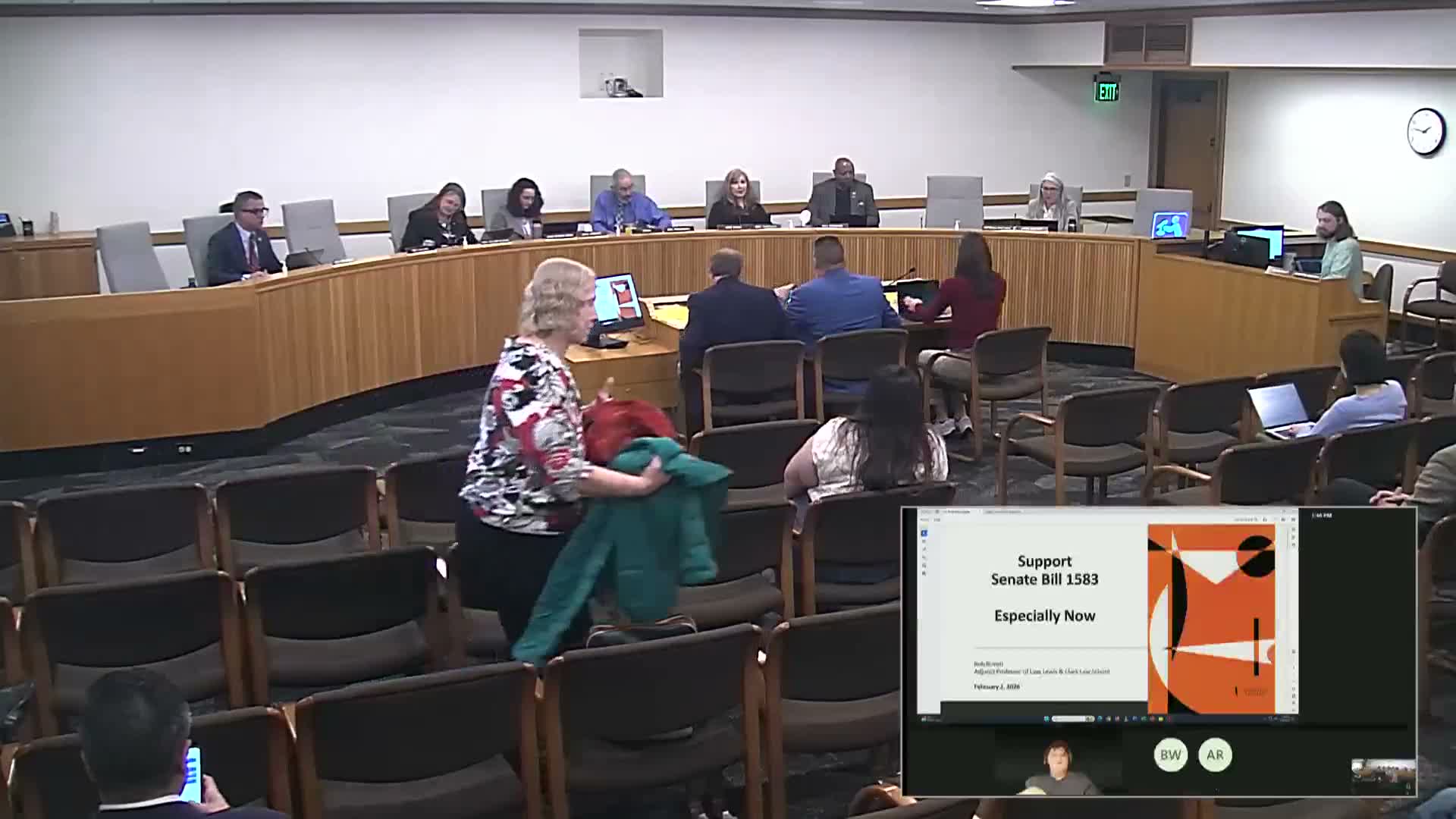
Rob Ovett, Lane County counsel and adjunct law professor, said overdose deaths have recently shown a decline in some data and that the state should use the moment to expand treatment capacity. Sponsors said the program would reallocate an existing cannabis-tax fund — described in testimony as about $180 million per biennium — and that the CJC has grant administration experience. Senator Manning, a co-chief sponsor, stressed the need for available treatment capacity and to coordinate with Ways and Means for funding.
Stakeholders and county officials testified in support, saying the move would strengthen statewide coordination and equity for behavioral-health services. The committee discussed workability and CJC capacity to administer the program; sponsors said they have discussed staffing expectations with the commission and the governor's office and expect some administrative fraction of the fund to be used to stand up the program. The hearing was informational.