
Tomball ISD trustees decline to adopt policy tied to state prayer statute after heated debate
Get AI-powered insights, summaries, and transcripts
Subscribe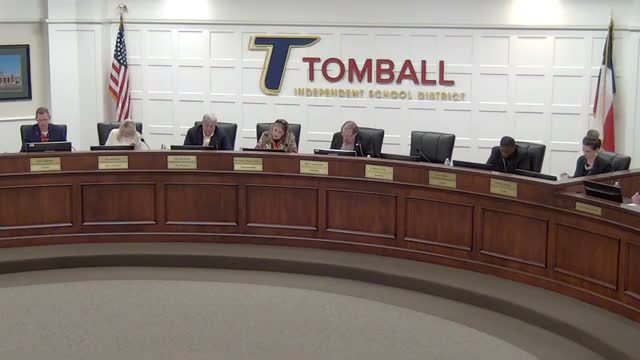
Summary
After an extended discussion about whether a state statute requiring a period for prayer should change local practice, the Tomball ISD board voted 6–1 on Feb. 10 to adopt a resolution that does not implement the statute as district policy.
The Tomball ISD Board of Trustees voted 6–1 on Feb. 10 to adopt a resolution declining to implement a policy tied to Texas Education Code §25.0823 that would create a designated period for prayer and the reading of religious texts.
The vote followed nearly two hours of discussion during which trustees weighed competing views about whether the statute would expand or restrict current student and employee religious expression. One trustee, citing conversations with a policy analyst for the bill’s author and the bill’s fiscal note, said the statute does not intend to remove existing student rights and that "the state would cover the cost of any expenses, costs, judgments, or settlements." That trustee said they would nonetheless vote against declining to adopt the policy and hoped the district might try an approach on a limited basis.
Other trustees said the statute, as they read it, would be more restrictive than current practice and could segregate students who choose to pray into separate locations away from peers and instruction time. Concerns raised included the burden of administering the policy at elementary campuses, the effect on staff with students of diverse faiths, and a clause discussed in the meeting that would require consenting parents or employees to waive certain legal rights, a point some trustees said merited caution.
Trustees also debated how frequently the opportunity would need to be offered; a trustee relayed that a policy analyst told them frequency was not strictly prescribed and could range from once a week to once a month rather than daily. Several trustees called for additional review and suggested that any trial of new procedures be reassessed after a set period.
Board President announced the motion carried (an announced tally of 6–1). Meeting minutes will include the resolution and the board noted that the resolution does not remove any rights currently enjoyed by students.
The board debated the item as part of its regular agenda; no members of the public were registered to speak during public comment about the measure.