Get Full Government Meeting Transcripts, Videos, & Alerts Forever!
Get email alerts on the Hospice Licensing topic
No spam. Unsubscribe anytime.
Panel hears sponsors and providers on pausing new hospice licenses to curb alleged fraud
Summary
Senate Bill 15 75 would temporarily pause new hospice licenses while the Oregon Health Authority completes rulemaking to strengthen vetting, including background checks and ownership reporting; supporters cited fraud in other states and urged stronger minimum standards, while provider groups asked for clearer language to avoid service disruption.
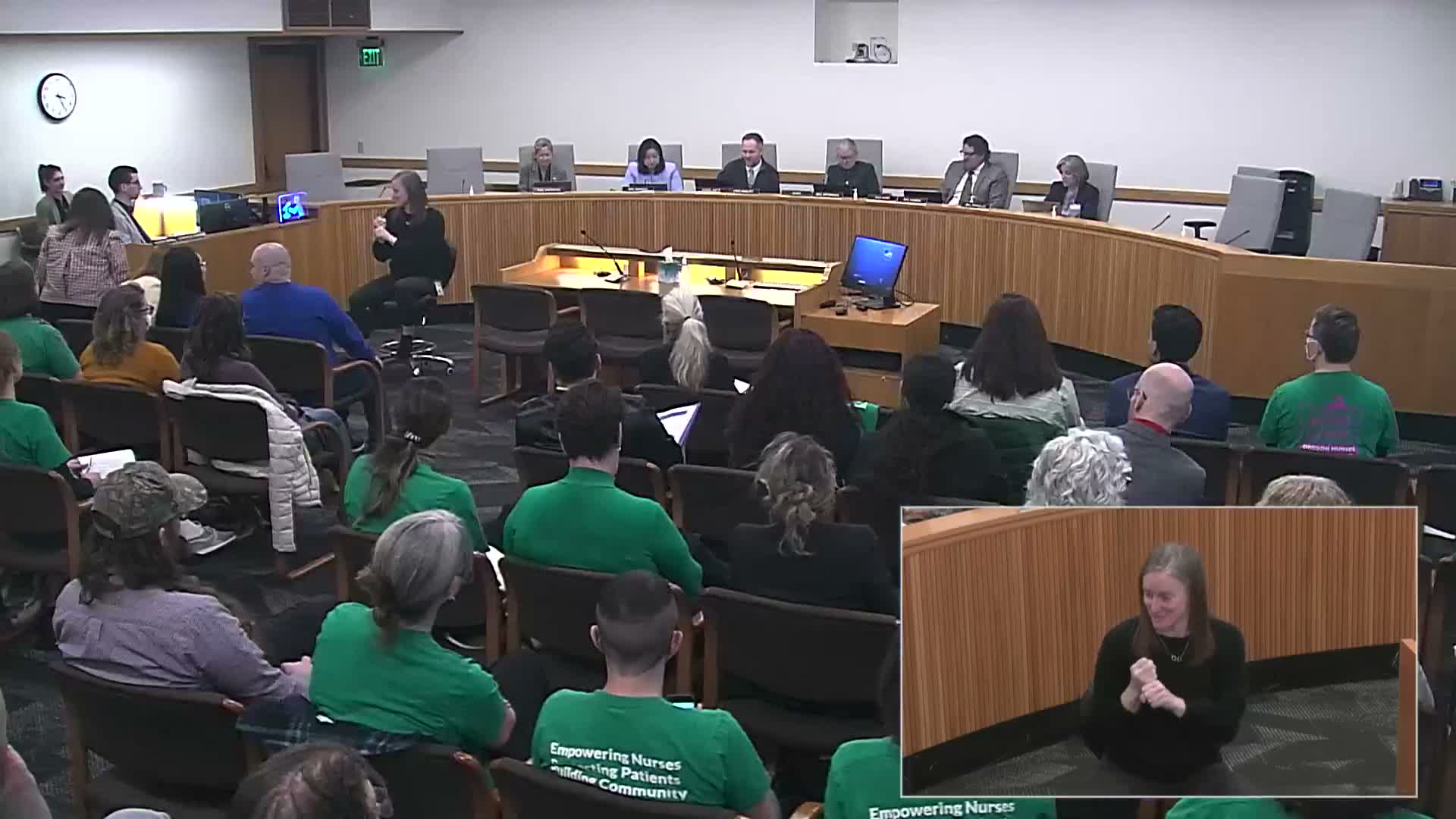
The committee opened public testimony on Senate Bill 15 75, a measure that would temporarily prohibit the Oregon Health Authority from issuing new hospice licenses while the agency develops new licensure review requirements within 24 months.
Barb Hansen, CEO of the Oregon Hospice and Palliative Care Association, described the bill as necessary to "keep the bad actors out of Oregon," pointing to documented hospice fraud in other states and asserting that stronger vetting will protect patients from neglect and fraudulent billing. Iris Nishimura (Willamette Vital Health) and other hospice providers described cases in which patients were improperly enrolled, denied needed care, or received no visits; Nishimura said federal oversight expansions in several states should serve as a warning for Oregon.
Senator James Ivory Manning Jr., a sponsor, characterized the bill as a set of guardrails to ensure hospices have adequate financial and operational capacity, and said he hoped the committee would vote unanimously. Other supporters included AARP Oregon, LeadingAge Oregon, and small local hospice operators who said the bill would help preserve dignity and care quality for older Oregonians.
Some providers and associations expressed concerns with specific language. Providence Health and Services said it was neutral but sought clarity about relicensing obligations on ownership transfer so that administrative burdens do not inadvertently reduce local services. The Oregon Primary Care Association and the Hospital Association of Oregon supported the bill's objectives but said the current -1 language requires further negotiation to avoid unintended operational or liability burdens.
What’s next: The committee closed the public hearing on SB 15 75 for today; no committee vote was recorded in the transcript. Stakeholders asked for collaborative drafting ahead of further committee action.