Get Full Government Meeting Transcripts, Videos, & Alerts Forever!
Get email alerts on the Healthcare Insurance Cervical Cancer topic
No spam. Unsubscribe anytime.
Senate committee adopts amendment and advances bill to end out‑of‑pocket costs for cervical cancer diagnostic follow‑ups
Summary
The Senate Committee on Health Care adopted a -1 amendment and voted to send Senate Bill 15 27 to the Senate desk with a do‑pass recommendation; the bill would require insurers to cover diagnostic follow‑up exams (colposcopy/biopsy) after abnormal cervical cancer screening without deductibles, copayments, or coinsurance.
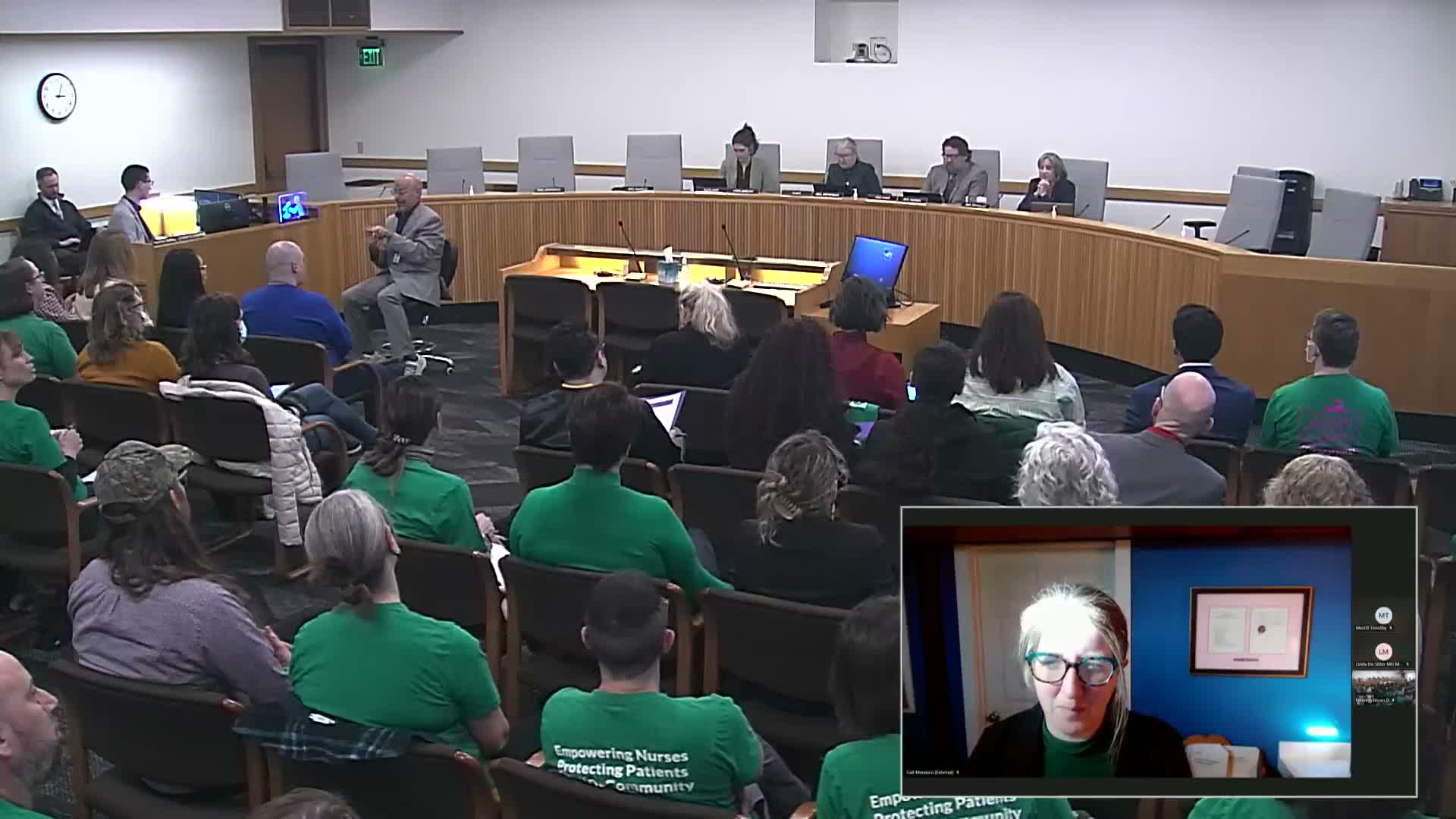
Chair Patterson opened a public hearing and work session on Senate Bill 15 27, which would prohibit health insurance carriers from imposing deductibles, coinsurance, copayments or other out‑of‑pocket costs for medically necessary diagnostic cervical cancer exams and follow‑up procedures.
Representative Anessa Hartman, who identified herself as the state representative for House District 40, testified in support and described her experience with cervical cancer and brachytherapy treatments to underscore why timely diagnostic follow‑up matters. "There are parts of this cancer that are preventable, preventable," she said, urging coverage for follow‑up procedures ordered by qualified clinicians.
Medical experts and advocacy groups also supported the bill. Dr. Julia Tassett, an OB‑GYN and fellow of the American College of Obstetricians and Gynecologists, told the committee the bill would eliminate cost barriers that lead patients to delay necessary colposcopies and biopsies, citing American Cancer Society data on incidence and mortality. Jane Leo of the American Cancer Society Cancer Action Network said about 5% of Pap screenings require diagnostic follow‑up and that such diagnostics can cost between $700 and $1,200, even for commercially insured patients. Gail Menasco, a patient survivor, described how a later high‑deductible plan and a $2,000 diagnostic bill led to delays in care.
Committee staff noted there is a -1 amendment that clarifies the bill's application to specified public plans (the transcript references PEBB and OEBB) and that a fiscal and revenue analysis posted on OLIS reports a minimal fiscal impact and no revenue impact for the amendment. During the work session a senator moved to adopt the -1 amendment; the committee adopted the amendment by roll call and subsequently moved SB 15 27 as amended to the Senate desk with a do‑pass recommendation.
The committee recorded that Chair Patterson and Vice Chair Hayden would be carriers and expressed a hope that Representative Hartman would carry the measure in the House if it arrived there. The committee closed public hearing and work session activity on SB 15 27 and proceeded to other agenda items.
What’s next: SB 15 27 as amended will be sent to the Senate desk with a do‑pass recommendation; the committee posted fiscal and revenue materials on OLIS.