Lifetime Citizen Portal Access — AI Briefings, Alerts & Unlimited Follows
Proponents urge sustained funding and policing powers in HB 4,139 as opponents warn of cuts to behavioral health
Loading...
Summary
Supporters told the House committee HB 4,139 would restore dedicated funding and enforcement tools to curb illegal marijuana grows and labor trafficking; opponents, including treatment providers and county officials, warned the bill’s off‑the‑top funding would divert roughly $18 million per biennium from behavioral‑health services set up after Measure 110.
Supporters of House Bill 4,139 urged the House Committee on Economic Development, Small Business and Trade to preserve an off‑the‑top funding stream and stronger enforcement powers to curb illegal marijuana cultivation and related crimes.
Representative Kim Wallen of Medford told the committee hemp and marijuana plants “look identical” and argued current legal gaps have allowed illicit growers to flood the market. Wallen said the measure would expand inspection and license‑revocation authority and shift more OLCC tax revenue into an enforcement grant program to support local investigations and victim services.
Rob Bovette, an adjunct professor at Lewis & Clark Law School who helped draft the omnibus package, urged the committee to retain two sections in the dash‑2 amendment: the marijuana market enforcement grant program and a change to the Oregon Medical Marijuana Program (OMMP). Bovette proposed an interim stakeholder work group to resolve remaining hemp‑policy issues.
Jackson County Sheriff Nate Sickler, speaking for the Oregon State Sheriffs Association, described enforcement gains funded by prior grants and urged a stable, dedicated revenue source. He said enforcement teams in his county had eradicated “over 1,000,000 marijuana plants,” seized hundreds of thousands of pounds of processed product and recovered firearms, and warned that cutting funding could force teams to disband.
Opponents said the bill’s proposed funding shift would undercut behavioral‑health services. Dr. Hannah Studer, executive director of Bridges to Change, said section 15 would “divert approximately $18,000,000 per biennium” from tax revenues currently dedicated to behavioral‑health and addiction recovery networks and estimated that could amount to a roughly 10% reduction in those funds.
Tim Dooley of the Association of Oregon Counties said counties value the enforcement grants but cannot support a mid‑biennium statutory reallocation of Measure 110‑directed revenues in a short session; he urged participation in the proposed interim work group instead of a quick statutory change.
Industry and hemp advocates offered mixed reactions. Nikki Terziav of the Cannabis Industry Alliance said the morning’s dash‑2 amendment and a committed work group reduced her organization’s opposition to neutral. Courtney Moran, representing Oregon CBD, and Beau Whitney, chief economist at Whitney Economics, warned against conflating compliant hemp businesses with criminal operations and flagged economic harms to grain, fiber and compliant hemp producers.
Anthony Taylor of Compassionate Oregon, who holds OMMP’s patient seat on the Oregon Cannabis Commission, voiced support for section 16, which he said would grant limited clinical flexibility to licensed providers to recommend cannabis for qualifying patients while preserving the statutory list of conditions.
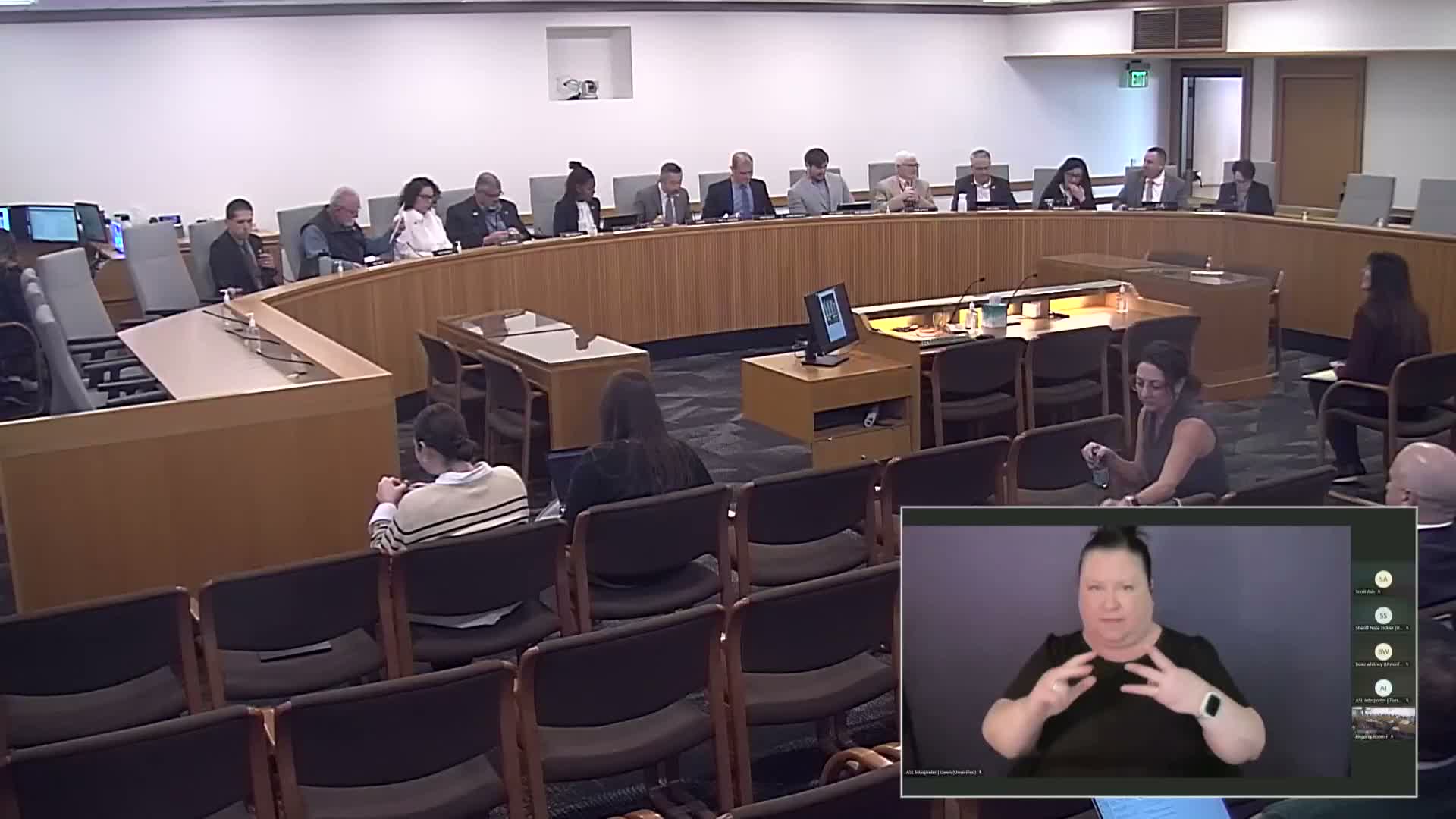
The committee closed the public hearing on HB 4,139 without taking a vote and moved on to other bills. Members said they would direct follow‑up questions to panelists after the session.
What’s next: The committee did not vote on the measure during the hearing; sponsors and proponents signaled they expect further work in interim stakeholder meetings and possible conforming amendments before any next committee action.