
THEC condenses Quality Assurance Funding to three standards; commissioners press for data use
Get AI-powered insights, summaries, and transcripts
Subscribe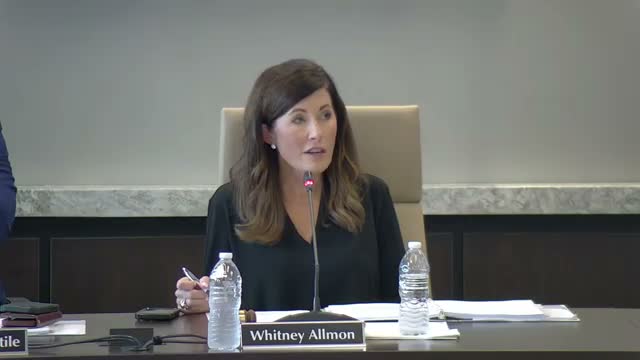
Summary
THEC staff proposed reducing QAF measures to three buckets (academic program quality, student success, student engagement) and aligning the cycle with outcomes-based funding; the committee approved the change and asked for clearer examples of campus action tied to survey data.
Dr. Julie Roberts, THECchief academic officer, presented finalized Quality Assurance Funding standards that condense previous measures into three primary categories: academic program quality, student success, and student engagement.
Roberts told commissioners the change is intended to focus QAF on program quality and learning outcomes while avoiding duplication with the outcomes-based funding formula. She said programmatic accreditors will be required where applicable and that programs without accreditors will undergo THEC program review. Dr. Roberts also said the QAF process will use nationally normed student-engagement surveys (for example, NSSE and CCSSE) with an added career-readiness module; she defended retaining 10 points for the student-engagement metric while acknowledging survey fatigue on campuses.
Commissioners asked how survey results produce concrete campus changes; staff said campuses historically used QAF reports to inform program-level discussion and that THEC will provide supports and annual updates to help institutions leverage the data. Roberts said the revised standards, if approved, would take effect in 2026 and that QAF moves roughly $80 million in state funds. The commission approved the proposal on a roll-call vote.
THEC staff committed to providing annual updates on QAF implementation and to share examples of campus-level changes driven by survey results.