Get Full Government Meeting Transcripts, Videos, & Alerts Forever!
Get email alerts on the Paid Leave topic
No spam. Unsubscribe anytime.
Committee advances bill giving OED narrow rulemaking authority to account for paid‑leave fund after IRS ruling
Summary
SB 15‑20 would let the Oregon Employment Department adopt accounting rules to separate employer and employee contributions to the Paid Family and Medical Leave fund, addressing an IRS interpretation that threatened the program; the committee sent the bill to the floor with a due‑pass recommendation.
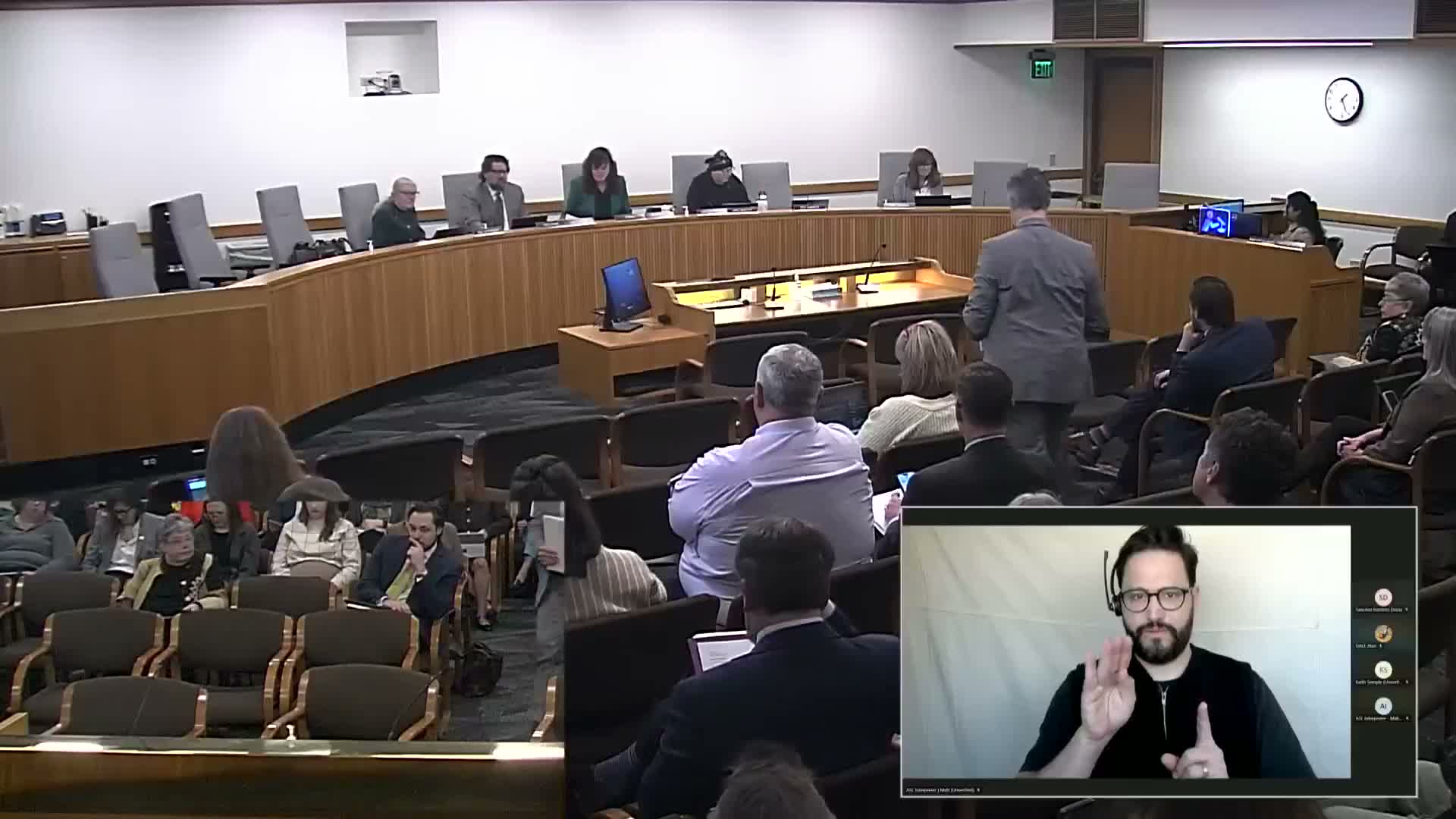
The Senate Committee on Labor and Business moved Senate Bill 15‑20 to the Senate floor with a due‑pass recommendation on Feb. 4 after hearing agency and stakeholder testimony that the bill is a narrow fix to an IRS accounting issue.
Andrew Stolfi, director of the Oregon Employment Department, told the committee the bill would give the department limited rulemaking authority to establish an accounting system to ensure contributions and benefits comply with tax reporting and withholding requirements and to identify the source of each dollar contributed so that employee contributions are used only for medical leave benefits. He emphasized the bill does not permit the director to change the statutory maximum contribution rate (1%) or the 60/40 employee/employer split.
Labor (Katie Tyson, Oregon AFL‑CIO) and the business community (Paloma Sparks, OBI) supported the measure as a narrowly tailored solution that avoids costly programming changes and potential federal penalties. Tyson noted that more than 200,000 Oregonians have used paid family and medical leave since the program launched in September 2023 and urged swift legislative action to avoid expensive system changes.
Vice Chair Hayden moved to report SB 15‑20 to the Senate floor with a due‑pass recommendation; the motion passed by voice consent and Hayden agreed to carry the bill.
The bill would take effect on the 91st day following adjournment sine die. The committee recorded no roll‑call tally; action was taken by voice consent.