Get Full Government Meeting Transcripts, Videos, & Alerts Forever!
Get email alerts on the Benefits Management System topic
No spam. Unsubscribe anytime.
PEBB and OEBB update joint benefits system: vendor reset, stop‑work order and funding questions remain
Summary
State benefits boards told the Ways and Means Human Services Subcommittee they paused vendor work after quality problems, have initiated a vendor 'reset' with discovery workshops, and expect a revised timeline and cost proposal before resuming work; funding to date was drawn from administrative fees and about $11.5 million of baseline budgeted funds have been spent.
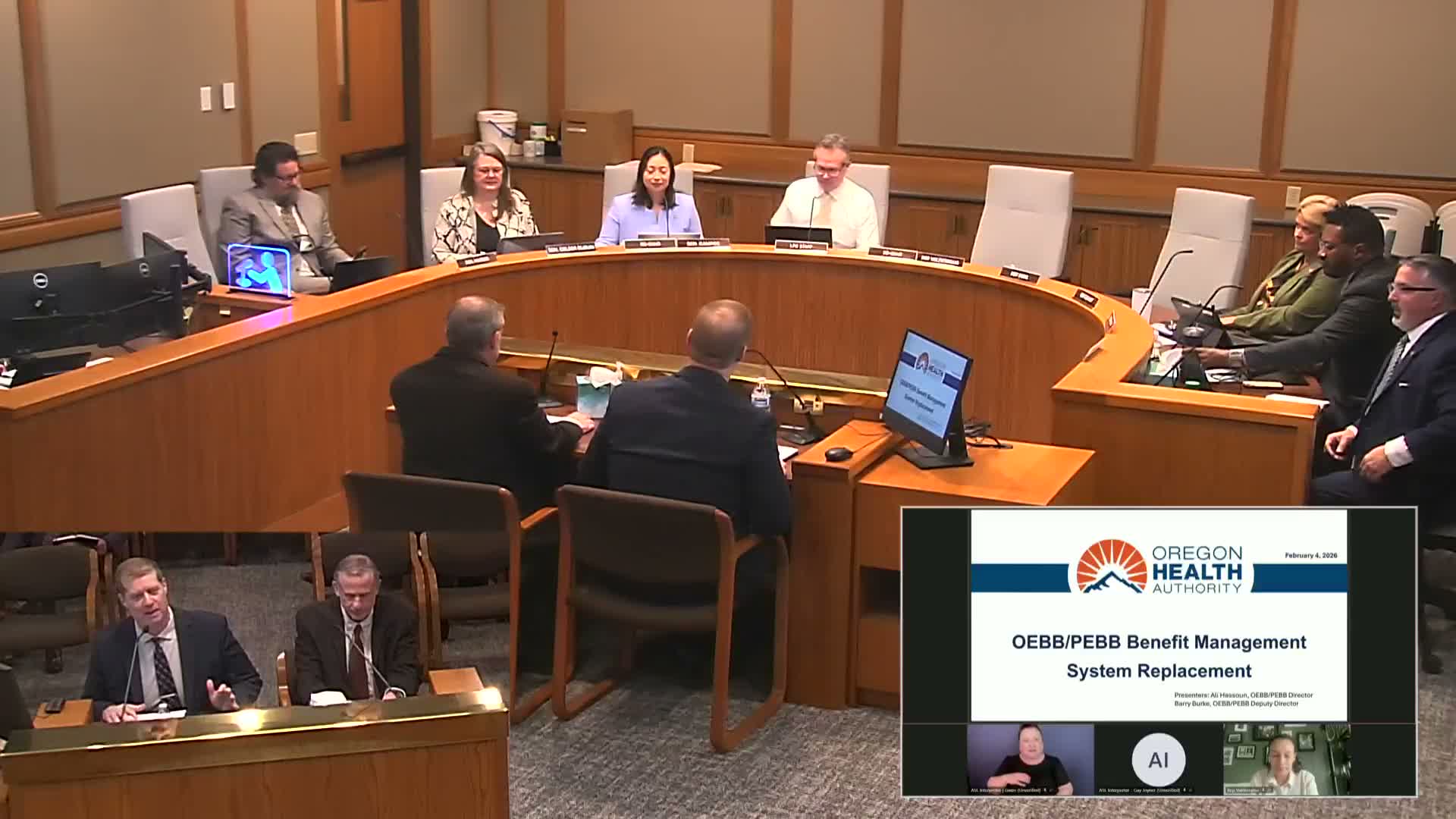
Ali Hassoun, executive director of the Public Employees’ Benefit Board (PEBB) and the Oregon Educators’ Benefit Board (OEBB), told the Ways and Means Human Services Subcommittee on Feb. 4 that the agencies are pursuing a joint benefits management system but have paused vendor work to reduce financial risk while the project is reset. "We are currently finishing our fourth of six workshops this week," Hassoun said, describing a discovery process intended to validate scope and requirements before a new contract amendment is considered.
The project was initiated after a 2017 technical assessment recommended replacement of aging, custom-built systems. Barry Burke, deputy director and project lead for the joint effort, said Oregon executed a vendor contract in 2022 with TELUS Health and originally planned a March 2024 go‑live. After user acceptance testing identified high bug rates and documentation deficiencies, the state issued a cure letter in September 2024 and a stop‑work order in March 2025. "The recommendation from that assessment was replacement of our aging custom built systems," Burke said.
Why it matters: the two boards cover roughly 150,000 enrolled lives each and together administer benefits to more than 300,000 people; their systems manage enrollment, premiums and plan administration that ultimately affect member access to benefits and the state’s ability to manage premium and administrative‑fee limits set in statute.
Funding and expenditures: Hassoun said the project has been funded from the boards’ operating budgets using administrative fee revenue (the presentation referenced a statutory limit of no more than 2 percent of total monthly premiums for the administrative fee and a 3.4 percent annual cap on premium increases). The presenters reported project expenditures of approximately $11,500,000 against a $14,500,000 baseline budget as of December 2025; future funding needs and any request for an "other funds limitation" will depend on the vendor’s validated schedule and cost proposal following the reset workshops.
Quality assurance and oversight: the agencies engaged independent quality assurance vendor NTT DATA, which reported to the executive steering committee that the reset workshops had produced "a sense of cautious optimism" and that improvements followed changes in TELUS Health’s project personnel. Presenters said the state will require a vendor‑validated timeline and a cost estimate acceptable to the boards before moving forward with any contract amendment.
What’s next: if the vendor completes the remaining discovery workshops satisfactorily, OHA/PEBB/OEBB will request an updated timeline and cost, pursue required approvals and, if terms are acceptable, execute a contract amendment to resume work. The subcommittee did not take formal action; presenters invited member questions but none were raised during the update.
Ending: the boards said they will return with a validated schedule and cost proposal after the reset workshops and pursue required legislative budget steps if additional other‑funds authority is needed.