Get Full Government Meeting Transcripts, Videos, & Alerts Forever!
Get email alerts on the Budget Shortfall topic
No spam. Unsubscribe anytime.
Oregon Ways and Means hearing draws hundreds of public witnesses urging protection of health, education and disability services amid HR 1 revenue shock
Summary
Hundreds testified before the joint Ways and Means Committee on Feb. 3, 2025, urging legislators to avoid deep program cuts proposed after federal tax changes (HR 1) reduced state revenue. Witnesses pressed to protect education, IDD services, Medicaid programs and natural‑resource funding and proposed revenue alternatives.
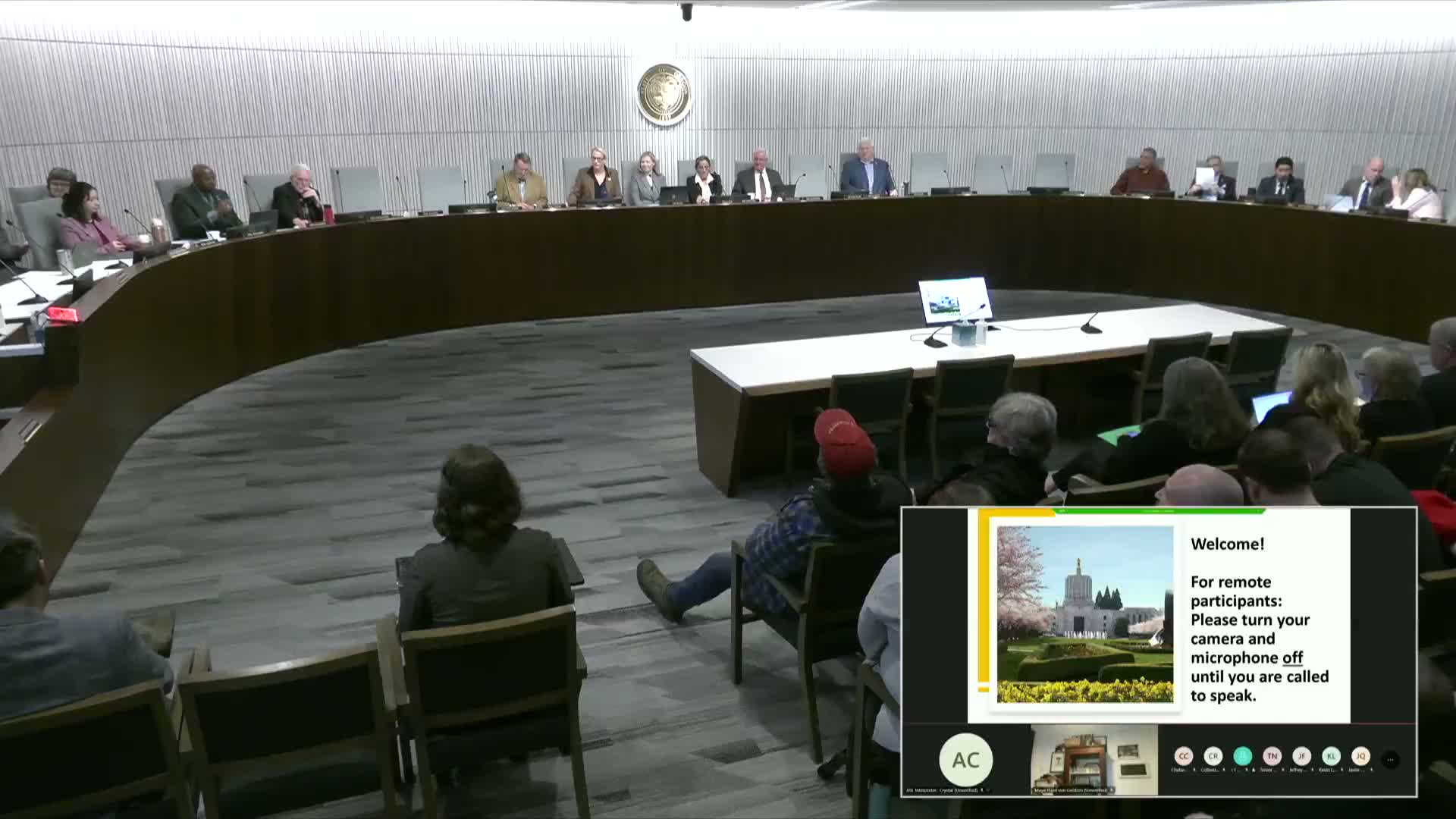
Co‑chairs of the Oregon Legislature’s joint Ways and Means Committee opened a Feb. 3, 2025 hearing to gather public testimony on proposed mid‑year budget reductions after the passage of the federal HR 1 tax package, which witnesses and the committee said has reduced state revenue and shifted costs to programs including SNAP and Medicaid.
The chair framed the hearing as part of an accelerated short‑session budget process, noting agencies submitted reduction lists and six subcommittees collected feedback from nearly 170 stakeholders. Committee staff limited in‑person and remote testimony to 90 seconds and accepted written comment for 48 hours after the hearing.
Speakers from a broad cross‑section of Oregon’s public and nonprofit sectors urged the legislature to preserve core services and consider revenue options rather than deep program cuts. Health‑care advocates, including Sen. Deb Patterson (chair, Senate Health Care Committee), warned that HR 1’s changes reduced federal funding and urged preserving graduate medical education, the post‑hospital extended care benefit and the state‑based insurance marketplace to maintain coverage and federal matching dollars. "Please protect services to vulnerable [Oregonians]," Patterson said.
Education leaders and teachers stressed the acute harm of reductions to K‑12 and higher‑education funding. Portland Public Schools board chair Eddie Wong described cumulative district cuts of tens of millions of dollars in recent years and urged use of revenue tools such as the Education Stability Fund and a proposal to disconnect Oregon’s tax code from the federal code to avoid further job losses and classroom disruptions.
Multiple witnesses highlighted disability and long‑term‑services supports. Parents, providers and advocacy organizations repeatedly warned that eliminating the parental income disregard for children with developmental disabilities and delaying scheduled provider rate increases would remove eligibility for in‑home supports, risk institutional placements and undermine provider capacity. Providers warned DSP wages set at current levels are unsustainable and that delaying a scheduled July 2026 rate increase would further destabilize services.
Natural‑resource, conservation and agricultural witnesses said cuts to agencies such as the Oregon Department of Forestry, Oregon Department of Fish and Wildlife and OSU Extension could jeopardize habitat plans, permit review and small‑farm assistance that protect jobs and public health. Arts and cultural institutions including the Oregon Shakespeare Festival and Portland Center Stage urged release of previously approved allocations under HB 5006 to sustain recovery and preserve education programs.
Witnesses suggested alternatives to program reductions: using rainy‑day reserves and the Education Stability Fund, pursuing a state disconnect from parts of the federal tax code, closing corporate tax loopholes, and targeted revenue reforms such as HB 4125 (a forecast modernization proposal cited by several speakers). Several local officials identified transportation and infrastructure priorities — Wilsonville Mayor Sean O'Neil urged sustained investment in the Boone Bridge, noting prior legislative seed funding that leverages federal matching dollars.
The hearing included dozens of additional speakers — union representatives, community‑college and technical‑education advocates, nonprofit executives and parents — who framed the reduction choices as immediate threats to services on which vulnerable Oregonians rely. The committee closed the hearing and reminded people to submit written testimony within 48 hours.
The joint committee has not taken formal votes during the hearing. Lawmakers will next receive the official revenue forecast and continue deliberations in the short session before making final budget decisions.