
Eastern York sees ELA proficiency drop; trustees push targeted interventions and early-childhood expansion
Get AI-powered insights, summaries, and transcripts
Subscribe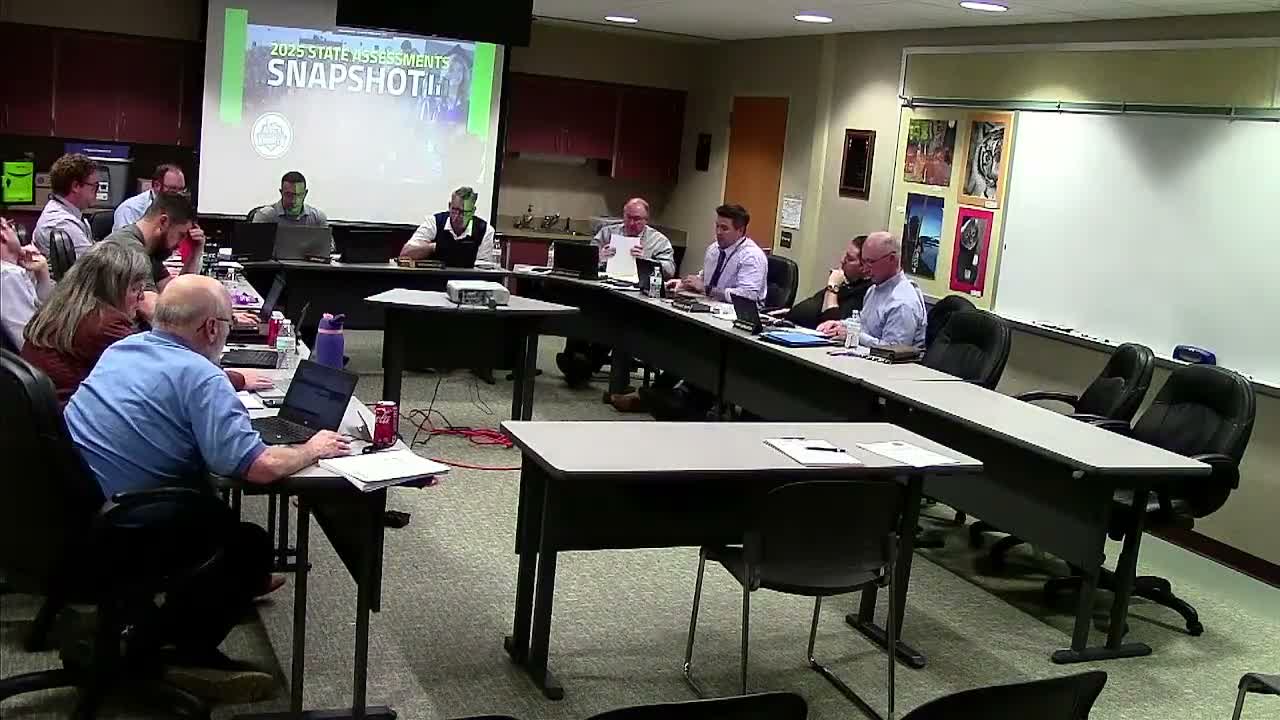
Summary
District ELA proficiency fell from 56% to 48% with the largest drops in grades 4 and 8 and pronounced declines in certain cohorts; administrators proposed evidence-based programs, tiered interventions (READ 180), professional development and consideration of expanded pre-K as long-term strategy.
District curriculum leaders told the board that Eastern York’s statewide assessment results showed an 8-point districtwide decline in English language arts (56% to 48%) that mirrored a statewide drop. Administrators singled out the largest local declines in grades 4 and 8 and identified a specific cohort at Crites Creek/Candadale with concentrated needs: that cohort has higher-than-average rates of economically disadvantaged students, students with IEPs, and Title I participation, and posted notably low proficiency rates in grade 4.
The superintendent and curriculum directors described immediate and planned responses: piloting state-recommended, research-based reading programs (Emerge, Foundations, Heggerty, GEOs) in grades 3–5; expanding professional development in science-of-reading practices; targeted interventions such as READ 180 for tier-3 students; and rollout of standards-based grading pilots to better align instruction to assessed standards. Administrators also flagged the district’s move to fully digital PSSA administration in spring 2026 and expressed concern about student stamina and the need to teach digital test skills.
Board members asked about upstream strategies; administrators urged prioritizing early childhood expansion (pre-K) where feasible—either via partnerships or district-run programs—arguing that universal or enlarged pre-K would reduce readiness gaps. Trustees asked for costed options for expanding pre-K seats, repurposing positions at anticipated retirements, and summer programs to accelerate readiness. The district will return with a prioritized action plan that includes metrics, professional-development timelines, and the cost and space implications of pre-K expansion.