Get Full Government Meeting Transcripts, Videos, & Alerts Forever!
Get email alerts on the Autonomous Vehicles topic
No spam. Unsubscribe anytime.
House Transportation Committee hears wide testimony on bill to regulate autonomous vehicles
Summary
Supporters told the House Committee on Transportation HB 4,085 would create a statewide, safety‑first framework for fully autonomous vehicles; opponents — including rideshare drivers, cities and disability‑advocacy groups — warned it preempts local control, leaves cybersecurity and wheelchair access unresolved and risks job losses. The committee held a first public hearing and postponed votes.
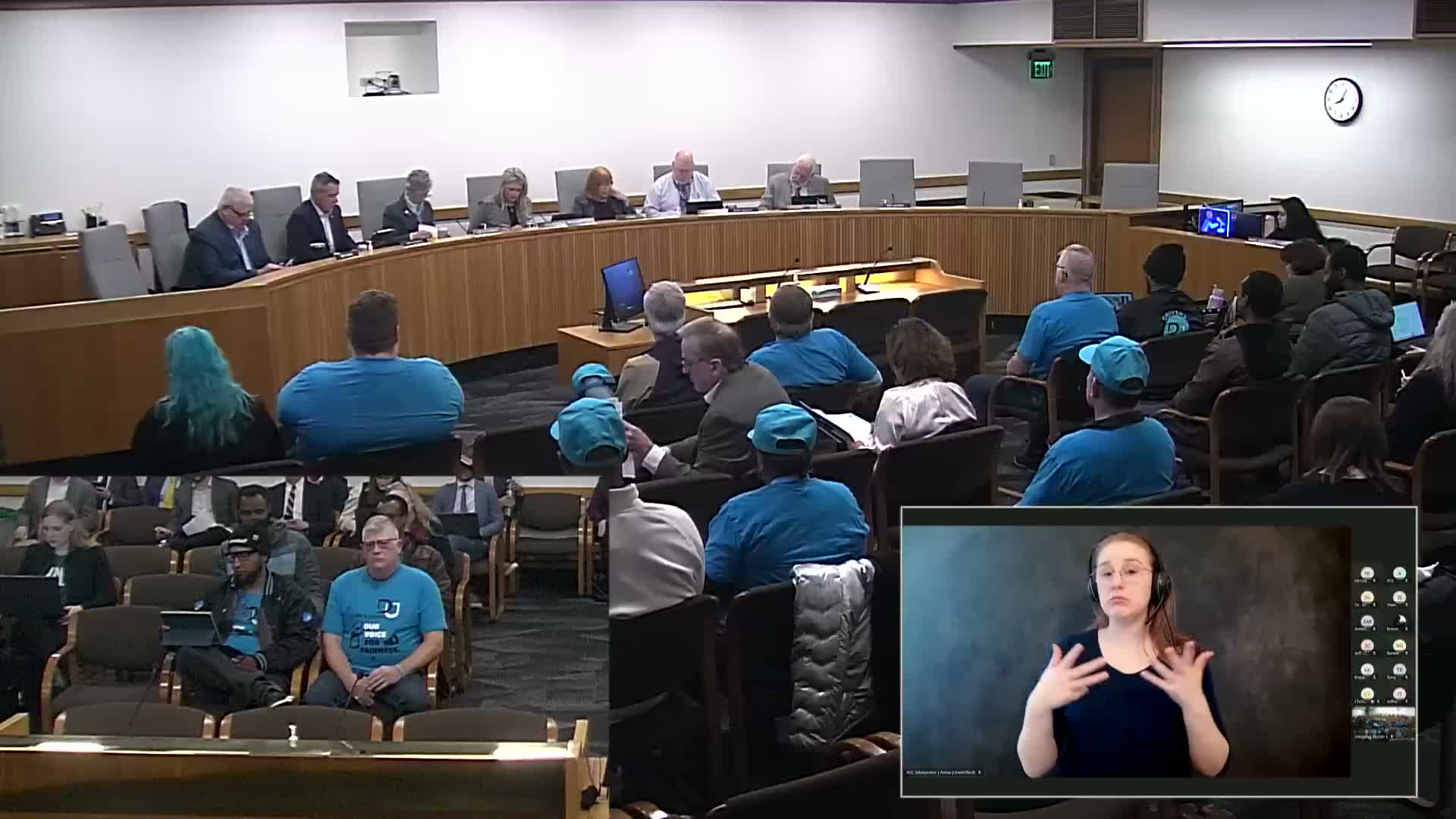
SALEM, Ore. — The House Committee on Transportation held a first public hearing on Feb. 9 for House Bill 4,085, a proposed statewide regulatory framework for commercial autonomous vehicles, hearing more than a dozen witnesses who offered sharply divided views on safety, local authority, accessibility and economic impacts.
Chair McLean, who sponsored the bill and said she has worked on autonomous‑vehicle policy since 2018, framed HB 4,085 as a "safety first" measure that would give the Oregon Department of Transportation (ODOT) authority to create a uniform permitting and oversight program. She said the bill follows a multi‑year task force and aims for a slow rollout so the state can rely on data as it expands AV operations.
"It creates a consistent floor of safety and operational standards, just as ODOT already does for vehicle safety on all other vehicles on our roads," Chair McLean said, adding the bill preserves local enforcement of traffic laws and allows cities to collect per‑trip taxes in line with existing network‑company charges.
Supporters, including industry groups and disability advocates, said HB 4,085 would make Oregon consistent with other states and expand mobility for people who cannot drive. Michael McGee, West Coast policy manager for Waymo, cited company data and said the Waymo Driver has driven hundreds of millions of miles and "reduces the frequency and the severity of collisions where we operate," including what he described as roughly 90% fewer serious‑injury crashes in the company’s comparison sets.
"By passing House Bill 4,085, Oregon will join more than half the country in enacting a clear framework for the commercial deployment of fully autonomous vehicles," McGee said.
Advocates for older adults and people with disabilities also testified in favor. Amber Kern Johnson, executive director of Community for Positive Aging in Portland, told lawmakers that AVs could preserve independence for older residents who can no longer safely drive. Kevin Kopas of the Epilepsy Foundation of Oregon said the technology could provide mobility for people with seizure disorders who currently face barriers to employment and daily life.
Industry and trade groups (TechNet, the AV Industry Association, and Chamber of Progress) urged the committee to adopt the bill to provide regulatory certainty that, they said, would attract investment and accelerate pilot programs.
Opponents said the bill, as drafted, hands too much power to the state and not enough to cities and towns to manage local safety, traffic and curb space, while leaving key issues unresolved. The League of Oregon Cities and the City of Portland urged stronger local authority and called for explicit cybersecurity provisions drawn from a 2019 task force report.
"We believe cybersecurity is absolutely an issue of statewide concern, and we'd like to see that included in the statewide framework," said Nicole Singe of the League of Oregon Cities.
Rideshare drivers and labor advocates delivered some of the most emotional opposition testimony. Nathaniel Hudson Hartman, an organizer with Drivers Union Oregon, told the committee the bill "unleashes dangerous experiments on vulnerable communities" and said drivers are fighting for fair pay, benefits and workplace protections that the measure does not address. Several drivers recounted near‑misses and operational problems they attributed to AVs in other cities.
Jacob Sherman, who leads the City of Portland’s emerging‑technology work for the Bureau of Transportation, said Portland is "opposed to House Bill 4,085 and the dash‑2 amendments" in the short session because the bill groups multiple complex use cases together and limits local tools for integrating AVs into street designs, school zones and emergency response plans.
Committee members asked technical questions during the hearing. Representative Nathanson raised cybersecurity and software‑failure scenarios; Waymo’s witness said the dynamic driving task is performed by on‑board systems and that remote support teams do not ‘‘drive’’ vehicles but assist with confirmation checks. ODOT’s DMV administrator, Amy Joyce, told the committee that the dash‑2 amendments envision a phased approach that would require an on‑board human operator starting in January 2027, with later authorization pathways for fully driverless operations, and that ODOT would need staff and resources to run a new regulatory program.
The hearing showed broad areas of agreement and disagreement. Supporters emphasized potential safety gains, accessibility for people who cannot drive, and economic development. Opponents emphasized local control, cybersecurity, maintenance funding (given likely electric AV fleets and reduced gas tax revenues), wheelchair‑accessible vehicle capacity and the potential displacement of rideshare drivers.
The committee did not take a final vote. Chair McLean said the committee will continue working with stakeholders, and she announced that HB 4,007 (Transportation Ombudsman) and HB 4,081 (work‑zone speed cameras) were rolled over to the next meeting; she also said HB 4,008 (transit funding) was postponed to the next meeting. The committee plans additional hearings and will return to consider votes at a future meeting.
The record from this first public hearing will be available through the committee's posted testimony and OLIS entries for members and staff to use as they draft amendments and determine next steps.