Get Full Government Meeting Transcripts, Videos, & Alerts Forever!
Get email alerts on the Tax Policy topic
No spam. Unsubscribe anytime.
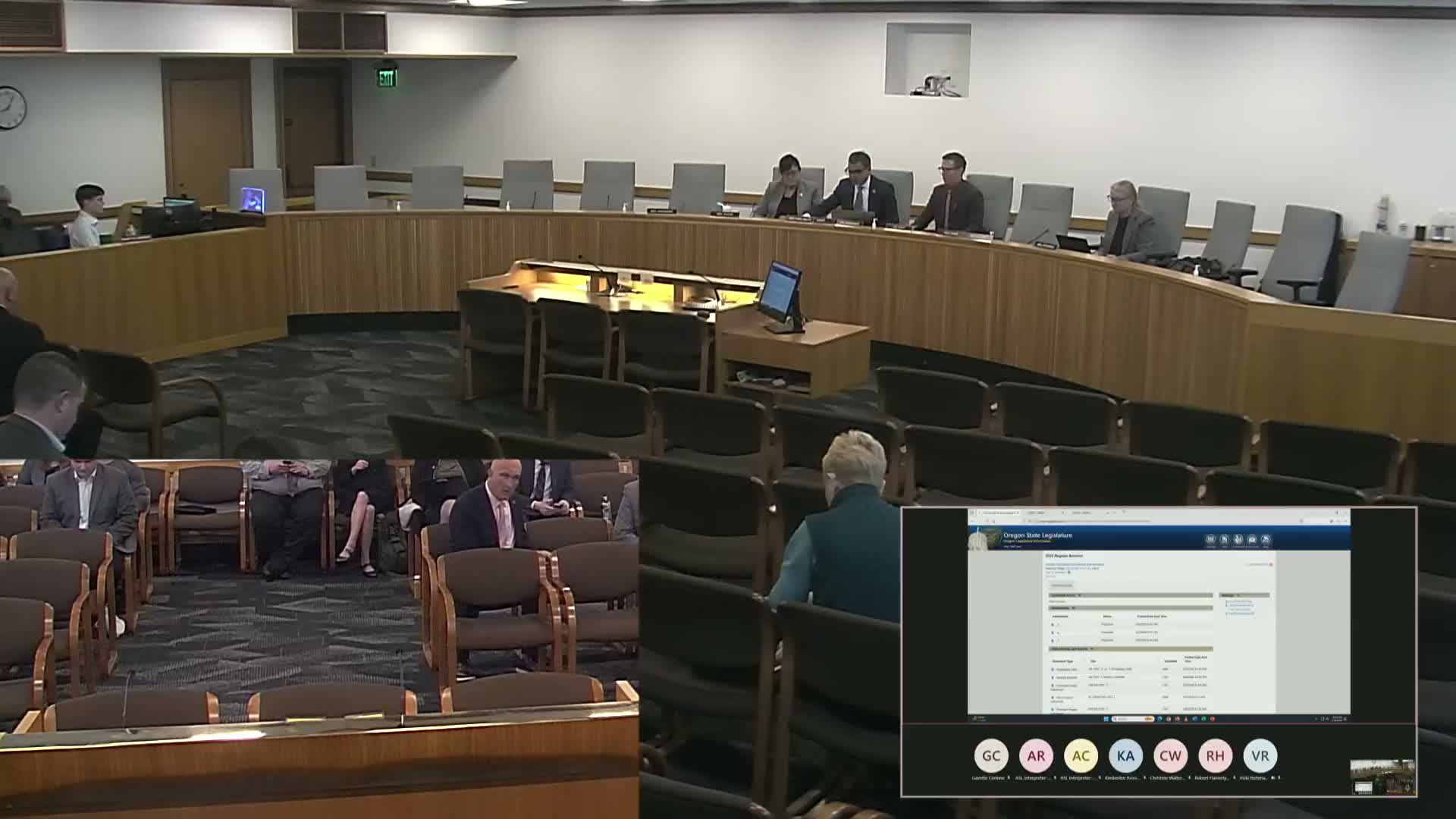
Senate Finance and Revenue Committee advances SB 1507 as amended, adopting dash 3 and dash 7
Summary
The Senate Finance and Revenue Committee adopted dash 3 and dash 7 amendments to SB 1507 and voted to send the bill to the Senate floor with a due-pass recommendation after a session of invited testimony and technical briefing. Debate centered on expanding the Earned Income Tax Credit, a $1,000 jobs tax credit, and whether to disconnect from select federal tax provisions including bonus depreciation.
The Senate Finance and Revenue Committee voted to advance Senate Bill 1507 as amended, adopting two amendments labeled dash 3 and dash 7 and sending the measure to the Senate floor with a due-pass recommendation.
Chair Broadman opened the Feb. 6 work session saying she would evaluate the bill "through the lens" of affordability, and described key elements in SB 1507: "The expansion of the Earned Income Tax Credit that is in this bill will cut taxes and put money back in the pockets of over 200,000 households," she said, framing the legislation as targeting working families facing rising costs.
The committee first adopted the dash 3 amendment, described by staff as a "rolling reconnect" that updates Oregon's definitional ties to the federal Internal Revenue Code. Committee staff said dash 3 carries minimal direct fiscal impact because it principally adjusts definitional references.
The chamber then debated and adopted the dash 7 amendment, a larger, selective package of changes that preserves certain federal provisions for Oregon while disconnecting from others. Key elements of dash 7 discussed by staff and advocates include a modest expansion of Oregon's Earned Income Tax Credit (EITC) and a jobs tax credit, described in committee materials as a $1,000 credit per job created, limited to the first 10 jobs created by a taxpayer and conditioned on the job paying at least 150% of the applicable minimum wage.
Supporters — including a range of local officials, school and county leaders, and small-business owners — urged the committee to adopt the amendments to protect state services. "Taking this thoughtful approach, Oregon can preserve nearly $300,000,000 in funding to prevent cuts to programs Oregonians care about," said Colleen Carey, who testified in support and described the impact of state-funded services for families relying on the Oregon Health Plan.
Portland Public Schools Superintendent Kimberly Armstrong told the committee SB 1507 would help districts avoid further cuts: "This is the fourth straight year of budget cuts in Portland… SB 1507 will at least be a tourniquet," she said.
Opponents — including several senators, the Oregon State Chamber of Commerce, the National Federation of Independent Business, and Oregon Business & Industry — warned that disconnecting from federal provisions such as bonus (accelerated) depreciation would reduce capital investment incentives and complicate compliance for small businesses. "I would suggest that the bill as it, potentially moves forward is actually damaging to Oregon's economy," Senator Bruce Star testified, saying decoupling from bonus depreciation harms opportunities for local investment and hiring.
Committee staff provided revenue estimates during debate. Kyle (committee staff) said the bill's net figures were positive in near-term biennia, reporting figures of roughly $311.6 million for 2025–27, $313.9 million for 2027–29 and $123.7 million for 2029–31; staff clarified those estimates reflect changes relative to the current-law baseline and described the provisions as largely preserving state revenue that otherwise would be reduced by federal changes.
After discussion and a roll call, the committee adopted dash 3 and dash 7 and voted to move SB 1507 as amended to the Senate floor with a due-pass recommendation. Senator McLean gave notice that she will file a minority report on the dash 7 adoption.
The committee then received a technical informational presentation from the Oregon Society of CPAs on federal changes (HR1) and the areas where Oregon law may remain connected or disconnected. The society offered to serve as a technical resource to committee staff.
The committee's action moves SB 1507 to the full Senate with a due-pass recommendation; further floor consideration and any amendments or final votes will occur in subsequent Senate proceedings.