Get Full Government Meeting Transcripts, Videos, & Alerts Forever!
Get email alerts on the Rule 27 Amendments topic
No spam. Unsubscribe anytime.
Joint Committee on Conduct introduces bills to amend Rule 27; equity officer details definition, confidentiality and investigative changes
Summary
The Joint Committee on Conduct voted to introduce two committee bills (LC 3-20 and LC 3-32) to amend Legislative Branch Personnel Rule 27. Legislative equity officer Boer Yang outlined changes including a definition of "legislative business," removal of the "severe or pervasive" standard, new confidentiality rules and revised investigation processes; a public hearing is scheduled next Thursday at 5 p.m.
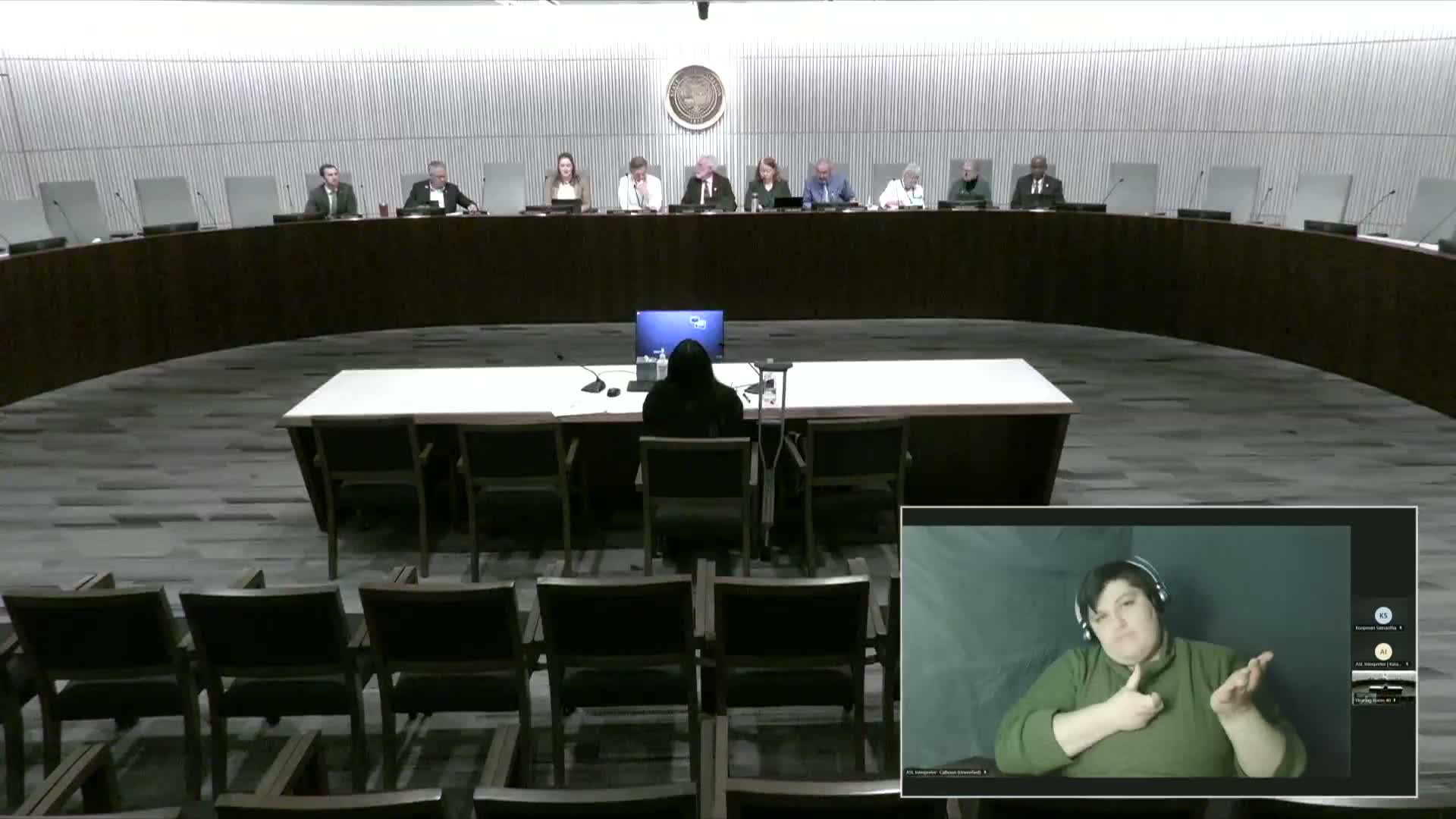
The Joint Committee on Conduct on Feb. 5 introduced two committee bills to amend Legislative Branch Personnel Rule 27 and heard an informational briefing from the legislative equity officer.
Boer Yang, the legislative equity officer, told the committee the proposed changes are intended to clarify the scope of Rule 27, strengthen confidentiality protections and standardize how investigations are handled. "Harassment and discrimination persists despite some of the most comprehensive civil rights legislation that has ever been passed," Yang said, arguing the rule changes are driven by a need to close procedural gaps and protect parties and witnesses.
Yang said the proposal would adopt a definition of "legislative business" to determine the rule's scope and noted that a majority of training participants supported covering conduct at the State Capitol and at field offices. On whether social media would be covered, Yang said it "could" be included under the proposed definition and recommended the committee explicitly call out social media to remove ambiguity.
The changes would create a consistent definition of hostile work environment across harassment categories and would remove the "severe or pervasive" legal standard borrowed from federal case law. Yang cited the 1986 U.S. Supreme Court decision Meritor Savings Bank v. Vinson and said that applying that high legal threshold in policy can prevent practical accountability. "When we borrow a legal standard into our policy, we are suggesting that that is the threshold that we are using here," Yang said, and added that multiple jurisdictions have eliminated the severe-or-pervasive test.
Yang described proposed process changes designed to treat complainants consistently: everyone would have access to confidential process counseling; when a formal written complaint is filed it would be served on a respondent immediately; investigative reports would be subject to attorney redaction; and alternative dispute resolution would be embedded in Rule 27 so parties could resolve matters without a public hearing if they choose. On confidentiality he said investigative reports and settlement agreements involving elected members could be released in redacted form, but the office seeks to limit broader publication to protect witnesses.
A significant procedural question the committee discussed was whether the legislative equity office should be permitted to open investigations when an impacted party will not or cannot participate. Yang said the draft allows investigations when there is documentation of a pattern of inappropriate behavior or when evidence is independent of the impacted party, and reported survey support for those approaches.
Committee members asked about survey methodology, participation and scope. Sen. Weber asked who was surveyed; Yang said the survey was conducted through mandatory Rule 27 trainings beginning in September 2025 and included lobbyists, staffers and members, though the transcript did not specify the exact respondent count. Yang said the union had been invited to weigh in multiple times but had declined to participate so far.
On procedure, a committee member moved to introduce LC 3-20 (dated Jan. 26, 2026) and LC 3-32 (dated Jan. 29, 2026) as committee bills. A roll call recorded multiple "Aye" votes including Representative Deal, Sen. Paterson, Sen. Weber, Co-Chair Kraft, Co-Chair Kazansky and Co-Chair Anderson; the motion passed and the measures were introduced. Staff said the plan is to drop the measures in the Senate as a senate concurrent resolution and a senate bill, have them first read next week and hold a public hearing next Thursday at 5 p.m.
The committee did not adopt final policy during the meeting; the introductions move the proposals to the public hearing stage where members of the public and outside groups can comment before the committee takes further action.