Get Full Government Meeting Transcripts, Videos, & Alerts Forever!
Get email alerts on the Inclusionary Zoning topic
No spam. Unsubscribe anytime.
Senate committee hears bill to recalibrate inclusionary zoning in Portland metro
Summary
Lawmakers and stakeholders told the Senate Housing and Development Committee that SB 15 21 would modernize inclusionary zoning in the Portland metro by requiring jurisdictions to fully offset developer cost impacts, lower thresholds outside Portland and require periodic recalibration to avoid stalling housing production.
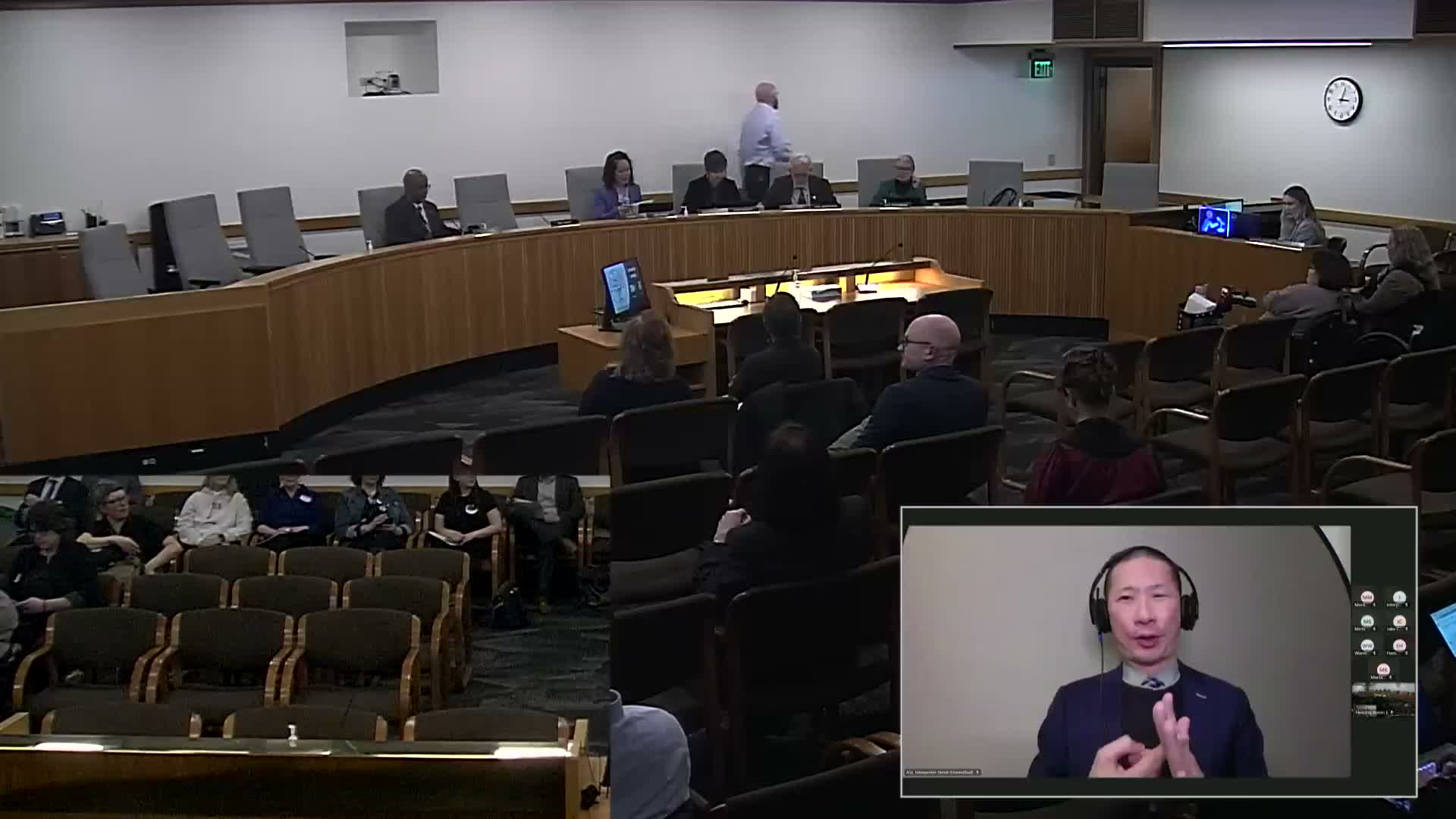
Sen. Pham opened a public hearing on Senate Bill 15 21 on Feb. 5, 2026, describing the measure as an effort to create "greater guardrails and more opportunities for flexibility for inclusionary zoning programs" after a decade of experience with Portland’s original policy.
Supporters told the Senate Housing and Development Committee that Portland’s initial, unfunded inclusionary zoning (IZ) program discouraged larger projects and reduced housing production. "Ten years later, I remain a champion of inclusionary zoning," Pham said, and added that unfunded mandates had prompted developers to propose buildings of 19 units or fewer to avoid the 20‑unit threshold. Sightline Institute’s Michael Anderson summarized SB 15 21’s core mechanics: the bill applies only in the five‑county Portland metropolitan statistical area, leaves IZ optional for jurisdictions, lowers the threshold outside the City of Portland (to 10 units), permits wider income‑target flexibility, requires methods and standards to calculate expected marginal loss, and delays operability (rental housing: 2028‑01‑01; all developments: 2029‑01‑01).
"The funding requirement is 100% of lost revenue," Anderson told the committee, outlining a requirement that jurisdictions identify offset packages — tax abatements, fee waivers, or other incentives — sufficient to make projects feasible. He also described a six‑year recalibration schedule for the studies that produce those calculations and noted forthcoming technical amendments, including one tying the duration of price controls to the term of any tax abatement used to fund a local IZ program.
Housing and housing‑advocacy groups largely supported the bill. Kevin Cronin of Housing Oregon called the measure an "improvement based on real world experience," noting that Portland’s program produced few affordable condos under its previous structure. Developers and industry groups expressed concerns about details: Zach Lindahl of Multifamily Northwest said his organization opposed the bill as drafted but expected a forthcoming amendment might change that position.
Witnesses described how SB 15 21 aims to prevent the program from "backfiring" by ensuring local governments fully account for the financial impacts of mandatory affordable units and by offering jurisdictions flexibility to design programs that fit local markets. Supporters and the sponsor emphasized the bill is intended to preserve housing production while increasing affordability.
The committee heard several technical questions from members — for example, whether cities would have to subsidize rents for a fixed number of years — and Anderson replied the specifics (package components and durations) are for local governments to decide, using the bill’s methods to make the sums equivalent. The hearing closed after a series of invited and public testimonies; no committee action was taken on SB 15 21 at the session.
Next steps: The bill remains under committee consideration; the sponsor warned that two technical amendments were expected in the days following the hearing.