Get Full Government Meeting Transcripts, Videos, & Alerts Forever!
Get email alerts on the Child Welfare topic
No spam. Unsubscribe anytime.
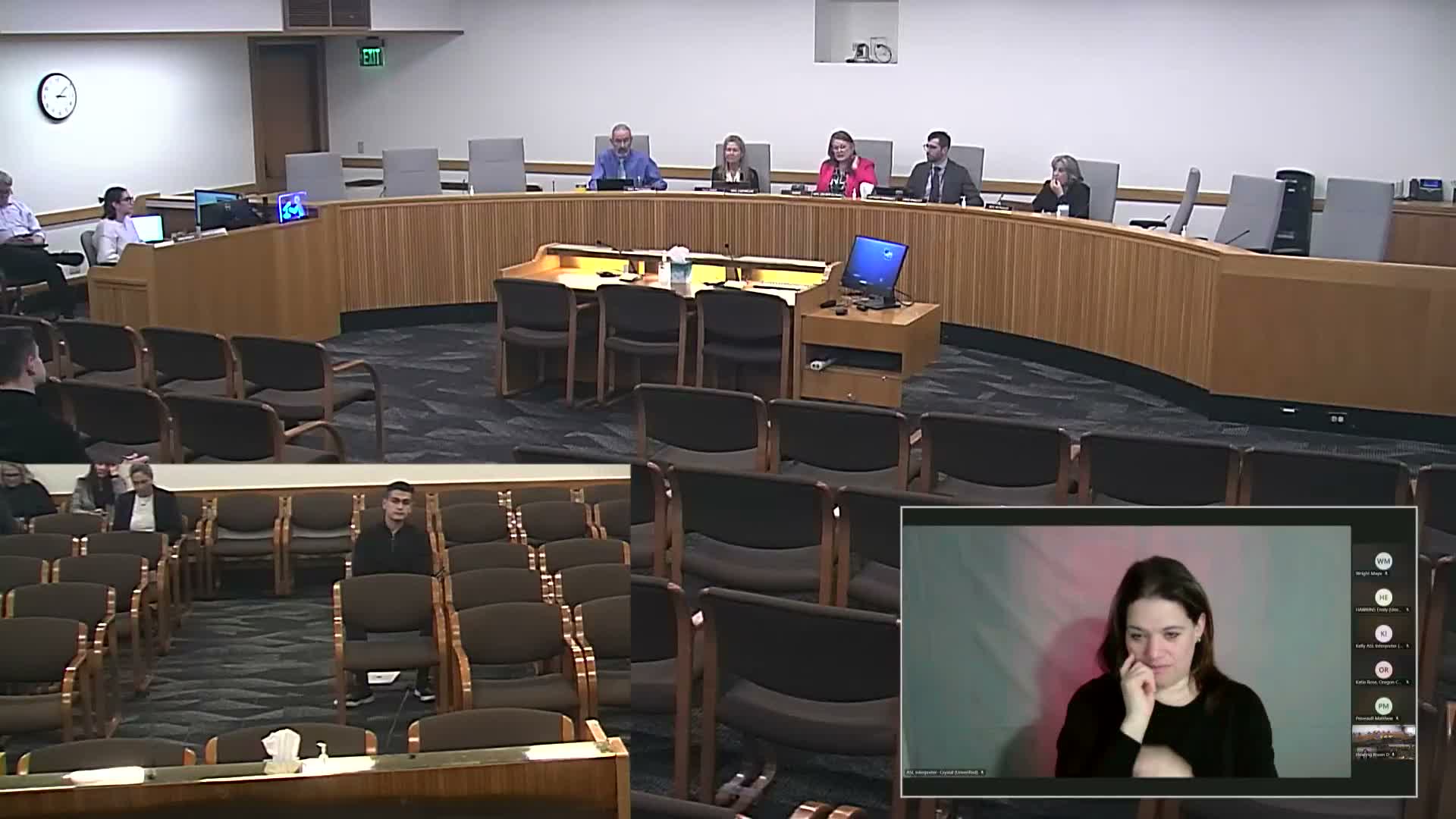
Senate committee hears SB 15‑32; tribal office says ICWA requires quick, not delayed, placements
Summary
At a Feb. 5 public hearing, testimony on SB 15‑32 focused on removing administrative barriers so the Oregon Department of Human Services can follow tribal placement preferences under ICWA, correcting 'immediate jeopardy' language, and aligning rate models for developmental disability services.
The Senate Committee on Human Services on Feb. 5 heard public testimony on Senate Bill 15‑32, an omnibus measure that would modify the Department of Human Services' authority over residential and long‑term care facilities, developmental disability services and children in care and declares an emergency effective on passage.
Emily Hawkins Quentin of the Office of Tribal Affairs at the Oregon Department of Human Services told the committee that the Indian Child Welfare Act and the Oregon Indian Child Welfare Act "establish clear placement preferences in child welfare proceedings" and that those laws "prioritize relatives, tribal families, and tribally approved homes or facilities, even when those placements are located out of state." She said proposals that would require advance court approval or waiting periods "would create dangerous delays and could prevent children from accessing life saving care." Quentin added that ODHS is already required to notify the court of all placement changes and cited state statute and administrative rules governing notice to courts, parents and tribes.
Katie Rose, executive director of Oregon Community Brokerages, testified in support of the bill's developmental disability provisions. "We're an association of the 14 support service brokerages that provide case management services to 7,700 adults with intellectual and developmental disabilities all throughout the state," she said, urging alignment of rate models so household providers are paid consistently for services they provide.
Committee members and staff discussed a late amendment to correct 'immediate jeopardy' language and to incorporate suggested language from the Oregon Judicial Department. The chair said section 9 — language that had allowed DHS to place a child in an eating‑disorder clinic without first licensing the facility — was removed after health authority concerns. Committee members asked ODHS to coordinate further with the judicial department and tribal representatives before finalizing amendment language.
The chair also relayed a case update that family representatives said a child would be discharged and placed with them no later than April 15, and then closed the public hearing on SB 15‑32.
What’s next: The committee moved SB 15‑32 off the public‑hearing phase and is preparing a combined amendment for committee consideration; work‑session materials and draft amendments were posted for the upcoming Tuesday meeting.