Get Full Government Meeting Transcripts, Videos, & Alerts Forever!
Get email alerts on the Case Management Project topic
No spam. Unsubscribe anytime.
BOLI outlines case‑management replacement plan, RFI returns and cost range; subcommittee acknowledges report
Summary
BOLI told the subcommittee it received 27 RFI responses for a case-management replacement, is preparing stage-gate 2 artifacts for an RFP, budgeted about $2.15M in phase funding and expects implementation by 2027; the committee acknowledged the report and asked for oversight updates.
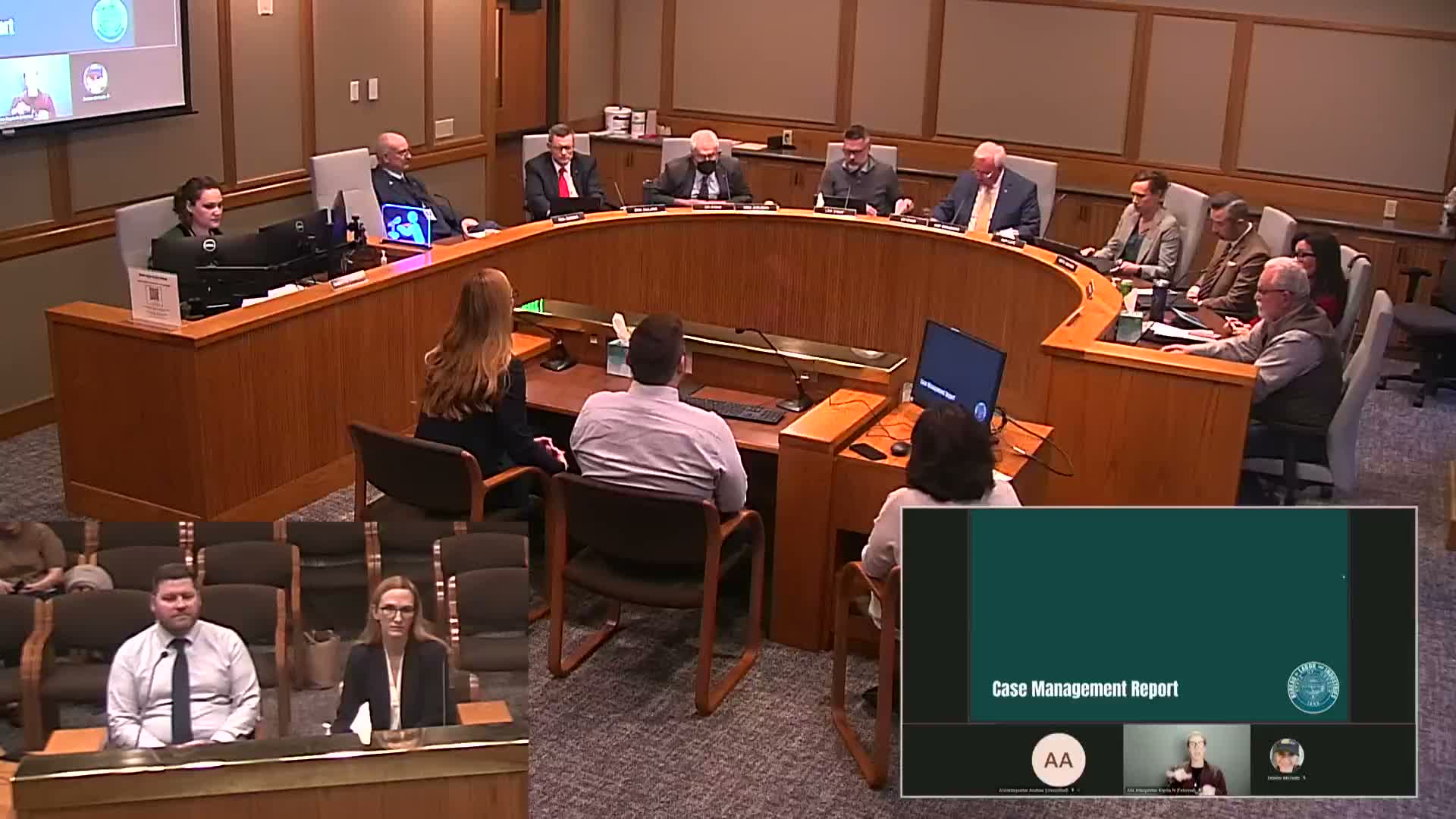
The Transportation Economic Development Subcommittee received a status report on the Bureau of Labor and Industries' project to replace its aging case management system and acknowledged the agency's update.
Alex Michel, BOLI’s Business Operations Administrator, said the current system is more than 20 years old and increasingly difficult to maintain. BOLI reported receiving 27 responses to a request for information and identified roughly 14 potential vendors whose capabilities and price points were in the agency’s range.
"We received 27 responses. Of those, 14 were in the ballpark of what we wanted," Michel said, summarizing vendor interest. The 2025 legislature appropriated about $2.15 million and three positions for phase two of the effort (HB 5015 funding), Michel told the committee. The project team has obtained stage-gate 1 endorsement, is preparing stage-gate 2 artifacts and is coordinating with DAS IT procurement with a target RFP release before March and vendor selection and implementation work toward the agency’s 2027 completion goal.
Michel described wide variation in vendor cost estimates: some solutions produced license estimates in the low hundreds of thousands per year and others in the multi-million-dollar range. The agency currently budgets roughly $1 million this biennium for software/vendor costs, including $250,000 for an independent quality management service, and estimated ongoing licensing closer to $200,000 per year as a mid-range figure.
On staffing, BOLI is hiring a small implementation team and expects two permanent IT positions to remain after the project ends and one limited-duration change-management position to sunset. Commissioner Christina Stevenson said the agency currently operates with a three-person IT team and that senior leadership and program staff have been heavily involved in implementation because the agency lacks dedicated capacity.
The Legislative Fiscal Office and DAS Chief Financial Office recommended the subcommittee acknowledge receipt of the project status report. An unidentified committee member moved to accept that recommendation and the motion carried without recorded objection.
BOLI will proceed toward issuing an RFP and continue stage-gate work with third-party quality review and legislative oversight as the procurement and implementation phases advance.