Get Full Government Meeting Transcripts, Videos, & Alerts Forever!
Get email alerts on the Insurance Policy topic
No spam. Unsubscribe anytime.
Heated testimony for and against expanding UTPA to insurers at House hearing
Summary
Supporters including Rep. April Dobson and Attorney General Dan Rayfield urged the committee to bring insurers under the Unlawful Trade Practices Act to give consumers private enforcement; industry groups warned it would drive litigation and raise premiums. The committee took extensive public testimony but did not vote.
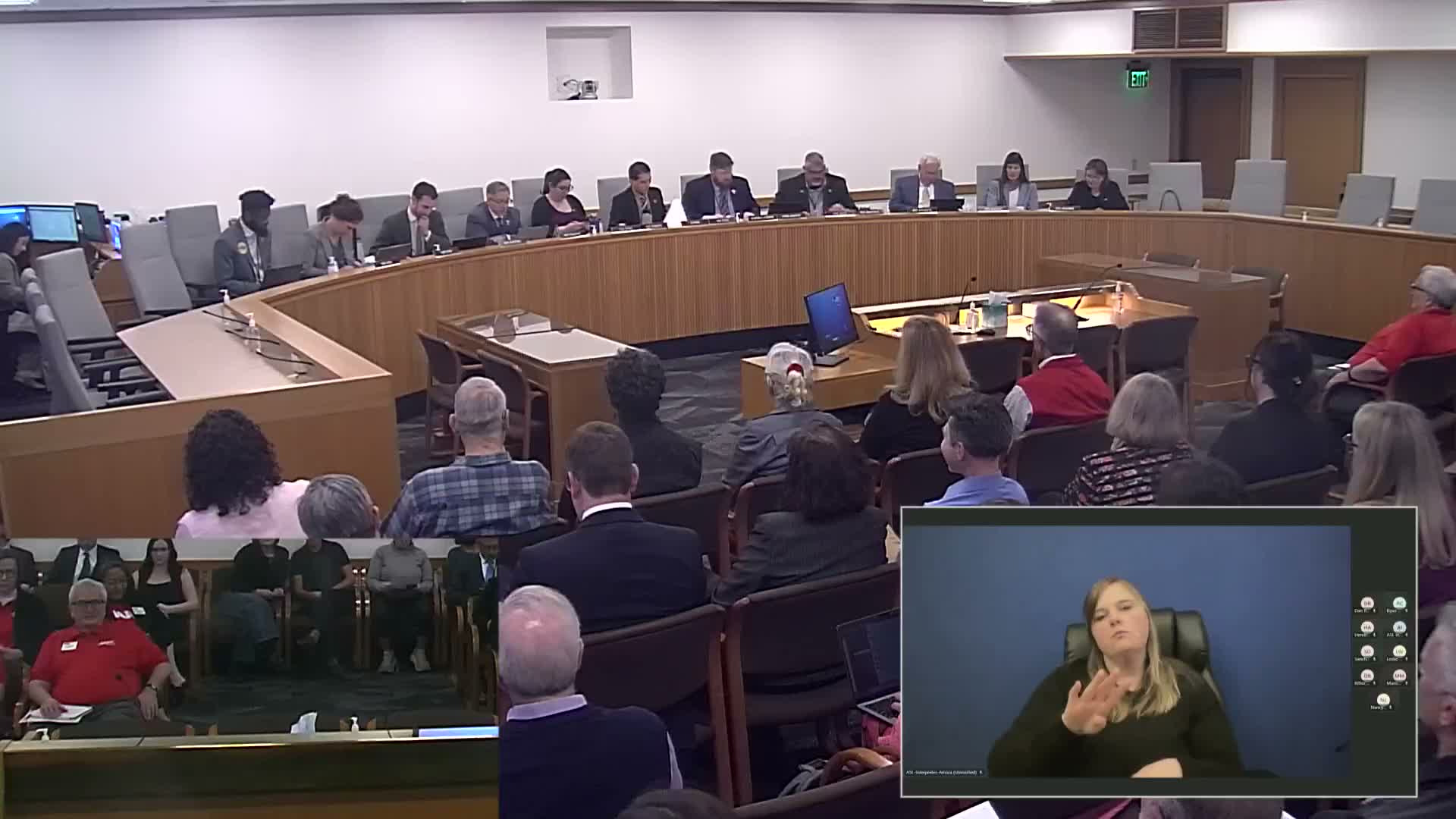
The House Committee on Commerce and Consumer Protection heard hours of testimony Feb. 5 on HB 4,098, a bill that would subject certain insurance-related practices to Oregon's Unlawful Trade Practices Act (UTPA).
Sponsor Rep. April Dobson (House District 31) opened the hearing and framed HB 4,098 as a consumer-protection measure that would put insurance on the same enforcement footing as many other industries. "HB 4,098 would give insurance consumers the same access to justice that already exists in 33 states," Dobson said, adding that Oregon policyholders receive about 62 cents back in homeowners insurance claims for every dollar in premiums compared with 71 cents nationally.
Oregon Attorney General Dan Rayfield, appearing online, testified in support and told the committee his office receives a steady stream of insurance complaints. "From 2020 to present, it was 738 complaints come into our office," he said, and argued the Department of Justice needs the statutory tools to hold insurers accountable.
Proponents — including consumer-advocacy groups, auto repair shop owners and lawyers representing insureds — described individual cases of delayed payments, aggressive lowball offers and prolonged disputes. Mike Lieb, CEO of Precision Body and Paint, said a customer waited 27 months to obtain a payout and wound up with inadequate compensation. Daisy Bedoya Sotelo of the Oregon Health Equity Alliance framed the issue as one of health equity, saying delays and denials can cascade into housing instability and worse outcomes for vulnerable communities.
Industry witnesses pushed back. Brandon Vick of the National Association of Mutual Insurance Companies and Denny Ritter of the American Property Casualty Insurance Association urged rejection, saying Oregon already has a robust administrative regulatory system through the Division of Financial Regulation (DFR) and the Department of Consumer and Business Services (DCBS). Kenton Bryan of the Northwest Insurance Council said HB 4,098 reaches beyond Washington-style first-party bad-faith laws by also allowing third-party suits and could destabilize markets, citing California's experience with broad third-party exposure.
Testimony focused on two competing concerns: whether private UTPA enforcement is necessary to correct insurer misconduct and give consumers meaningful remedies, and whether expanding private litigation would significantly increase claims costs and insurance premiums. Industry witnesses pointed to studies and past state experiences that, in their view, show litigation can produce large rate impacts; proponents said regulatory remedies often leave consumers without practical relief and that private enforcement is necessary to change insurer behavior.
Committee members asked technical questions about carve-outs in the bill (for example, medical malpractice and workers' compensation), scope regarding ERISA-regulated plans, and whether narrower statutory changes or reliance on DFR would meet policy goals. Industry witnesses offered to provide a state-by-state list of approaches and noted that among states that link claims-settlement statutes to their consumer protection acts, only a subset allow private rights of action and very few allow both first- and third-party suits without limits.
No committee action was taken; the chair closed the public hearing after noting the committee had limited time and asked those not heard to file written testimony.
What to watch: the committee may request technical fixes, data on state experiences, or amendments addressing notice-and-cure or limitations on third-party suits before the bill is scheduled for a work session or vote.