Get Full Government Meeting Transcripts, Videos, & Alerts Forever!
Get email alerts on the Child Support topic
No spam. Unsubscribe anytime.
Committee advances HB 522 to clarify low-income support rules and parentage in DCFS placements
Summary
HB 522 clarifies how low-income child-support tables apply when children are placed with relatives by juvenile court or DCFS and establishes a process for DNA-driven changes when a married but nonbiological parent disputes support obligations; the committee voted 6–4 to send it to the House.
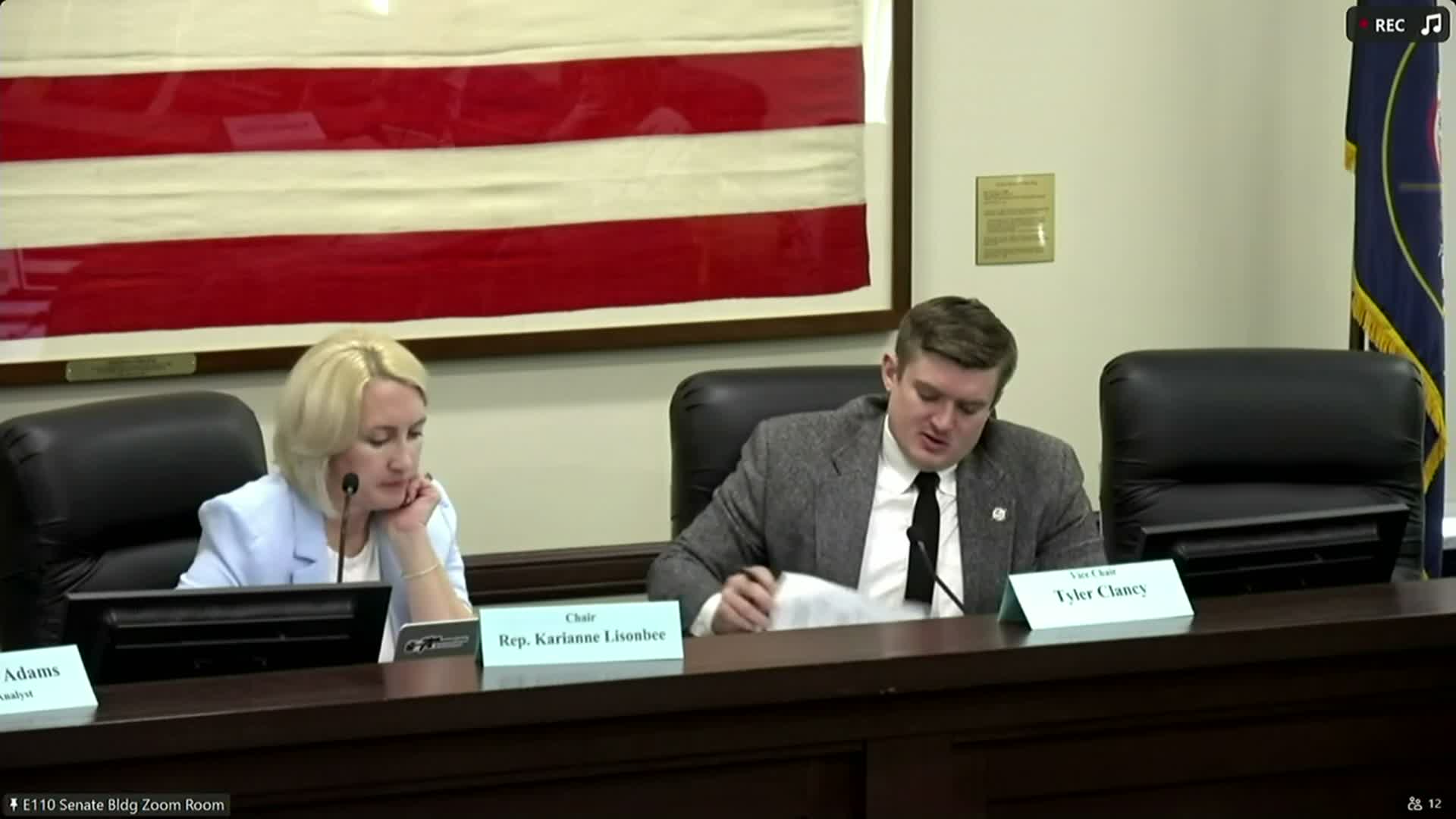
Representative Watkins presented HB 522 to the House Judiciary Committee on Feb. 23, describing two distinct changes: (1) clarifying how child-support obligations are set when a child is placed with relatives by juvenile court or the Division of Child and Family Services (DCFS), and (2) creating a process to relieve a married spouse from child-support obligations if DNA testing shows the child is not biologically theirs and a court finds reassignment appropriate.
The sponsor framed the bill as clarifying prior legislation and practice, noting it responds to casework in which parents and caseworkers were unsure about low-income thresholds and when support should be established. During public comment, Maria Sharon (who had spoken earlier on family-law litigation abuse) cautioned that self-employed payers can claim poverty; the sponsor and chair clarified HB 522 applies to DCFS/juvenile placements rather than ordinary district-court divorce matters.
The committee moved the bill to the full House by roll-call vote; the clerk read votes and the chair announced the motion passed 6 to 4 with Representatives Acton, Auxier, Hawkins, and Gracious recorded as voting no. The committee discussion emphasized the statute’s narrower scope (DCFS placements) and that it is not intended to change district-court child-support practices unrelated to juvenile custody placements.