Get Full Government Meeting Transcripts, Videos, & Alerts Forever!
Get email alerts on the Behavioral Health Workforce topic
No spam. Unsubscribe anytime.
Oregon committee adopts amendment and advances bachelor's-level behavioral health license to the floor
Summary
The Senate Committee on Early Childhood and Behavioral Health adopted a dash-1 amendment clarifying educational requirements and voted to send SB 15 47 to the Senate floor. Supporters said the new license would expand early-intervention capacity through bachelor-level providers with more than 700 hours of applied training under Board of Psychology oversight.
A Senate committee on Thursday adopted an amendment and voted to advance Senate Bill 15 47, a measure that would create a state license for a new behavioral health and wellness practitioner intended to expand access to prevention-oriented services for children and families.
Proponents, including Dr. Katie McLaughlin, executive director of the Ballmer Institute for Children’s Behavioral Health at the University of Oregon, told the Senate Committee on Early Childhood and Behavioral Health the credential would create a clear pathway for bachelor’s-degree graduates who complete more than 700 hours of applied practical training to join care teams in schools, primary-care settings and community organizations. McLaughlin said the role is explicitly limited: licensed behavioral health and wellness practitioners would not be authorized to diagnose mental disorders, deliver psychotherapy, prescribe or manage medications, or practice independently; they would remain supervised by master's- or doctoral-level licensed providers.
"This recommendation reflects a clear need for our state to have rigorously trained, bachelor's-level providers who can engage in prevention-oriented services to fill critical gaps in our system," McLaughlin said during her testimony.
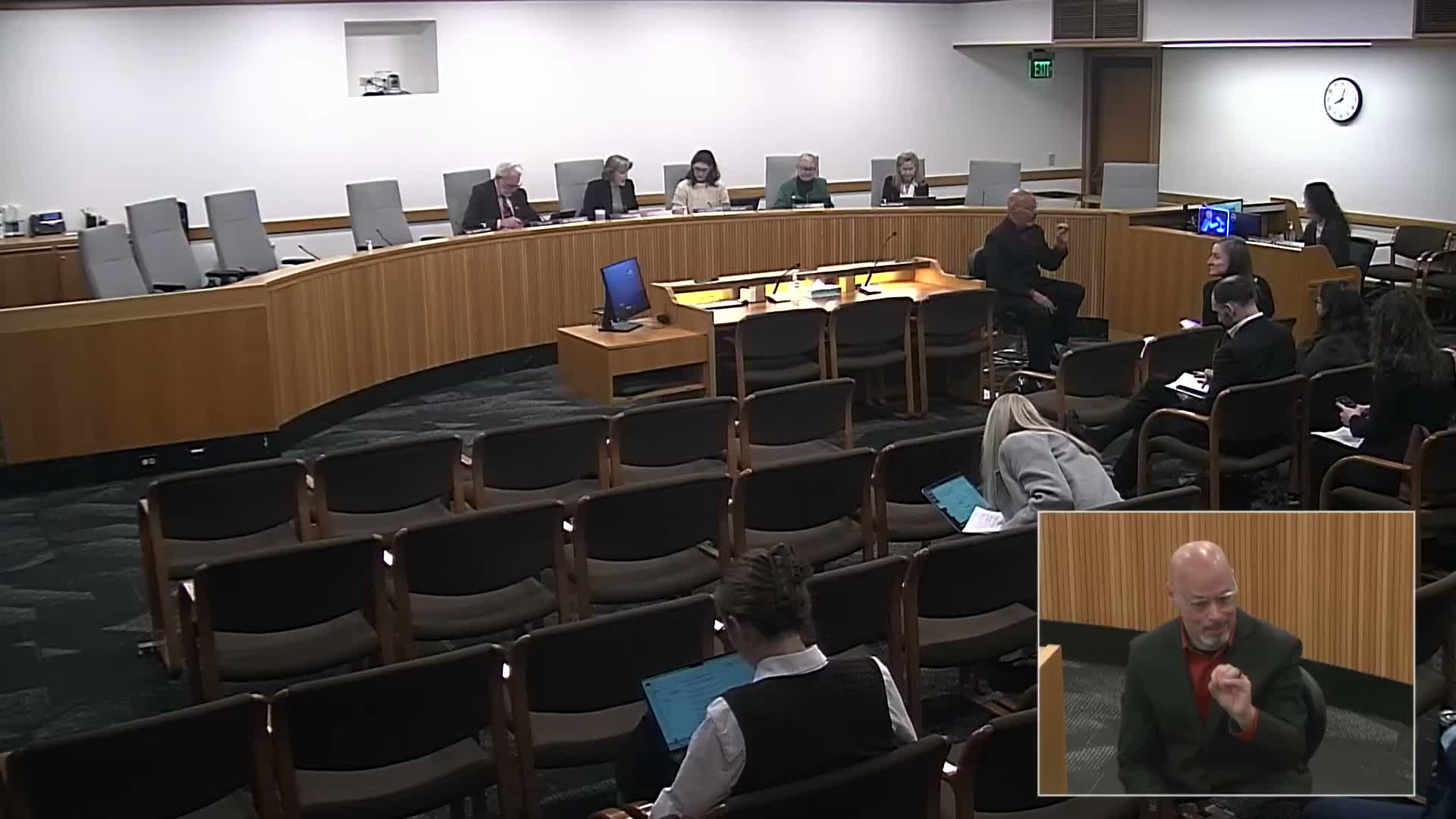
The committee adopted a dash-1 amendment dated 02/04/2026 that changes a reference from "certification" to "educational" program to clarify applicants must complete an educational program rather than a short certificate. The amendment drew no recorded opposition during the work session and was adopted by roll-call vote. The committee then voted to refer SB 15 47, as amended, to the Senate floor with a "do pass" recommendation; Chair Reynolds said she will carry the bill on the Senate floor.
Supporters emphasized oversight and a narrow scope of practice. Dr. Robin Henderson, chief executive of behavioral health for Providence Oregon and legislative chair of the Oregon Psychological Association, said the Board of Psychology will oversee the credential and has helped limit the scope so it does not supplant psychologist responsibilities. Nick Gallo, CEO of Morrison Child and Family Services, said the credentialed practitioners could be integrated into team-based care and help address workforce shortages that lead to staff burnout and service gaps.
Senators questioned supervision details, billing and career pathways. McLaughlin said the statute intentionally leaves supervision frequency and specifics to the Board of Psychology to define by rule, and that licensure is a necessary first step before working out billing codes and reimbursement with Oregon Health Authority and managed-care organizations. She described the role as a workforce ladder: many graduates plan to work for a time and later pursue graduate training.
Fiscal materials submitted to the committee show a minimal fiscal impact and no revenue impact as amended. The bill’s supporters said the mental health regulatory agency and the Board of Psychology indicated implementation costs can be absorbed.
The committee recorded aye votes during both the amendment adoption and the recommendation to the floor; the clerk called members and the motions passed by roll call. The bill now proceeds to the full Senate for further consideration.