Get Full Government Meeting Transcripts, Videos, & Alerts Forever!
Get email alerts on the Primary Reform topic
No spam. Unsubscribe anytime.
Lawmakers and advocates spar over HJR 201 to open Oregon primaries; supporters cite enfranchisement, opponents warn of harms to minor parties
Summary
Supporters urged HJR 201 to let unaffiliated voters vote in primary elections and create a single primary ballot with top-two advancement; opposition from the Democratic Party and the Libertarian Party warned the proposal could narrow choices, advantage well-funded candidates, and disrupt minor-party nomination methods.
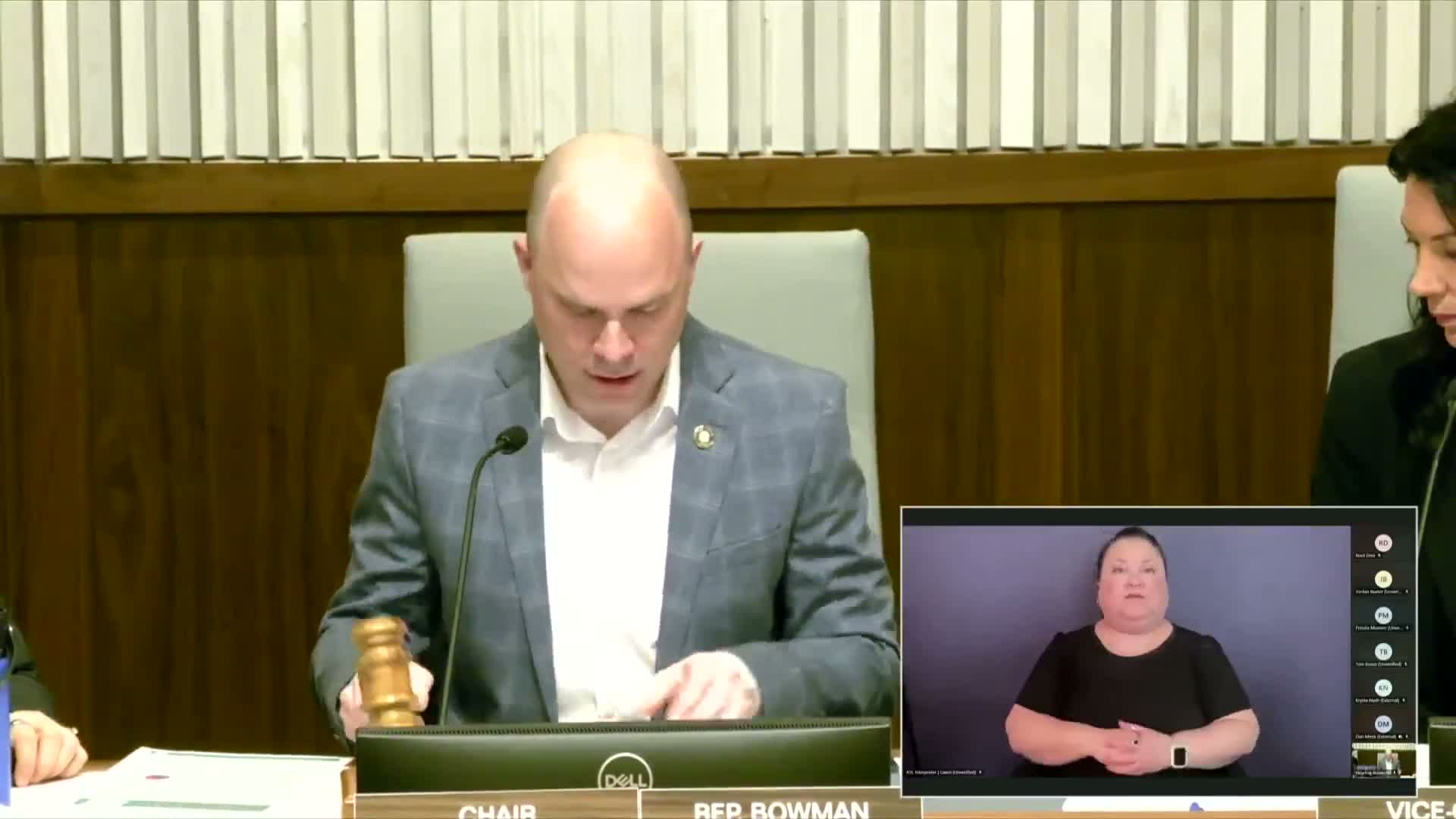
The House Rules Committee heard more than two hours of testimony on House Joint Resolution 201 on Feb. 5, 2026, a proposed constitutional amendment to open Oregon's primary elections to registered electors regardless of party affiliation and to list most candidates on a single primary ballot.
Representative Cyrus Javidy, sponsor of HJR 201, framed the measure as a response to the state's growing share of nonaffiliated voters, which he said now represents about 37% of the electorate, and argued closed primaries exclude many voters from deciding the most consequential contests. "An Oregon primary will fix that," Javidy said, describing a model in which all candidates appear on one ballot and the top two advance.
Supporters from a cross-section of groups—including the Voter Fairness Coalition, Veterans for All Voters and business groups—argued the change would enfranchise more than 1,000,000 unaffiliated Oregonians, reduce polarization and increase turnout in primary contests. "One of these principles," testified Lainie Block Wilker (Voter Fairness Coalition), "is that all voters should be able to vote in taxpayer-funded primary elections that decide our state's most important representatives." Jordan Baxter of Veterans for All Voters said, "1,100,000 Oregonians … are locked out of participating in them."
Opponents included Candy Emmons of the Democratic Party of Oregon and Thomas Bussey of the Libertarian Party of Oregon. Emmons argued top-two-style systems can narrow choices and advantage well-funded candidates, and said such structural changes would reduce party accountability and candidate development. Bussey said, as written, the resolution could impede minor parties' ability to nominate by convention and urged rejection unless amended.
Several committee members pressed sponsors on mechanics: why top-two, how many candidates should advance, ballot-labeling and opt-out provisions for parties. Testimony from election-law experts and business groups emphasized design options and implementation details could be handled in enabling legislation if the amendment established broad principles. Rick Metzger, testifying for himself, uploaded an amendment that would set broad constitutional principles and leave implementation details (such as how many candidates advance) to the legislature.
The record shows technical concerns and competing trade-offs: proponents stressed opt-out and signature paths for candidates and said the proposal is a "top-two plus" design intended to preserve minor-party access; opponents warned of vote-splitting and "party label hijacking" in other states' systems. Dan Meek, an election-law attorney, told the committee HJR 201 allows the legislature to change how many candidates advance and preserves existing party nomination options if parties opt out and run their own nominating processes.
What happens next: The committee closed the hearing without a vote; sponsors urged further work and some said they would consider amendments to clarify opt-outs and ballot mechanics. County clerks joined the hearing and committee staff said technical follow-up could continue with election officials.
Note on source claims: witnesses and advocates offered numerical estimates and cited studies during testimony; those figures are reported as attributed claims in this article and should be verified against official voter registration and turnout data for independent confirmation.