Get Full Government Meeting Transcripts, Videos, & Alerts Forever!
Get email alerts on the Consumer Protection Interest Rates topic
No spam. Unsubscribe anytime.
House committee advances bill aiming to curb out‑of‑state lenders’ interest‑rate practices
Summary
The House Committee on Commerce and Consumer Protection voted to send HB 4,116 to the full House with a due‑pass recommendation after rejecting a dash‑1 amendment that would have turned the measure into a study. Sponsors said the bill enforces Oregon’s 36% cap; opponents warned it could reduce access to credit for people with limited options.
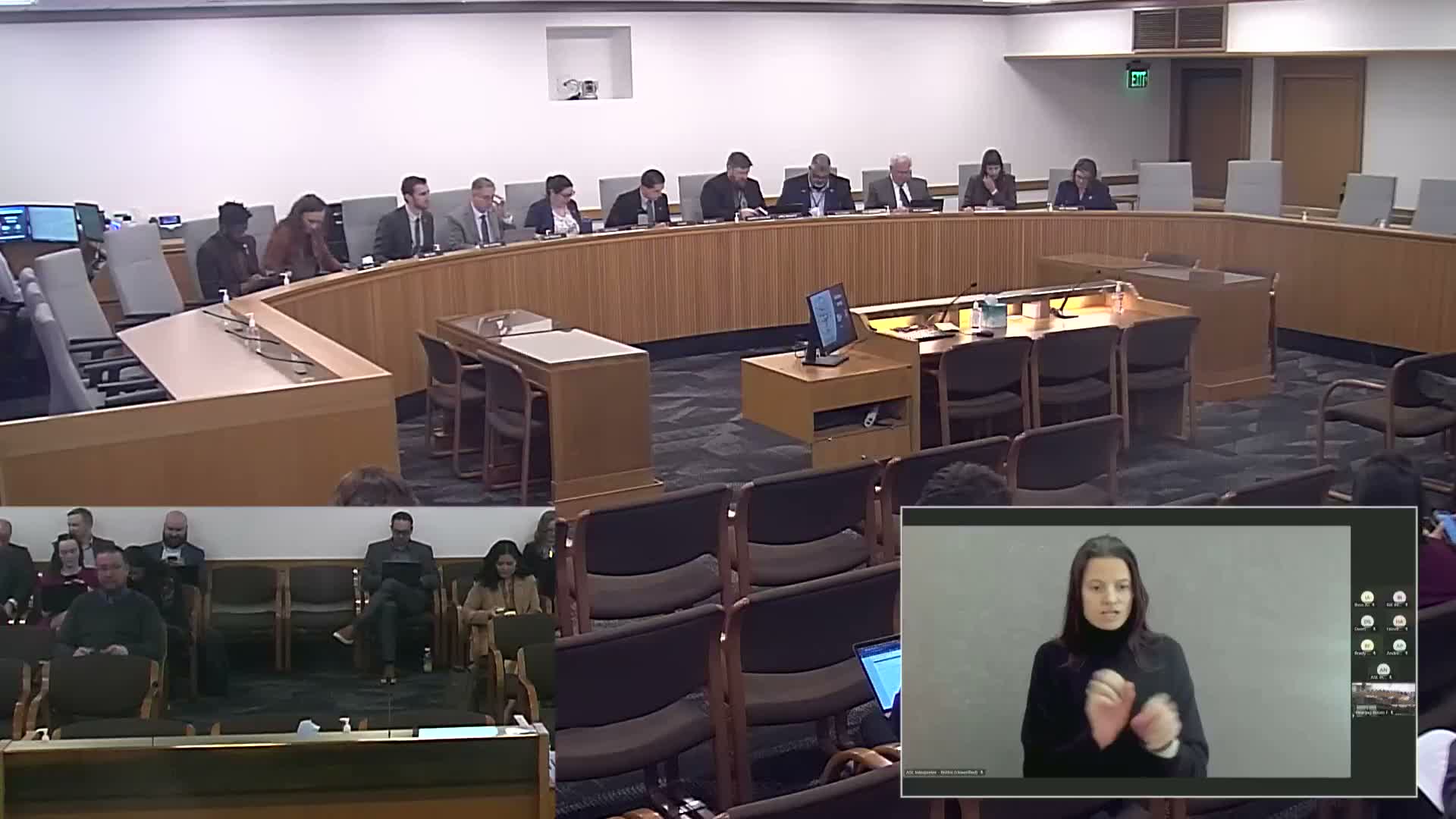
House Committee on Commerce and Consumer Protection members voted to send House Bill 4,116 to the House floor with a due‑pass recommendation after debating an amendment and two rounds of recorded votes.
The bill, as summarized for the committee by staff, would prevent financial institutions chartered in other states from relying on their home‑state laws to set allowable interest rates for consumer finance loans in Oregon and would make certain federal Depository Institutions Deregulation and Monetary Control Act amendments inapplicable to consumer loans made here. Staff said the measure takes effect 90 days after adjournment sine die.
Vice Chair Osborne introduced a dash‑1 amendment to convert the bill into a study or task force that would bring lenders and other stakeholders to the table before imposing new restrictions. "I think there needs to be more discussion on this bill before we pass it," Osborne said, urging a work‑study approach that would preserve borrowing options while seeking consensus.
Bill sponsor Chair Sosa, who led the floor presentation, said the amendment would not fix what he described as a core compliance problem. "We have said as a state that 36% is the maximum you can charge," Sosa said. "If there are folks who are going above that and we have the ability to put a stop to it, then we should do so and hold everybody to the same standard."
The committee rejected the dash‑1 amendment in a roll‑call vote (recorded in the hearing): Representative Kate — Yes; Representative Chotzin — No; Representative Gomberg — No; Representative Roland — Yes; Representative Walters — No; Representative Wise — No; Vice Chair Osborne — Yes; Chair Sosa — No. The chair announced the motion failed.
Vice Chair Traichi then moved to send HB 4,116 to the floor with a due‑pass recommendation. Members exchanged views: supporters said the bill would protect Oregon consumers from loans that exceed the state’s 36% cap, while skeptics warned that stricter rules could prompt some lenders to leave Oregon and reduce access for borrowers with limited credit.
The committee recorded its final vote and the chair announced the motion passed; the sponsor will carry the bill to the House floor and a minority report will be filed.
The bill now moves to the House calendar. Committee members who opposed the measure said they will continue to monitor implementation and consider amendments addressing practical access concerns.
Ending: The committee closed the work session and proceeded to a public hearing on other bills on its agenda.