Get Full Government Meeting Transcripts, Videos, & Alerts Forever!
Get email alerts on the HB 4059 topic
No spam. Unsubscribe anytime.
Committee hears data and testimony on HB 4059 as advocates debate narrowing 'threat of harm' and raising substantiation standard
Summary
At a resumed public hearing on House Bill 4059, committee staff, ODHS and national researchers presented data on how redefining 'threat of harm' and raising the standard for 'founded' findings would affect investigations; advocates and survivors offered competing testimony about trauma, bias and service access.
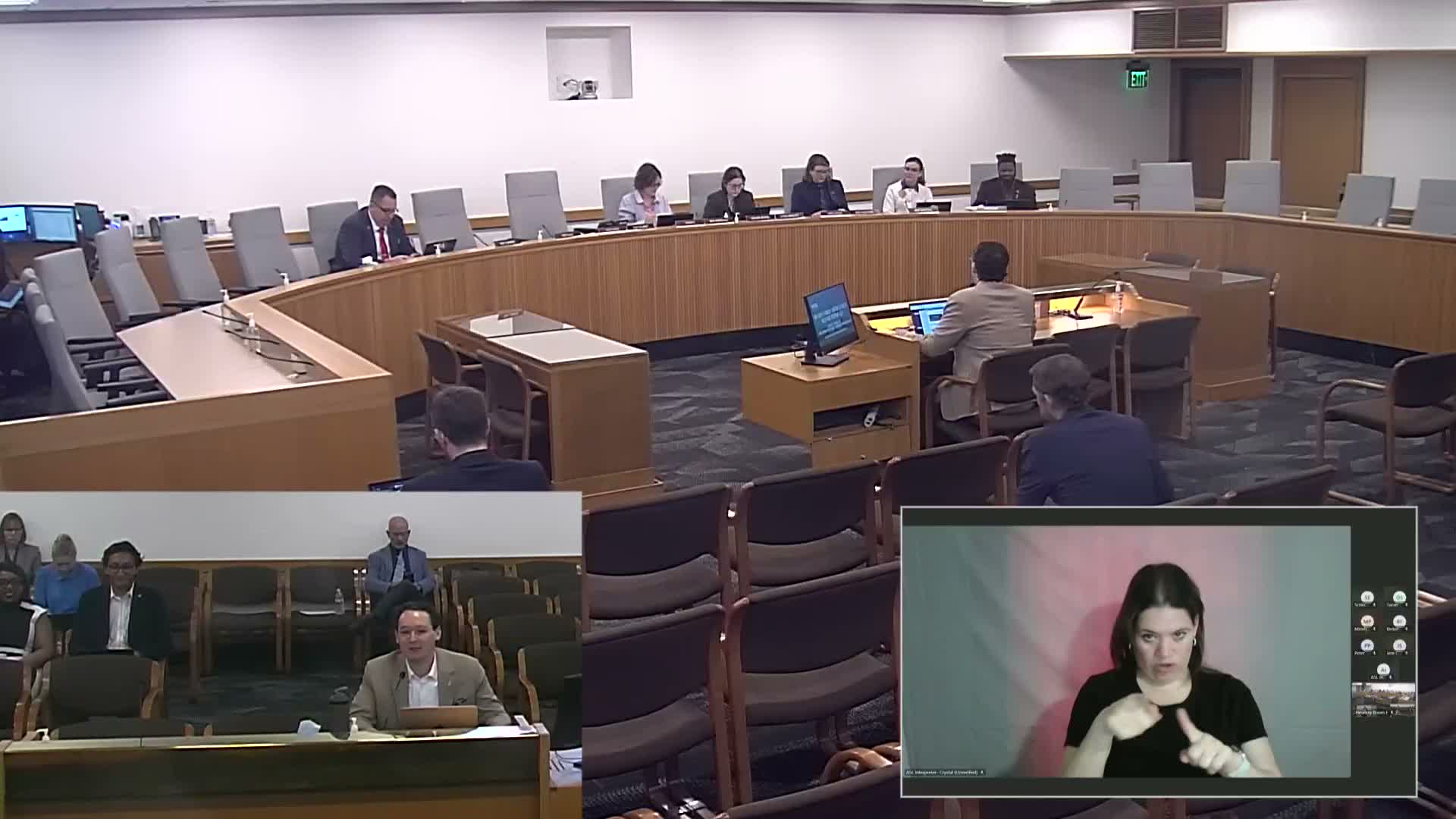
The House Committee on Early Childhood and Human Services resumed a public hearing on House Bill 4059 on Feb. 10, hearing a report‑back from a work group, ODHS data reviews and dozens of witnesses about proposed changes to the "threat of harm" definition and the evidentiary standard for founded child‑abuse determinations.
Daniel Shane Mulkey, who facilitated the committee’s interim work group, told members that Oregon has higher referral and substantiation rates than national averages — roughly 100 reports per 1,000 children in Oregon compared with about 70 nationally, and a substantiation rate of about 21.5% versus a national average near 16% — and that many CPS assessments are overdue. Mulkey said the work group narrowed the controversial "threatened harm" category and recommended aligning the statutory language with an existing definition of "severe" harm in chapter 419B; the dash‑2 removes the explicit word "imminent" and instead uses language that harm be "reasonably likely to occur in the near future." The dash‑2 also pulls grooming‑related allegations out of the broader threatened‑harm category and adds a separate statutory category for a child who witnesses domestic violence (citing ORS 107.705) so that those cases are more precisely categorized.
ODHS Deputy Director Molly Miller presented two agency reviews. First, ODHS sampled 273 screening reports from 19,852 assigned reports in 2025 that included a threat‑of‑harm allegation and found that roughly 60–64% of that sample would still be assigned under the proposed definition change while about 36% were threat‑of‑harm‑only cases that would not be assigned for investigation under the narrower language. ODHS then examined a statistically reliable sample of founded dispositions (about 277 reviewed) and reported that about 81% of dispositions meeting the current "reasonable cause to believe" standard also met a preponderance‑of‑the‑evidence standard; roughly 19% of founded dispositions in the sample would not meet the higher standard, which ODHS projected could translate to an estimated ~13,700 fewer founded dispositions if applied across 2025 volumes. Miller emphasized that changing the dispositional legal threshold affects whether reports are labeled "founded," but does not change how child safety (protective interventions) is determined.
National researchers also weighed in. Peter Pecora of KC Family Programs summarized research showing children generally have better outcomes when raised with family and urged that removal be used only when an imminent, serious risk is present; he cautioned that broad definitions can create an "overly wide front door" to child‑welfare involvement.
Public testimony reflected a deep split. Advocates for survivors and civil‑rights groups supported the bill’s aims to reduce unnecessary investigations and to prevent survivors of domestic violence from being labeled perpetrators. "Oregon's vague and subjective definition of threat of harm results in CPS assessments for families in which there is no safety concern," said Maggie Carlson of Youth Rights and Justice. Desiree Massey, who said she has been investigated more than 10 times and briefly lost her job after two founded findings, described the personal toll of repeated investigations and urged lawmakers to pass the bill.
Opponents — including disability advocates, child‑abuse centers and some prosecutors — warned that narrowing the standard or raising the evidentiary threshold could miss early warning signs and disadvantage children with communication challenges. "For many children with disabilities, that is a serious concern," said Mindy Parker, a parent and community advocate, adding that behavior can be the only signal of harm for some children.
Other commenters raised technical and statutory questions. The Oregon District Attorneys Association asked for drafting clarifications and cautioned that the phrase "reasonably likely to occur in the near future" has no clear statutory precedent in Oregon case law. Oregon Child Abuse Solutions (OCAS) voiced concern that a strict "witnessing only" standard could screen out important domestic‑violence‑exposure cases; the dash‑2's authors have said the language is intended to keep investigations focused on the alleged batterer.
The committee closed the public hearing without taking a final vote on HB 4059 and adjourned. Members and staff indicated follow‑up work and continued stakeholder discussions would continue as the bill moves forward through the legislative process.