Get Full Government Meeting Transcripts, Videos, & Alerts Forever!
Get email alerts on the Administrative Rulemaking topic
No spam. Unsubscribe anytime.
House committee hears bill to set minimum 28‑day effective date for rules that change compliance obligations
Summary
A bill requiring specified state agencies to set consistent rule effective dates and post rule contacts drew support from business groups who said small businesses need more time to comply; Legislative Counsel said courts can invalidate rules adopted without compliance and temporary rules can still be used for short periods.
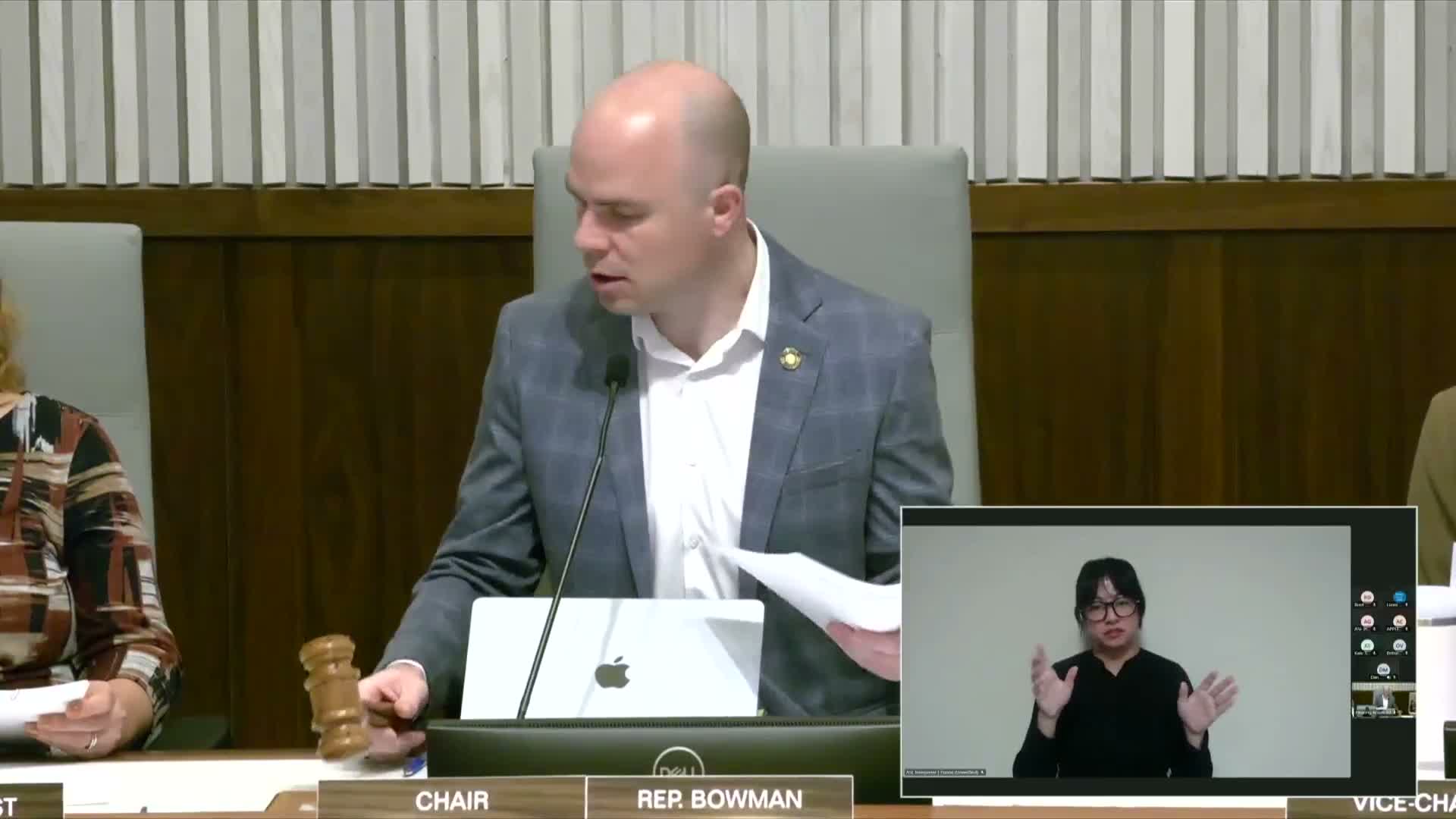
Representative Ben Bowman, chair of the House Committee on Rules, opened a public hearing on House Bill 4,021, which would require several state agencies to use specified effective dates for rules and provide more advance notice to regulated entities.
"Agencies have different standards for rule implementation across the enterprise, but regulated entities...deserve some basic expectations of consistency," Bowman said, describing the bill as part of a broader effort to speed permitting and improve implementation.
Melissa from legislative staff summarized the bill's provisions: it would require the Department of Environmental Quality, Department of Transportation, Department of State Lands, Department of Geology and Mineral Industries and the Department of Energy to provide rule notices a specified number of days prior to filing and, per a -2 amendment posted on OLIS, would delay the effective date for permanent rules that create or modify compliance obligations to no earlier than 28 days after filing with the Secretary of State.
Duke Shepherd, senior policy director at Oregon Business & Industry, said regulated entities—especially small businesses—need more time to plan for complex regulatory changes. He cited the Climate Protection Program final rule as an example where the final rule was available only about 10 days before adoption, leaving little time to prepare.
Representative Kim Wallen pressed whether the bill specifies an enforcement mechanism to ensure rules do not take effect immediately. Marissa James, chief deputy legislative counsel, later explained that any person may challenge a rule's validity under ORS 183.400 when agencies fail to comply with rulemaking procedures and that temporary (emergency) rules may be adopted without full compliance but only last 180 days.
The hearing closed with committee members expressing interest in the Legislative Counsel's view of existing practice; no formal action was taken at the hearing. The committee recessed and later moved on to other bills on the agenda.