Get Full Government Meeting Transcripts, Videos, & Alerts Forever!
Get email alerts on the Prevailing Wage Housing topic
No spam. Unsubscribe anytime.
Prevailing‑wage exemptions for affordable housing divide testimony at Senate hearing
Summary
Hundreds of pages of testimony and more than a dozen in-person witnesses split the Senate committee on SB 1566: developers, cities and housing groups support narrow exemptions and clarity to avoid late-stage prevailing‑wage hits; labor unions strongly oppose, saying exemptions would erode wages, training and safety.
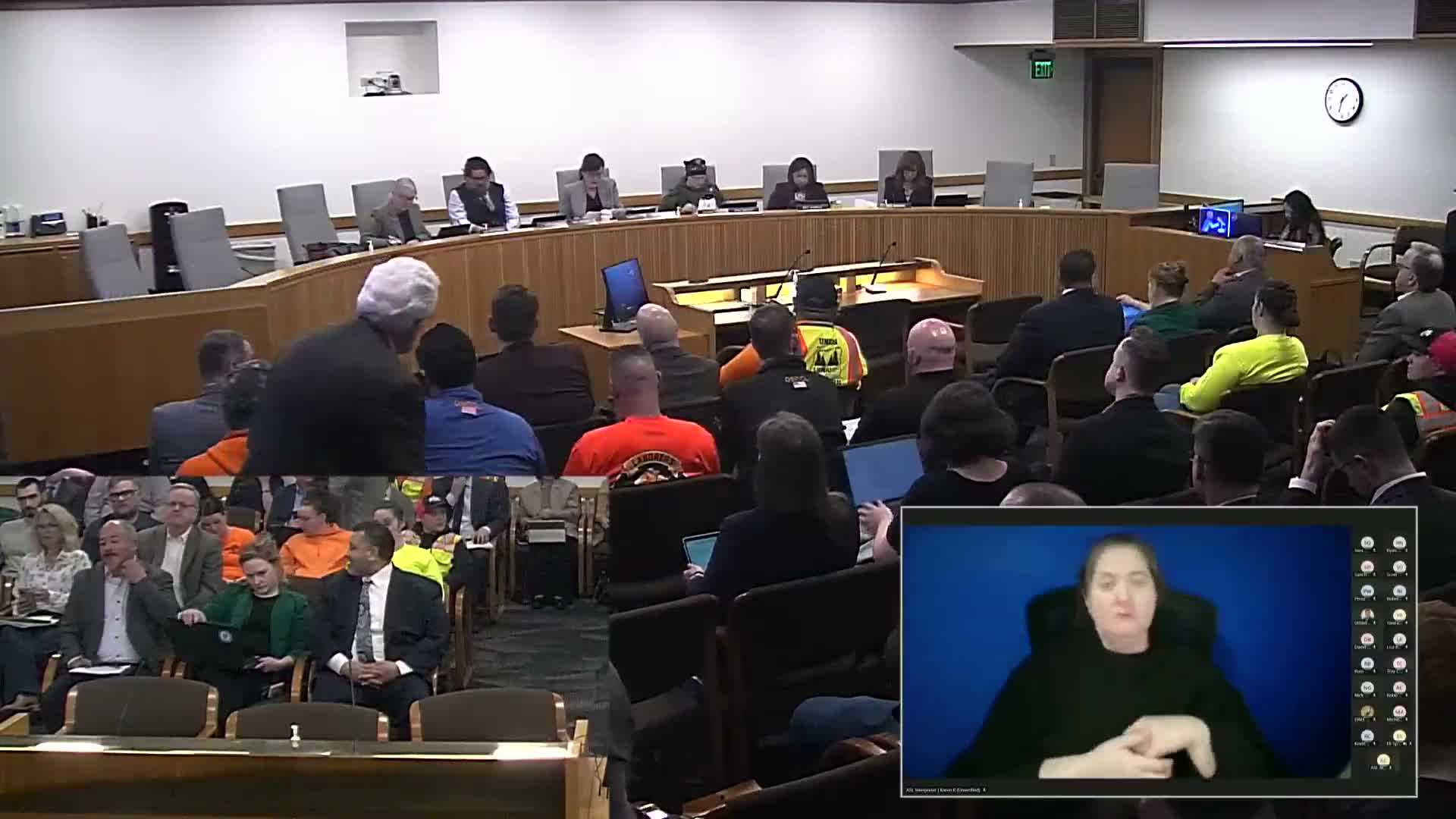
The Senate Committee on Labor and Business heard hours of public testimony on SB 1566 on Feb. 9, 2026, a bill that would clarify when prevailing‑wage requirements apply to affordable‑housing and certain privately financed projects. Witnesses were sharply divided: building trades and unions opposed the bill; local governments, nonprofit housing developers, chambers of commerce and some building industry groups supported it.
Sponsor Senator Anderson described SB 1566 as a set of targeted clarifications designed to restore predictability for affordable housing exemptions without undermining worker protections. He said ambiguity in administrative interpretations and recent determinations have scared away lenders and stalled projects, citing Oregon’s drop in housing permits since 2021 and the 2024 Eugene waterfront case as examples of how retroactive prevailing‑wage findings can derail projects.
Representative Vicki Breece Iverson (co‑chief sponsor) emphasized the bill’s goal of restoring lender confidence and avoiding retroactive prevailing‑wage costs that can add tens of percentage points to project budgets. Tanisha Bridal for Oregon Housing & Community Services said the agency is neutral but highlighted its 2022 report and the specific problem that adding childcare space to affordable projects can trigger prevailing wage for an entire project, raising costs 10–20% and stalling developments.
Opponents from multiple unions — plumbers, ironworkers, electricians, sheet metal, painters and laborers — argued carving out exemptions will depress wages, reduce training-funded apprenticeship programs, and risk on‑site safety and work quality. Brad Archuleta (Local 290 plumbers) said prevailing wage is "essential" to maintain training and local economic benefits. Several union witnesses argued labor is not the main driver of construction costs and that lowering wages would harm workers and local economies.
Supporters — including the League of Oregon Cities, Housing Oregon, local chambers, nonprofit affordable-housing developers and rural coalitions — said administrative interpretations have expanded prevailing‑wage triggers unpredictably, pushing developers away from projects or making them financially infeasible. Multiple local officials and nonprofit developers provided project examples: a Salem conversion and the Eugene waterfront project were cited as projects that became unviable after determinations applying prevailing wage retroactively.
Testimony highlighted policy tradeoffs: supporters view SB 1566 as a narrowly tailored fix to administrative overreach that would free up funds to build more housing (and allow co‑located childcare), while opponents see an erosion of long‑standing worker protections and the apprenticeship system that builds skilled trades. The committee paused the public hearing to take up SB 1506 but returned later to hear more witnesses; Chair Taylor noted the large body of written testimony on OLIS.
The committee did not vote on SB 1566 on Feb. 9; members indicated they will reopen the hearing to hear additional signed-up witnesses and review written testimony.