Get Full Government Meeting Transcripts, Videos, & Alerts Forever!
Get email alerts on the Pension Coverage topic
No spam. Unsubscribe anytime.
Informational hearing on PERS coverage examines which jobs meet federal 'public safety' definition
Summary
An informational hearing on SB 1569 focused on whether certain job titles (juvenile custody specialists, juvenile court counselors, evidence technicians) meet the federal 'qualified public safety employee' test and the fiscal uncertainty tied to employer data; PERS said the fiscal impact is indeterminate.
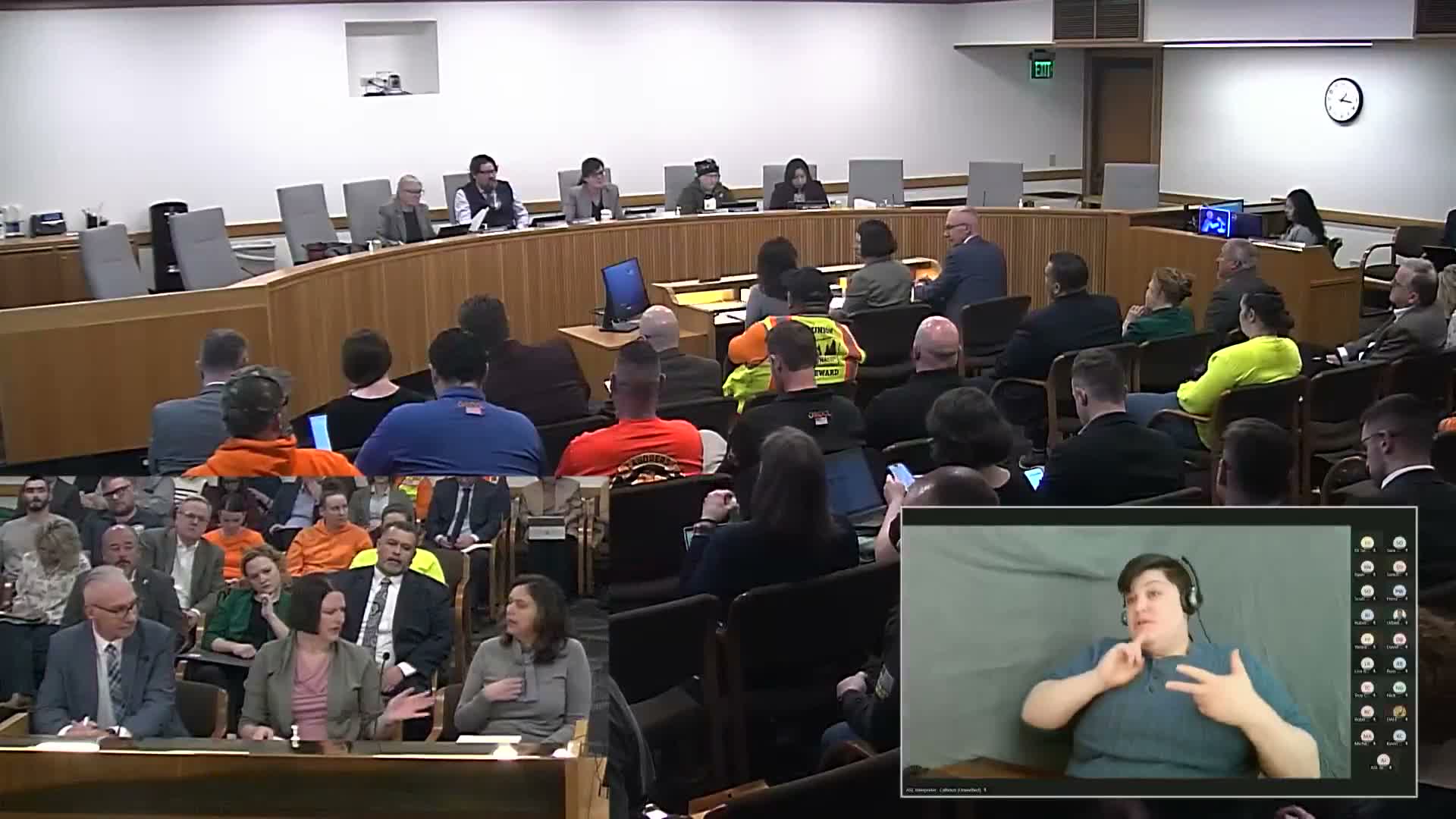
The Senate Committee on Labor and Business held an informational hearing on SB 1569 on Feb. 9, 2026, to examine whether specific job titles should be classified as "police officers" under Oregon law for PERS purposes and how that classification interacts with a federal definition that affects early‑retirement tax treatment.
Marisa James, Chief Deputy Legislative Counsel, told the committee the federal tax rules can impose a 10% penalty on early retirement unless a retiree qualifies as a "qualified public safety employee" under federal law. She summarized the federal list — employees providing police protection, firefighting services, emergency medical services, corrections services or forensic security — and said whether certain titles fit that framework is often a fact‑based, untested question.
Heather Case, senior policy advisor at Oregon PERS, and Director Kevin O'Lenick explained PERS’s operational analysis: juvenile custody service specialists’ primary duties resemble corrections officers and likely meet the federal public‑safety definition; juvenile court counselors more closely mirror investigative or advocacy duties and likely would not. Evidence technicians and many forensic staff generally do not meet the protective‑service lens, PERS said. Both counsel and PERS cautioned these are analyses, not definitive legal rulings.
PERS reiterated that its fiscal impact estimate is indeterminate because the agency does not receive job‑title and salary detail for all employees. PERS provided example contribution rates to illustrate potential employer effects: for systemwide general service the normal cost rate is about 10.47% of payroll vs. 15.74% for police and fire — an average 5.27 percentage‑point increase if payroll is reclassified; for tier 1/2 the difference cited was about 6.99 percentage points. PERS said those are averages and that local employers will face different outcomes depending on which positions and salaries are reclassified. PERS also noted possible small increases to the unfunded actuarial liability over time once retirees take advantage of earlier retirement options; actuaries would need actual reporting data (expected in 2027) to quantify that effect.
Committee members asked whether cities and counties will be able to provide the missing job and salary information; PERS said employers would need to supply that data for accurate local estimates. Chair Taylor instructed PERS to submit written testimony clarifying which titles the agency considers included or excluded and indicated the committee may carry the item to a future work session for further vetting.
No formal action was taken; the committee carried the item forward for more information and scheduled a possible work session for Feb. 11.