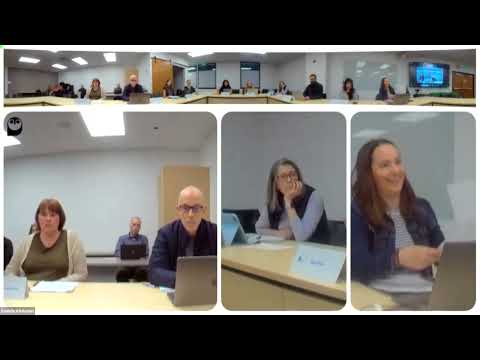
Eugene staff recommend no-infill artificial turf for Golden Gardens after TBL analysis; commissioners and residents call for more testing
Loading...
Summary
City staff and consultants recommended artificial turf without infill for phase 1 of the Golden Gardens sports complex after a triple-bottom-line analysis found turf delivers roughly three times the usable hours and higher revenue potential; public commenters and commissioners pressed for climate-plan alignment, PFAS testing and stronger microplastics mitigation before construction moves forward.
City staff recommended an artificial turf surface without infill for phase 1 of the proposed Golden Gardens sports complex, saying that new turf products offer the playability and financial sustainability the city needs while allowing the project to protect much of the site as habitat.
The recommendation came after a 15-month study and a triple-bottom-line analysis presented to the Eugene Sustainability Commission. Carolyn Berg, Ferguson Natural Resource Planning Manager for the city of Eugene, said staff concluded that "going with artificial turf without infill is the best way to move forward" for phase 1, which staff described as access points, a minimum of three rectangular fields, parking and habitat buffers on a 223-acre site with roughly 168 acres proposed for protection and a 26-acre habitat preserve.
Why it matters: consultants and staff said artificial turf dramatically increases "playable hours" — accounting for weather, maintenance and school/work hours — which raises community access and revenue potential. Tracy Wunsford of Parametrix, the consultant that prepared the TBL, said the analysis shows artificial turf options provide about three times the playable time of natural grass, which supports tournaments and rental revenue that can help operate the facility.
Key findings and numbers: the TBL estimated that irrigated natural grass for 14 fields would require about 62,000,000 gallons of drinking water annually; artificial turf without infill yields fewer landfill tons over time and was projected to deliver higher local economic benefit (roughly $4.0 million for turf versus about $1.5 million for natural grass). Parametrix also presented a conservative estimate of synthetic-fiber loss on turf of about 4,800 pounds per year for 14 fields to provide scale for potential microplastics emissions and recommended design mitigations such as bioswales and pre-filtering systems.
Public comment and concerns: Karen Hall, a Bethel-area resident and environmental conservation professional, urged the commission to require a formal review aligning the project with Eugene's Climate Action Plan and to perform a cumulative air-quality analysis for Bethel, which she said already carries a disproportionate share of toxic emissions. Hall asked the commission to "formally recommend that analysis before construction is actually approved."
Commissioner questions focused on four areas: (1) the real-world value of playable hours (peak vs. off-peak), (2) data gaps for the newer no-infill turf products — including temperature, injury and long-term material testing — (3) the need for third-party PFAS verification from manufacturers, and (4) microplastics mitigation effectiveness. Commissioners suggested a phased or mixed-surface pilot and said the timeline (phase 1 construction is not expected until 2029) leaves time for further evaluation and monitoring of installations elsewhere.
Responses from staff and consultants: Wunsford said the team prioritized independent scientific literature and operator experience where available and noted limits in the literature for some newer products. "We calculated [fiber loss] at about 4,800 pounds per year for all 14 fields," she said, while emphasizing that the figure is conservative and the comparison to other everyday sources was intended only to provide scale amid uncertainty. Staff said they would pursue procurement specifications that exclude manufacturers that use PFAS in production and would monitor pilots and emerging recycling options.
Next steps: the commission did not take a formal vote on the surfacing recommendation. Commissioners asked staff to return with additional analysis and clarifications; the chair agreed to place follow-up on the next meeting agenda so the commission can consider a formal response to the city's report and suggest mitigation measures (PFAS testing, pre-filtering for microplastics, and procurement specifications).
A procedural motion to extend the meeting by 10 minutes passed by voice vote to allow the discussion to continue.
What’s next: staff said the recommendation and supporting memo will be shared with city council (the presentation was characterized as part of a staff memo that could be forwarded to council). Phase 1 is planned in future years, and staff said they will continue to monitor emerging data, visit recent installations and refine procurement and mitigation requirements before construction.