
Board adopts Pahrump short‑term rental licensing after months of public debate
Get AI-powered insights, summaries, and transcripts
Sign Up Free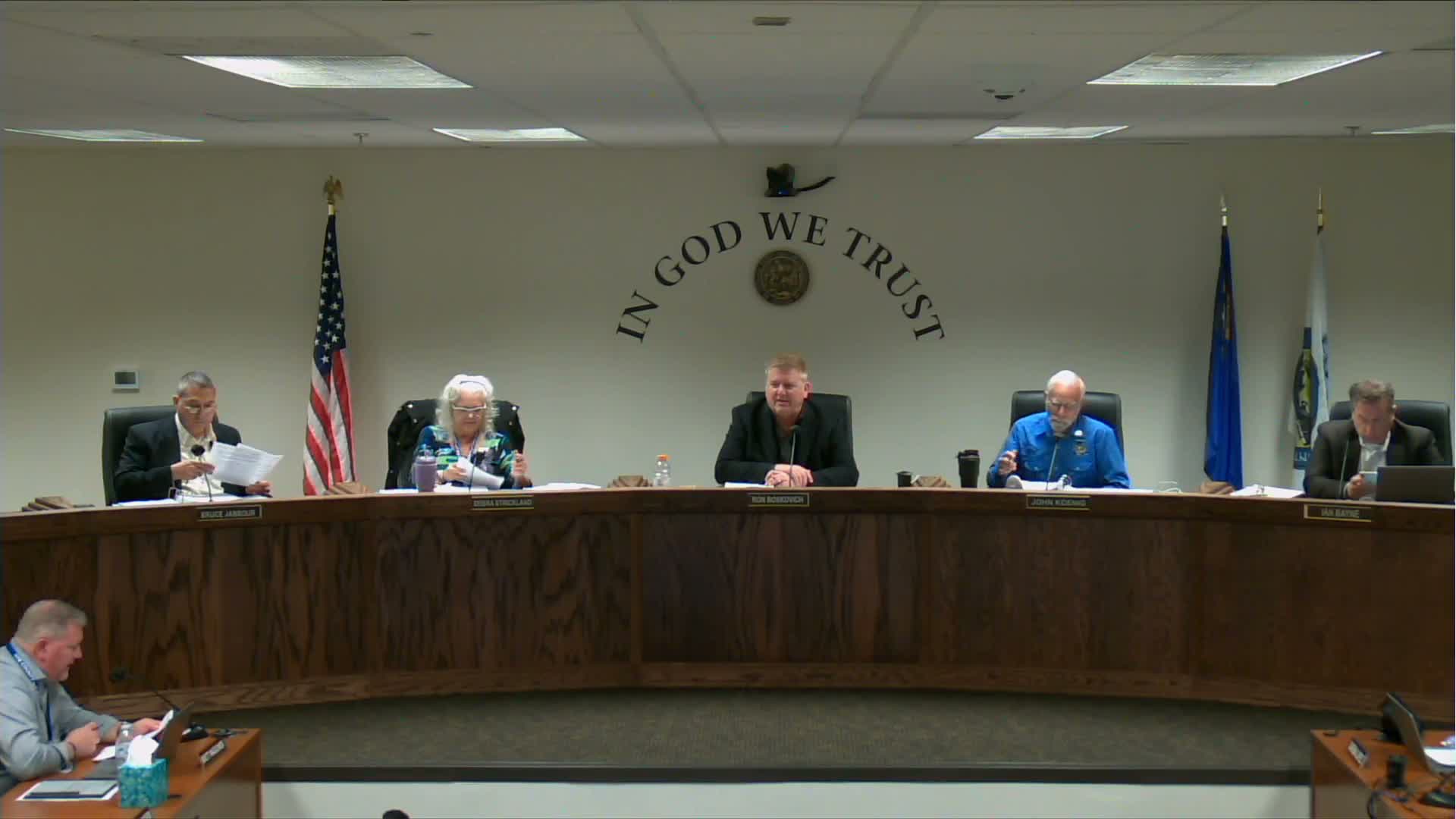
Summary
After extended public testimony from hosts, residents and advocates, Nye County commissioners adopted amendments to Pahrump’s short‑term rental ordinance, with staff and managers saying fines target unlicensed operators and the rule does not apply to monthly rentals.
The Nye County Board of Commissioners voted 5–0 on Feb. 18 to adopt amended Pahrump Bill 2026‑01, a short‑term vacation rental licensing and room‑tax collection ordinance the town enacted last year and staff revised in response to operational issues.
Public comment filled the chamber and the phone line for the timed hearing. Hosts and small operators warned the board that the draft imposes onerous pre‑issuance requirements and high fines for noncompliance; one presenter, Mark VincI, urged the board to table the ordinance and warned of constitutional and litigation risks based on recent court decisions in other counties. Multiple short‑term rental operators and B&B owners said the proposed fines and some distance buffers would punish lawful small operators more than problematic bad actors.
“It’s not a big business; this is not big business. Most of us are not making big money,” a property manager told the board, urging proportionate regulation and more outreach before strict enforcement. Several speakers argued the draft was copied from larger jurisdictions and not tailored to Pahrump’s rural context.
County staff and the county manager responded that the most severe fines apply to operators who refuse to register or who operate as unlicensed short‑term rentals. The manager said the current code was already in effect and that this drafting was intended to ease and clarify compliance; staff noted amendments incorporated many public suggestions gathered during prior review rounds.
Supporters of the ordinance — including some commissioners and residents — said licensing closes a gap that previously allowed many rentals to avoid room tax and public‑safety inspections.
After discussion commissioners approved an adoption motion with an effective date of 2026‑03‑09 and directed staff to follow up with outreach and a proposed workshop to address remaining operator concerns.
What the record shows: the ordinance applies only to transient stays up to 28 days and does not apply to monthly rentals. County staff emphasized the enforcement fines are primarily targeted at unlicensed operations rather than routine, registered operators.