County public comment spotlights 'zombie lots' problem and calls for clarity on who has authority to make parcels usable

Nye County Board of Commissioners · February 18, 2026

Get AI-powered insights, summaries, and transcripts

Subscribe
AI-Generated Content: All content on this page was generated by AI to highlight key points from the meeting. For complete details and context, we recommend watching the full video. so we can fix them.

Summary

Multiple Pahrump-area landowners told the commission that thousands of taxed but unusable parcels lack a clear pathway for water, sewage and residency; callers pressed the board to identify which agency or process can make lots 'buildable.'

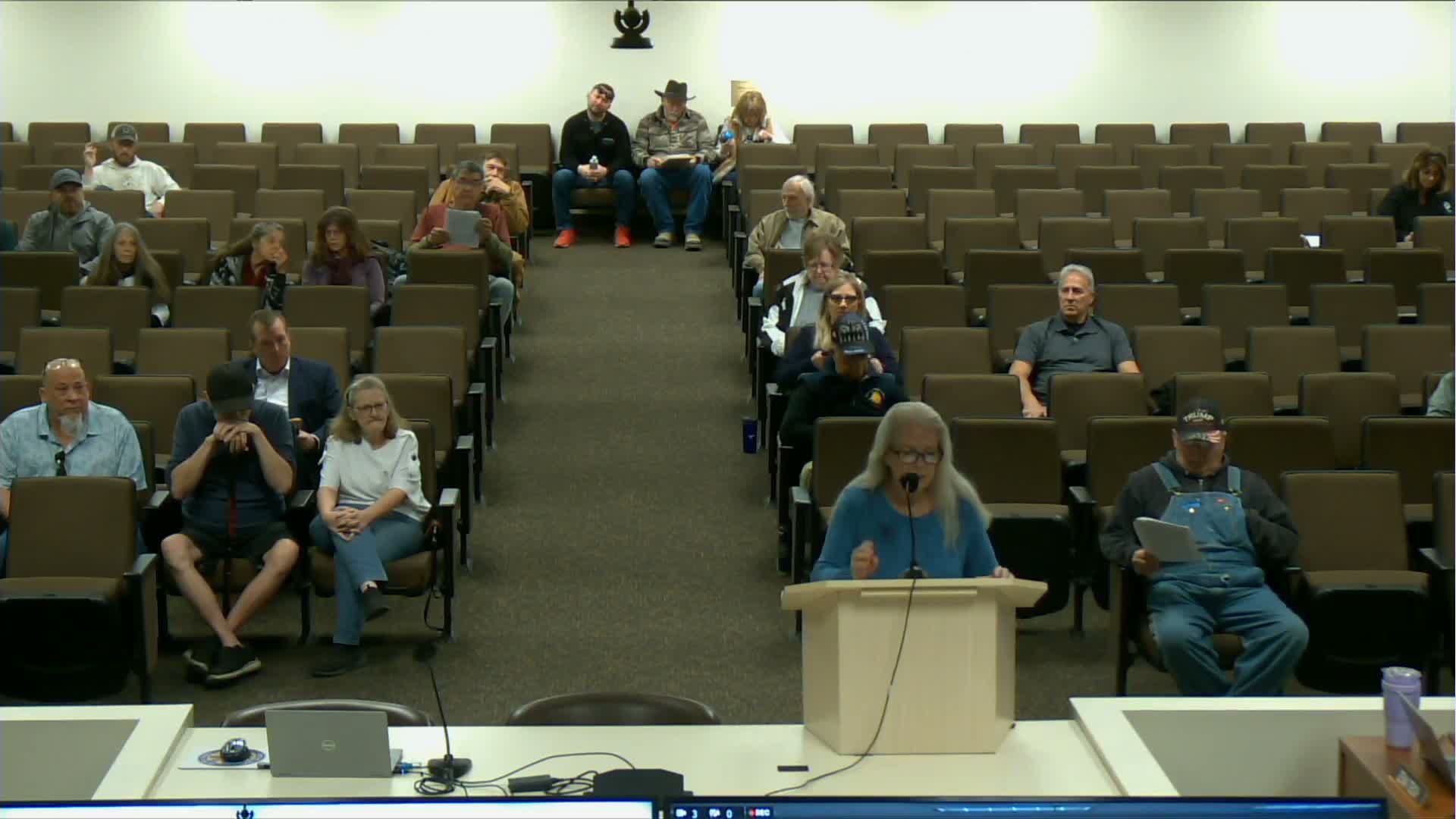
A string of residents told Nye County commissioners on Feb. 18 that long‑held vacant parcels known locally as “zombie lots” are being left unusable by a combination of zoning, utility tariffs and infrastructure gaps.

“Every meeting ends the same way with no path forward,” caller Molly Valdez said. “Great Basin Water refers us back to the county. The county sends us to planning. The water district refers us to the state, and the state refers us back to the county. This is not a solution, it’s a loop.”

Patricia Robb urged officials to consider state‑authorized alternatives to conventional sewer and water connections, citing state statutes and administrative code during public comment and noting that other counties issue permits for hauled water and regulated alternative wastewater systems. She asked the board to consider pilot programs and greater transparency on why one nonprofit’s proposal to pilot composting toilets did not proceed.

Long‑time out‑of‑state landowner Carol Milke said promised infrastructure never arrived and asked how grandfathering of long‑held lots should work; she urged the county to revise the master plan to restore original land‑use intent for owners who predated later zoning.

County staff and commissioners acknowledged the recurring concern and described ongoing work by the Water District Committee to explore options. County staff also noted an existing code amendment process: a code amendment may be sponsored by a commissioner or initiated by a planning department application, staff said in response to a public speaker’s question about options to change regulations.

What the record shows: callers repeatedly asked that the board specify — in clear, public terms — which agency or process has the authority to approve use or alternative utility arrangements for small lots; they also requested greater transparency about previous pilot decisions and clearer timelines from the water and planning authorities.

What’s next: commissioners and staff indicated the Water District Committee is working on potential solutions and that code amendment or formal sponsorship by a commissioner are available procedural paths for changing county code.