Get Full Government Meeting Transcripts, Videos, & Alerts Forever!
Get email alerts on the Scholarship Audit topic
No spam. Unsubscribe anytime.
Audit of Donaldson Scholars Academy finds ineligible scholarships, heavy administrative spending
Summary
A special legislative audit found the Charles W. Donaldson Scholars Academy awarded some scholarships to ineligible students, recorded documentation exceptions for disbursements, and showed the bulk of program spending went to salaries and administrative costs; the program ceased operations in June 2024 and remaining funds were returned.
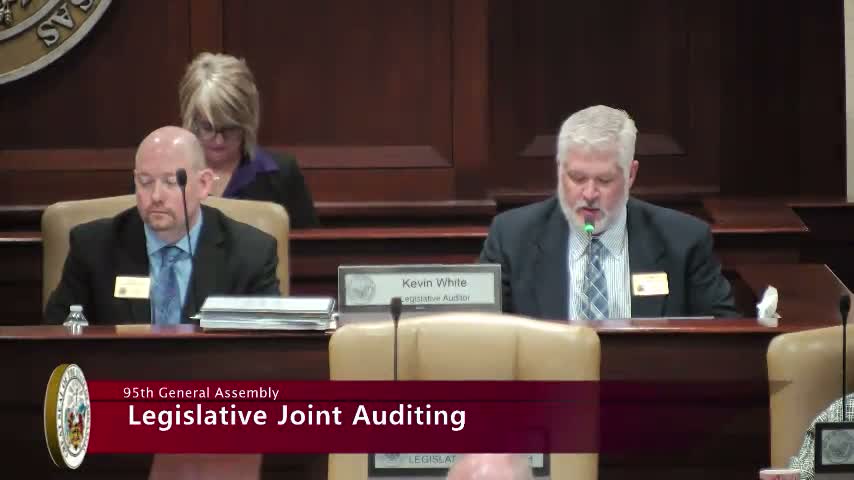
A special legislative audit presented Feb. 13, 2026, found instances of scholarships awarded to ineligible students in the Charles W. Donaldson Scholars Academy program administered through the University of Arkansas at Little Rock and identified multiple disbursement-processing exceptions.
Charlie Camp, presenting the report, said the program aimed to provide ACT preparation, college-application assistance and a $2,500 renewable scholarship for eligible students. The Pulaski County Special School District provided $10,000,000 in funding for the program over its lifetime, Camp said. The audit found that institutions reported program expenditures of about $8,000,000 at UALR, $262,000 at Philander Smith College and $61,000 at UAPTC.
The audit tested 39 scholarship recipients and reported 56 instances in which 32 of those students were ineligible, with scholarships awarded to ineligible students at Flandersmith and UALR totaling more than $111,000 — about 32% of roughly $350,000 tested, Camp said. The audit also tested 147 disbursements totaling about $1,910,000 and noted 124 exceptions related to processing and documentation. Camp told the committee that program activity declined beginning in 2020 due to the COVID-19 pandemic and the program ceased operating in June 2024; remaining funds (about $1,600,000) were returned — 80% to Pulaski Special School District and 20% to Jacksonville North Pulaski School District.
Committee members pressed presenters about oversight and the distribution of administrative versus scholarship dollars. Senator Johnson questioned whether spreading administration among multiple institutions reduced accountability; Charlie Camp replied that UALR served as custodian of funds and the director and other employees were UALR employees, and that staff relied on documentation provided because many original staff were no longer available.
The committee filed the special report for the record. The audit materials included a court order from the U.S. District Court for the Eastern District of Arkansas and a sample progress report provided by program administrators.
Why it matters: the findings point to lapses in eligibility screening and documentation controls for a multi-million-dollar program intended to support college access, raising questions about program oversight and stewardship of public funds.
Next steps: the committee filed the report; staff noted materials were provided to members and follow-up may occur at a later meeting.