Audit flags over $80,000 in questionable Cleburne County library spending; director charged
Loading...
Summary
A legislative audit presented Feb. 13, 2026, found more than $80,000 in unauthorized or questionable library disbursements in Cleburne County, identified purchases lacking business purpose, and noted the library director was charged; the committee filed the audit for the record.
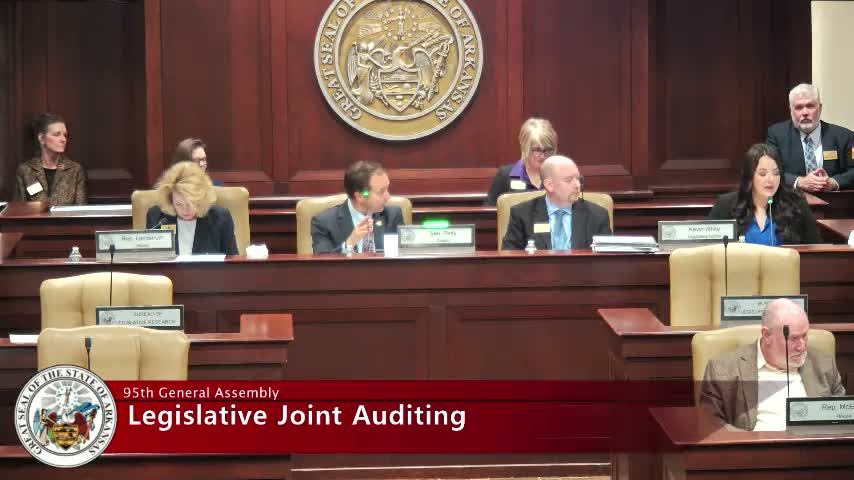
A legislative audit presented to the Legislative Joint Auditing Committee on Feb. 13, 2026, found unauthorized and questionable disbursements totaling over $80,000 in Cleburne County library accounts and reported that the library director was charged with felony theft and abuse of office.
The presentation by audit staff Lisonbee Polston said Cleburne County (county seat Heber Springs) reported combined assets of about $23 million and liabilities of $1 million for the year ended Dec. 31, 2024. Revenues were reported at $17.9 million and expenditures at $13.5 million. The audit reviewed library expenses from January 2022 through August 2025 and identified purchases without a documented business purpose totaling just over $73,000, including items such as power tools, night-vision goggles, clothing and grocery items. Polston said an additional estimated $2,157 in fuel expenses charged by county claim appeared improper based on mileage comparisons.
Polston told the committee the library director, Zachary Cawthorn, was placed on administrative leave in June; following an investigation by the Arkansas State Police and the Sixteenth Judicial District prosecuting attorney, Cawthorn was charged with felony theft of property and abuse of office on Sept. 11 and resigned the following day. The audit was referred to the prosecuting attorney and the attorney general, Polston said.
Committee members did not ask follow-up questions of county officials present, and a motion to file the audit was made and approved.
Why it matters: the audit identifies apparent weaknesses in local fiscal oversight and documentation controls that led to sizeable undocumented disbursements and prompted criminal referral. The committee filing preserves the record for any further legal or administrative action.
Next steps: the committee filed the audit report for the record and staff noted follow-up reporting will occur at a later meeting.