Get Full Government Meeting Transcripts, Videos, & Alerts Forever!
Get email alerts on the Transportation Governance And Finance topic
No spam. Unsubscribe anytime.
Senate committee hears wide-ranging debate on ODOT capital plan, commission changes and debt policy
Summary
Stakeholders at an Oregon Senate Transportation Committee hearing urged caution over SB 15-42 (a 10-year ODOT capital investment plan with scoring rules) and SB 15-43 (changes to the Oregon Transportation Commission and debt-management disclosures), warning that new processes could delay projects, de-emphasize congestion relief and politicize the commission; ODOT says a first plan could be ready by Dec. 2026.
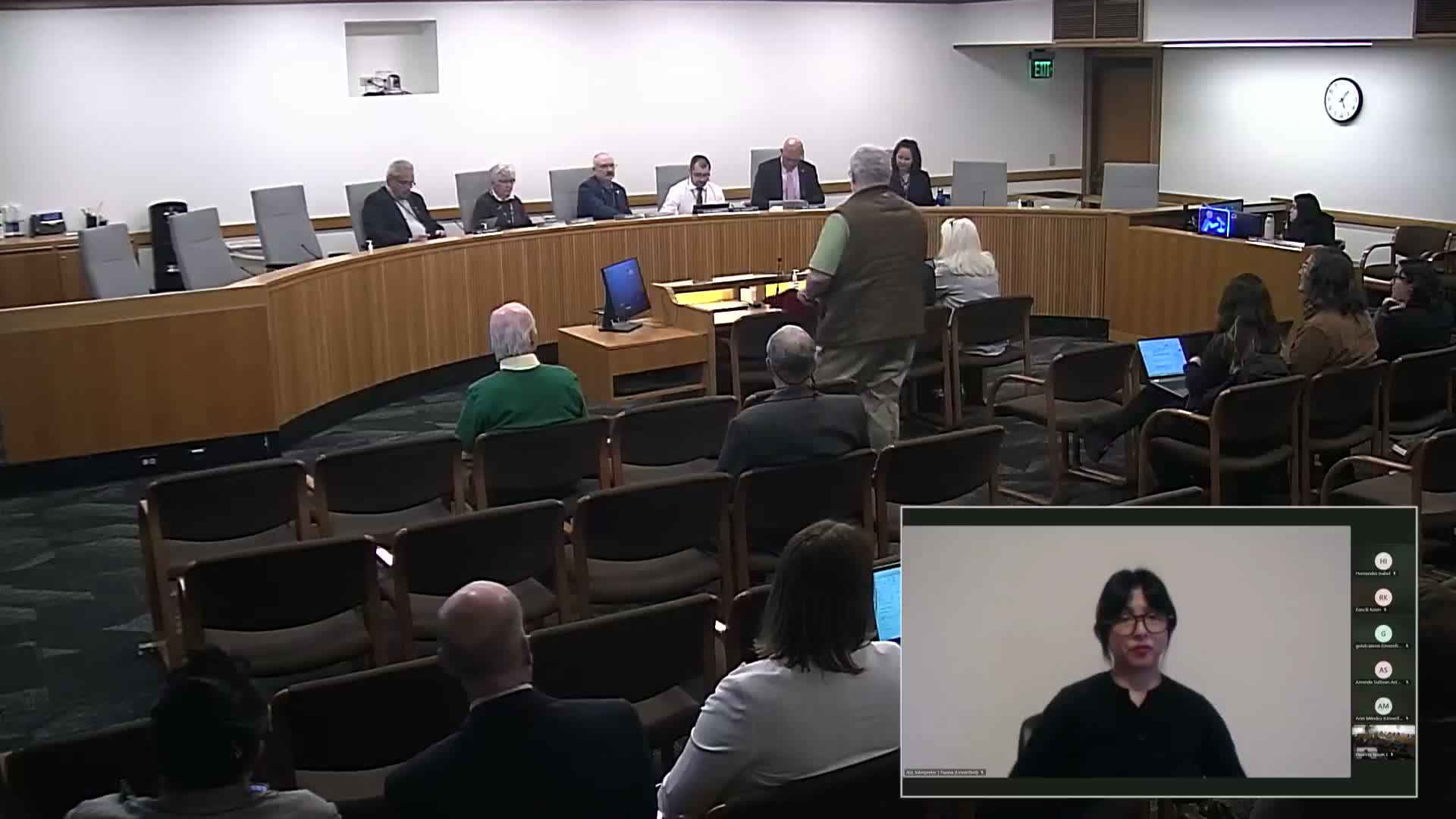
The Senate Committee on Transportation heard extensive testimony Feb. 9 on two related bills that would change how the Oregon Department of Transportation plans and finances major projects. Lawmakers and stakeholders debated SB 15-42, which would require the Oregon Transportation Commission (OTC) to develop and maintain a 10-year capital investment plan with a scoring methodology for projects, and SB 15-43, which would change OTC membership rules and require a debt financing management policy.
Opponents including the Oregon Trucking Association and Oregon Business & Industry said SB 15-42 would add time-consuming processes and could effectively bar many capacity or expansion projects by prioritizing “fix-it-first” criteria and a state-of-good-repair standard before approving expansion. Jana Jarvis, president and CEO of the Oregon Trucking Association, told the committee the bill risks delaying projects, duplicating accountability already in recent legislation (House Bill 3991), and increasing litigation risk if statutory evaluation criteria become grounds for challenge.
Business and construction groups also criticized elements of SB 15-43. Sharla Moffett of Oregon Business & Industry and other witnesses said replacing or reshaping the Transportation Commission and adding two legislative nonvoting members risks politicizing the commission and could shift priorities away from large highway investments. Several stakeholders warned that removing a clear numeric debt cap in favor of narrative guidance would reduce predictability for long-term funding.
ODOT representative Amanda Peetz, division administrator for policy, data and analysis, described the agency’s planned capital investment plan as a tool to show a 10-year view of planned and programmatic investments, improve cost estimation through stage gates, and increase transparency about where funding flows. Peetz said the department aims to complete a first iteration covering 2027–2037 and have the plan in place by December 2026, but cautioned that binding statutory targets or rushed rulemaking could require additional staff, cause a year-to-18-month delay for implementation and risk resetting recent regional planning work.
On debt policy, Daniel Porter of ODOT’s finance and budget division said the department already maintains an active debt policy (in place in its current form since about 2017), described the biennial bond-planning cycle, and provided context on coverage ratios and the agency’s historical bond issuance. He said ODOT’s current pledged revenues are about $900 million with roughly $230 million in annual debt service and that the department manages debt issuance in coordination with Treasury and municipal advisors.
Advocates for the bills, including Verde and others, said the proposals introduce needed transparency and opportunity-cost disclosures about borrowing decisions that are not consistently provided today. Cindy, transportation justice coordinator for Verde, testified that the dash-2 amendments add implementation flexibility while preserving direction and would require clearer mitigation and disclosure about how borrowing choices affect maintenance and other priorities.
Committee members asked whether the measures would make bipartisan transportation packages harder to assemble, and several witnesses said the bills risk shifting decisions from elected lawmakers or could constrain future legislative negotiation without strengthening delivery and execution. The committee did not take votes and set SB 15-42 and SB 15-43 over for further consideration; members instructed stakeholders to submit any additional written testimony to OLIS.
The committee will revisit the bills at a later session. No final action or vote occurred on either measure during the Feb. 9 hearing.