Get Full Government Meeting Transcripts, Videos, & Alerts Forever!
Get email alerts on the Ruc And Transportation Data topic
No spam. Unsubscribe anytime.
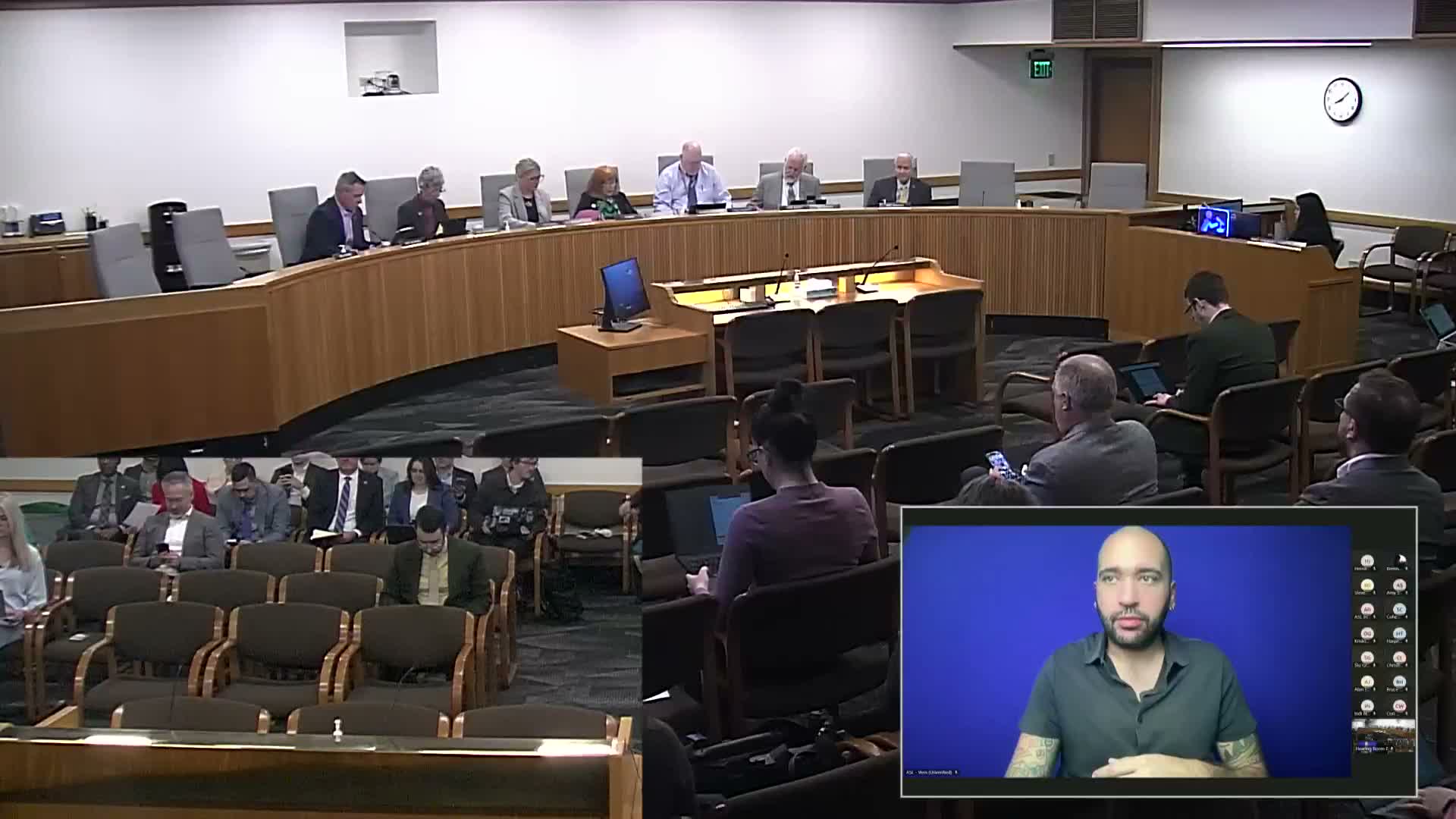
House committee hears mixed testimony on RUC data bill and electric-vehicle charges
Summary
Oregon lawmakers heard combined testimony on HB 4009 and HB 4126. Sponsors and local officials urged data collection to inform future road-usage charges; cities and counties warned of data gaps and large unmet maintenance costs. No vote was taken; the committee closed testimony and will consider amendments.
Representative Mark Gamba told the House Transportation Committee that House Bill 4126 would create a biannual, data-driven report on the condition of Oregon’s roads and bridges and the systemwide cost to meet agreed maintenance standards. "All we are doing is setting up a report with information we clearly need," Gamba said, stressing the bill does not set revenues or rates.
The bill would task the Oregon Department of Transportation, working with cities and counties, to compile standards for pavement condition, striping and bridge replacement timelines and then estimate how much it would cost to meet those standards. Gamba said a dash-1 amendment posted to OLIS would delay the first report to January 2027 and a dash-2 would break out data by vehicle weight.
Local officials urged the committee to support the reporting requirement but warned of steep, immediate maintenance needs and data limitations. "Last year we estimated that the percentage of busy streets in poor or very poor condition had grown to 64%," Shoshana Cohen, chief of staff at the Portland Bureau of Transportation, told the committee. She said Portland’s estimate to bring streets to fair or better condition had risen to $4,400,000,000 and that 20% of the city’s 159 bridges are weight restricted.
Corey Wiesner, Hood River County’s public works director, described his county’s constrained budget: staffing costs above $3,000,000 leave about $300,000 in discretionary funds, and the county last completed a capital project in 2019. ODOT staff cautioned that state pavement and bridge data are stronger for state routes than for local systems — "there are data gaps," Amanda Petes, ODOT Division Administrator for Policy, Data and Analysis, said — and that some components of the bill’s timeline may need extension.
Several witnesses addressed road-usage charge design and equity. Climate Solutions said it was "neutral, but tepidly supportive" of HB 4009 and favored a medium-duty RUC that captures vehicles above 10,000 pounds. Dr. Alan Jornet of Southern Oregon Climate Action Now urged a sliding scale tied to MPGe so efficient EVs are not discouraged. The Oregon Environmental Council urged the panel to ensure light-duty EVs pay a fair share relative to internal-combustion vehicles and to avoid double taxation of plug-in hybrids under prior statutes.
Stakeholders representing counties, transit agencies and EV advocates emphasized that any future revenue or RUC proposal should be grounded in the empirical costs the bill seeks to surface. The committee closed public testimony on the bills and moved on to other agenda items; no formal vote was taken on either bill during this meeting.
Next steps: The committee advised members to review posted amendments and outstanding fiscal analyses before continuing work in a subsequent meeting.