Get Full Government Meeting Transcripts, Videos, & Alerts Forever!
Get email alerts on the Journalism Preservation topic
No spam. Unsubscribe anytime.
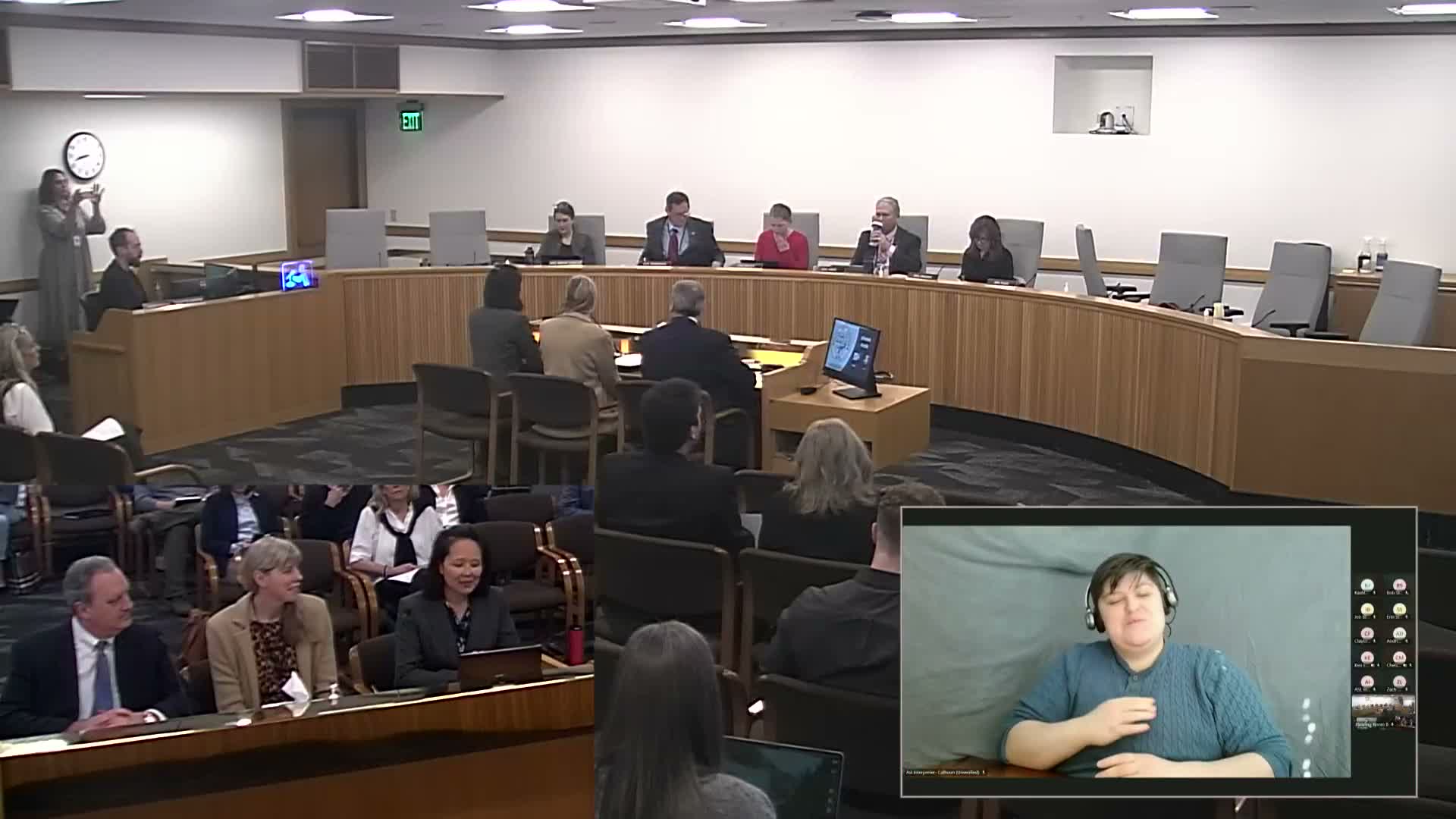
Senate committee hears hours of testimony on SB 15 80 to compensate Oregon newsrooms for platform use
Summary
Senate Bill 15 80, sponsored by Sen. Pham, would let Oregon news providers seek statutory damages for covered platforms that use their content and funnels most recovered funds to local newsroom payroll and a Civic Information Consortium; supporters say it will sustain local journalism, opponents cite First Amendment and federal preemption risks.
Senator Hai Pham introduced Senate Bill 15 80 — the Oregon Journalism Preservation/Protection Act — during the Senate Committee on Commerce and General Government hearing Wednesday, Feb. 11, arguing the measure is designed to restore lost revenue to Oregon newsrooms and protect local reporting jobs. Pham said more than 18 Oregon news outlets have closed since 2022 and that dominant digital platforms have extracted advertising value from local reporting without paying publishers.
"This isn't about a handout. This is about restitution for a theft and correcting a market that has been illegally monopolized," Pham said, describing a funding framework in the dash-2 amendment that directs roughly $1 of every $10 into grants for micropublications and the remaining $9 into an arbitration pool, of which 90% must be spent on newsroom payroll for journalists producing content for an Oregon audience.
Supporters from large and small news organizations urged the committee to approve the bill. Laura Gunderson, editor and vice president of content at The Oregonian, said algorithm changes and AI-driven summaries have diverted readers away from original reporting and eroded revenue that supports reporters. "We write stories and build roads to crater lakes — Google and other big tech platforms are making off ramps that take people past the places where we're trying to get them to the news they need," Gunderson said.
Proponents pointed to international precedents in Australia and Canada, and to California and New Jersey legislative models, as evidence that policy can direct platform money to publishers. Neil Quinter of the News Media Alliance said the dash-2 narrowed the bill’s scope, removed Facebook from covered platforms, and increased the share that must go directly to newsrooms.
Opponents, including counsel for Google and several technology trade groups, said the bill raises serious constitutional and federal preemption issues. Erin Simon, senior counsel for Google Search and News, said SB 15 80 would condition routine Internet indexing and linking on negotiated agreements, creating legal conflicts with the U.S. Copyright Act and the First Amendment. "By attaching financial liabilities to foundational mechanics of Internet services, the bill moves away from open web standards and raises significant legal challenges," Simon said.
Trade groups including TechNet, the Chamber of Progress and the Technology Association of Oregon warned the committee that dash-2 amendments had been posted late and that the measure could create unintended liability and process problems. Representatives argued the bill risks creating an uneven playing field, imposing statutory damages or arbitration outcomes that could harm platforms and, indirectly, publishers that rely on platform traffic.
Small independent publishers and unionized journalists urged action. Clayton Franke, a reporter at The Bulletin, said his newsroom has shrunk from six reporters to three and that the bill would help retain reporter jobs. David Summers of Ashland News urged the committee to include independent outlets in future drafting and disclosed that Ashland News had received a small Google grant two years prior.
Committee members asked technical and legal questions about arbitration, the bill’s narrowness, and whether the state can craft a label of covered platforms that would survive judicial review. Supporters said the arbitration and allocation structures were designed to favor newsroom payroll and to incentivize collective agreements; opponents maintained that the statute targets a single platform and is likely to face constitutional challenges.
The hearing produced no committee vote on SB 15 80. Chair Meek closed the public testimony for the day; paperwork for other bills was noted as pending and the committee adjourned.