Get Full Government Meeting Transcripts, Videos, & Alerts Forever!
Get email alerts on the State Hospital Budget topic
No spam. Unsubscribe anytime.
Oregon State Hospital warns staffing crunch, backlog and federal fines are straining its budget
Summary
Interim superintendent Jim Diegel told the Ways and Means Human Services committee that staffing costs and fines from the federal Mink/Bowman court order are driving significant pressure on the Oregon State Hospital budget, with wait lists and discharge backlogs limiting admissions.
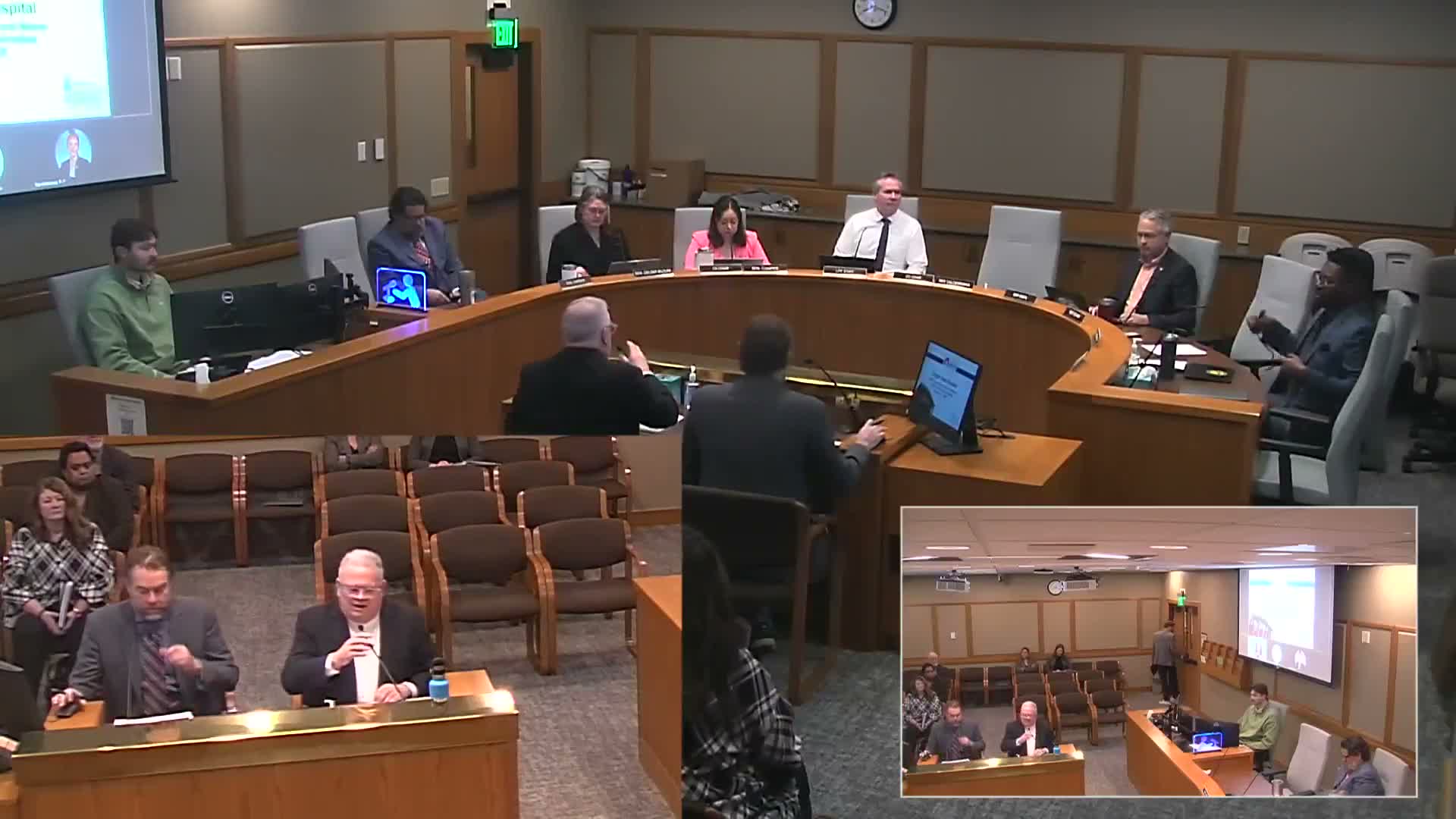
Interim Oregon State Hospital Superintendent Jim Diegel told a joint Ways and Means Human Services committee on Feb. 11 that the hospital is focused on rebuilding a "culture of safety" after eight months of leadership changes and policy shifts and that staffing costs are the chief budget pressure.
Diegel said the hospital is "for the first time in 4 years" in full compliance with the Joint Commission and the Centers for Medicare & Medicaid Services, an achievement he credited to staff and leadership. He said personnel services accounted for the bulk of the hospital’s spending in the prior biennium and that employee and non‑employee staffing costs rose to about 87.2 percent in the 2025–27 projection.
The superintendent and OHA officials told lawmakers that nurse staffing challenges are driven by unusually high daily call‑out rates, uncapped overtime under union contracts, and more medically complex patients requiring enhanced one‑to‑one supervision. Diegel said the organization is seeing increasing use of nursing overtime and occasional reliance on agency and locum staff, which substantially increases per‑unit costs.
Lawmakers pressed for specifics. Representative Nelson asked whether burnout is being addressed; Diegel said cultural changes to improve psychological and physical safety are central to retention work and that, at the time of the briefing, OSH listed about 20 registered‑nurse openings — a level he called lower than in prior years. Committee members also cited an approximate "400 FTE" overtime equivalent in 2025, a figure presenters agreed was substantial and for which they offered to provide a fiscal dollar estimate for the record.
Diegel also described the operational effect of the long‑running federal Mink/Bowman court proceedings, which impose a seven‑day expectation for admission. "If we do not get them in within 7 days, a most recent federal court ruling charges us about $500 per patient per day over 7 days," he said, producing escalating fines that come out of operating funds. As of one report in mid‑December, Diegel reported accumulated fines in the roughly $1.9 million range. He said, at the time of the hearing, OSH had 31 patients on the wait list to be admitted (average waits in the upper teens, roughly 15–25 days) and about 67 patients ready to be discharged but without placement options, a bottleneck that both blocks admissions and creates additional costs.
To reduce reliance on contractors and overtime, Diegel said leadership is pursuing operational changes: limiting authorized agency nurse overtime, reducing the number of agency contractors to improve oversight, matching classifications to actual duties during overtime, and hiring additional mental health technicians. He noted legislative investments including about $60.8 million in the prior biennium and an OSH request and reclassifications that added 136 mental health technician positions; he also cited a roughly $20 million CMS response package targeted at sustaining compliance and ending continuous oversight.
Diegel told lawmakers OSH is implementing enhanced security screenings, piloting patient vitals monitoring, and continuing IT and electronic health record investments; he repeatedly framed the work as ongoing and emphasized a leadership commitment to fiscal discipline and sustained compliance with accrediting and regulatory bodies.
The hearing included detailed follow‑up requests from committee members for cost‑of‑overtime estimates, the exact fiscal impact of filling FTEs versus reducing callout rates, and additional documentation on agency nurse usage. Diegel and OHA staff said they would provide supplemental detail to the committee for the record.