Get Full Government Meeting Transcripts, Videos, & Alerts Forever!
Lawmakers hear 'fix it first' models from Colorado and Minnesota as Oregon weighs outcomes-based transportation funding
Summary
Speakers from Rocky Mountain Institute, Minnesota and Colorado described outcome-based policies — including vehicle-miles-traveled targets and greenhouse‑gas planning standards — that reallocate funds from highway expansion to multimodal repair and transit; presenters said Oregon could save roughly 10% of expenditures under a modeled pathway.
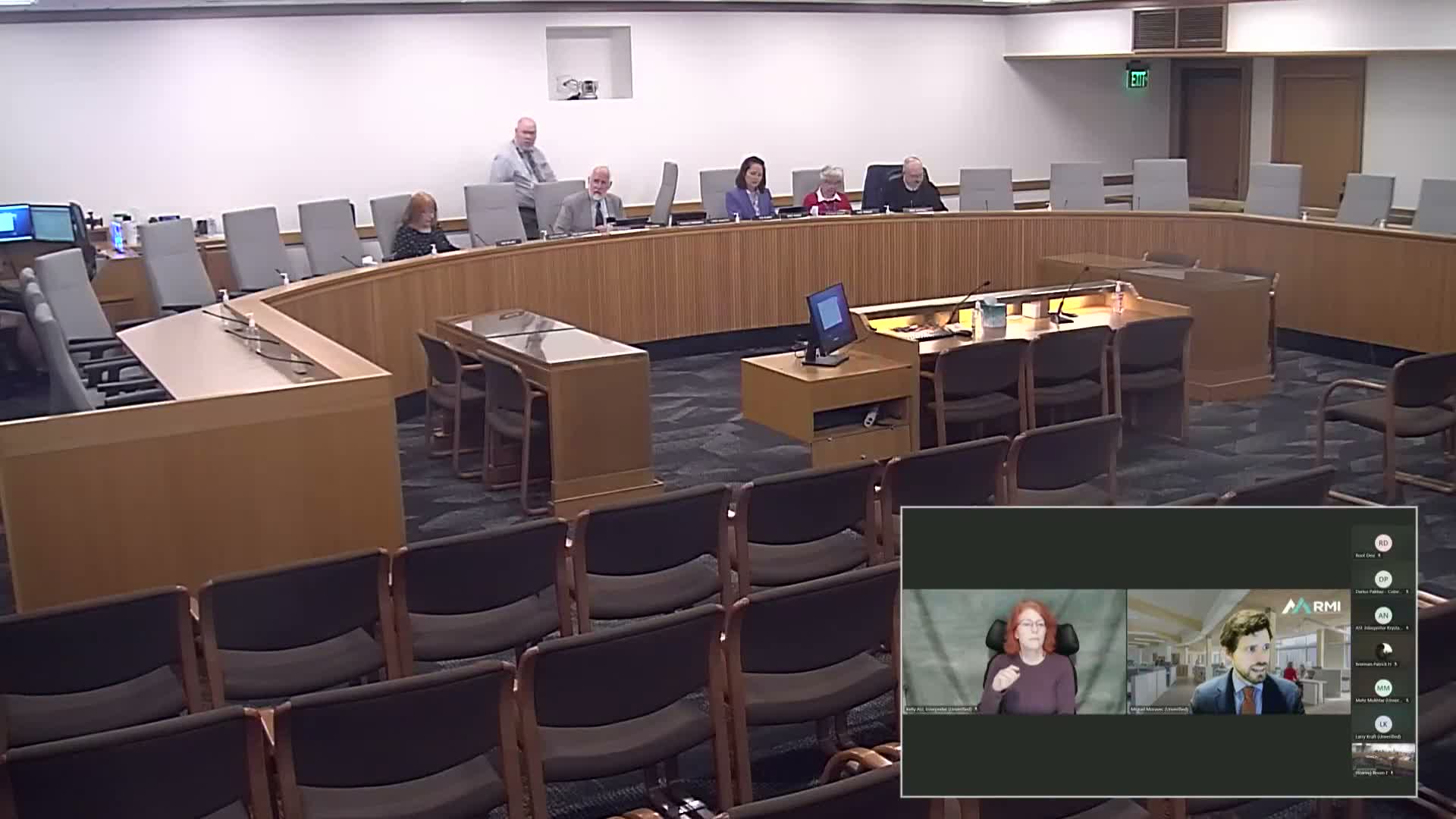
Miguel Maravik, a presenter with the Rocky Mountain Institute, told the Joint Committee on Transportation Oversight on Thursday that states can meet urban travel demand more efficiently by prioritizing maintenance and multimodal options instead of adding lane miles. "When you have a house and the mortgage is defaulting, it's not the time to add an expansion," Maravik said, arguing that added capacity often creates 'induced demand' that fills new lane miles within five to seven years.
The committee heard three state and national examples intended to show how policy design can shift investments. Maravik summarized Colorado’s greenhouse‑gas planning standard and said some decisionmakers there redirected about 1,000,000,000 dollars from planned highway expansions into multimodal projects, including bus‑rapid‑transit lines that spurred housing and commercial development. He also presented RMI analysis suggesting Oregon could save up to 10% of transportation expenditures—stated as about…
Already have an account? Log in
Subscribe to keep reading
Unlock the rest of this article — and every article on Citizen Portal.
- Unlimited articles
- AI-powered breakdowns of topics, speakers, decisions, and budgets
- Instant alerts when your location has a new meeting
- Follow topics and more locations
- 1,000 AI Insights / month, plus AI Chat