Get Full Government Meeting Transcripts, Videos, & Alerts Forever!
Get email alerts on the Transportation Funding topic
No spam. Unsubscribe anytime.
Lawmakers hear 'fix it first' models from Colorado and Minnesota as Oregon weighs outcomes-based transportation funding
Summary
Speakers from Rocky Mountain Institute, Minnesota and Colorado described outcome-based policies — including vehicle-miles-traveled targets and greenhouse‑gas planning standards — that reallocate funds from highway expansion to multimodal repair and transit; presenters said Oregon could save roughly 10% of expenditures under a modeled pathway.
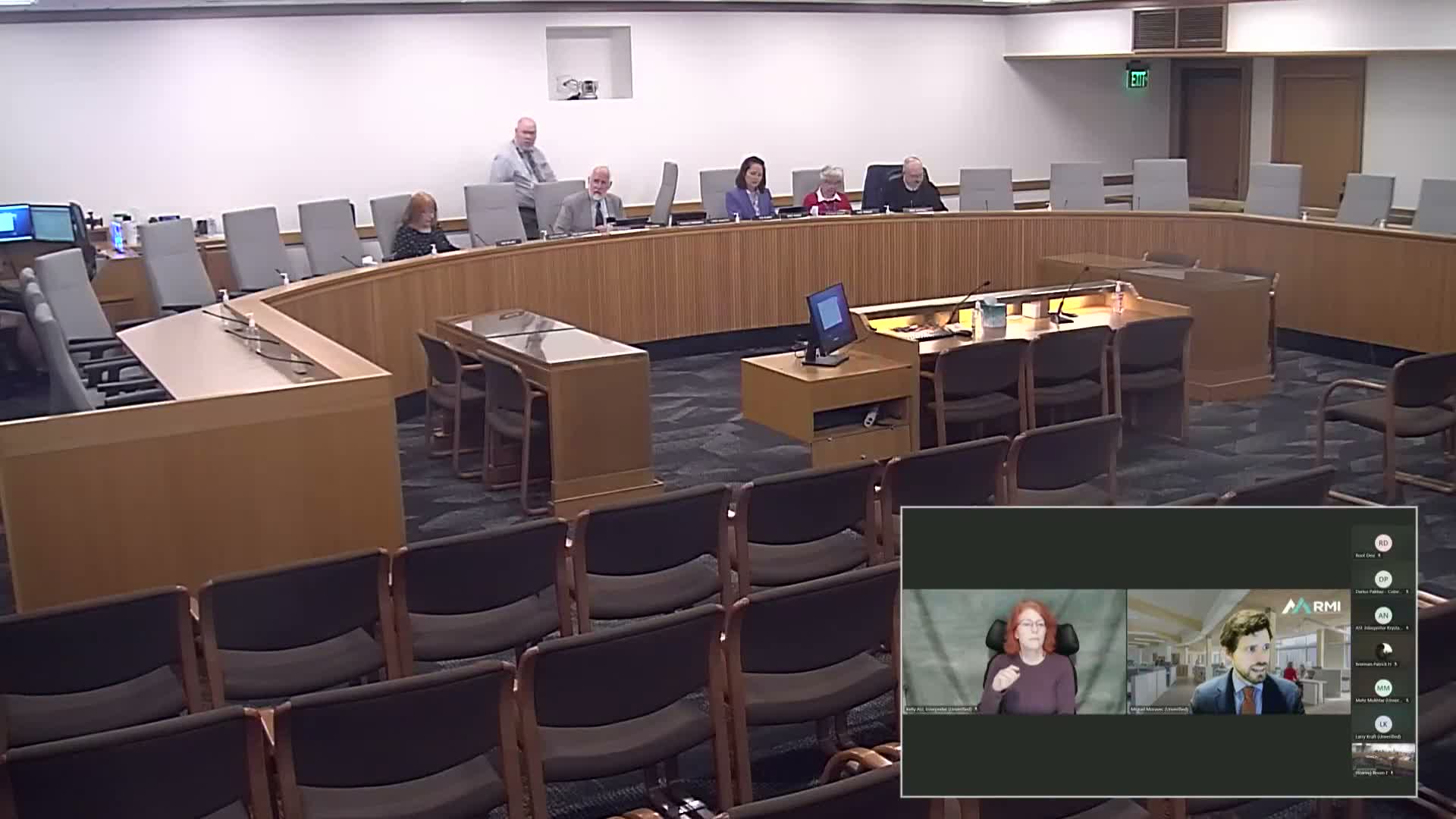
Miguel Maravik, a presenter with the Rocky Mountain Institute, told the Joint Committee on Transportation Oversight on Thursday that states can meet urban travel demand more efficiently by prioritizing maintenance and multimodal options instead of adding lane miles. "When you have a house and the mortgage is defaulting, it's not the time to add an expansion," Maravik said, arguing that added capacity often creates 'induced demand' that fills new lane miles within five to seven years.
The committee heard three state and national examples intended to show how policy design can shift investments. Maravik summarized Colorado’s greenhouse‑gas planning standard and said some decisionmakers there redirected about 1,000,000,000 dollars from planned highway expansions into multimodal projects, including bus‑rapid‑transit lines that spurred housing and commercial development. He also presented RMI analysis suggesting Oregon could save up to 10% of transportation expenditures—stated as about $410,000,000 per year—under a pathway that included 370 miles of BRT and 2,200 miles of bike lanes.
Representative Larry Craft of the Minnesota Legislature described Minnesota’s 2023 law that requires new DOT projects that would raise greenhouse‑gas emissions or vehicle‑miles‑traveled (VMT) to offset those increases. "If an expansion increases greenhouse gas emissions or increased vehicle miles traveled, then that must be offset," Craft said, adding that Minnesota set a goal of net‑zero greenhouse gases by 2050 and a targeted per‑capita VMT reduction. Craft told the committee the law phases in for new projects and uses a technical implementation group to smooth the transition; he also said MnDOT supports the framework and estimated savings of $91,000,000,000 between now and 2050 if the state hits its VMT goals.
Meher Mukhtar, senior policy associate at Transportation for America, focused on the national repair backlog and the allocation of recent federal funds. Mukhtar said the transportation program has received very large federal infusions—she cited $1,500,000,000,000 in federal taxpayer funds directed at moving repair outcomes—but argued that prioritization and transparency are needed so dollars actually produce sustained pavement and transit condition improvements. Mukhtar said 75% of voters favor fixing existing roads before building new ones and highlighted that Oregon’s most recent condition data in her slides showed roughly 52% of pavement in good condition and 6% in poor condition.
Darius Pacbaz, director of planning and environmental programs at the Colorado Department of Transportation, outlined how Colorado’s planning standard works in practice: MPOs and CDOT model reductions, submit greenhouse‑gas transportation reports with mitigation action plans when needed, and receive verification from the state air pollution control division. Pacbaz described mitigation measures ranging from transit and active‑transport investments to parking reductions and micro‑mobility, and listed strategic projects in Colorado’s 10‑year plan that align with the standard.
Committee members pressed presenters on rural applicability and funding. One senator asked how fix‑it‑first measures would serve small communities of 5,000–15,000; presenters pointed to rural mitigation options (regional bus service, micromobility, bike share for tourist towns) and said the Colorado and Minnesota approaches include regionally tailored targets. Lawmakers also asked about tax and fee mixes; Craft said Minnesota collects gas taxes ("30 plus cents" per gallon as stated in his answers), tab/registration fees and some delivery fees that help fund Greater Minnesota roads.
The hearing produced no formal votes. Chair (unnamed) closed the session after questions and thanked the presenters. The committee adjourned with staff and members signaling interest in follow‑up data and analysis.
Sources: Presentations and Q&A at the Joint Committee on Transportation Oversight informational hearing.