Get Full Government Meeting Transcripts, Videos, & Alerts Forever!
Get email alerts on the Local Government Impacts topic
No spam. Unsubscribe anytime.
Counties and cities warn ODOT cuts would ripple to local roads, bridges and emergency response
Summary
Representatives for the Association of Oregon Counties and the League of Oregon Cities told the committee that reductions to ODOT maintenance, local-bridge programs and pass-through funding would magnify decades of underinvestment, strain county and city budgets and reduce emergency response capacity in rural areas.
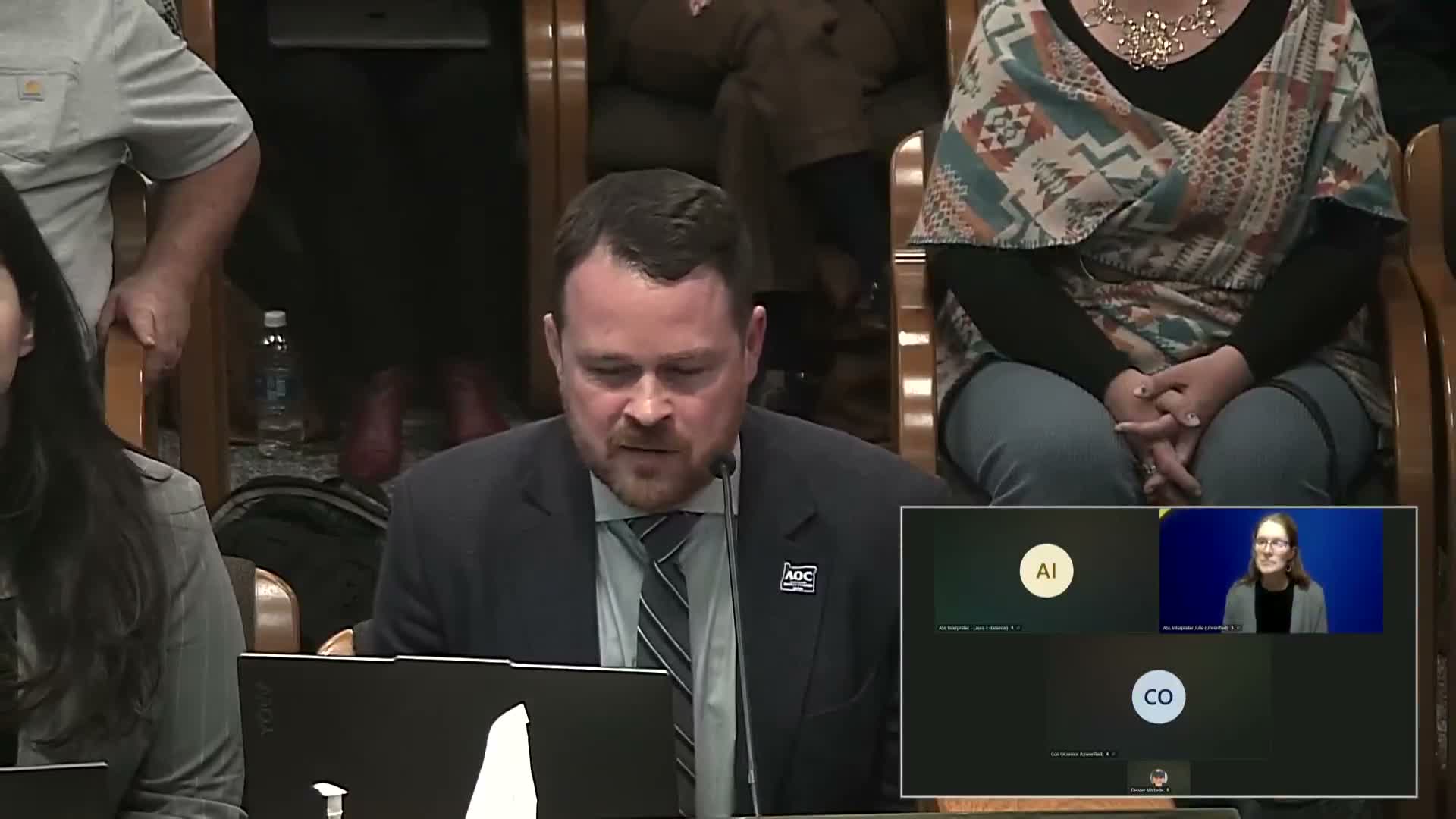
Brian Worley, road program director for the Association of Oregon Counties, told the subcommittee that counties own 62% of non-federal roads—over 32,000 miles—and more than 4,000 bridges, and that reductions at ODOT would ripple to local governments that lack capacity to absorb the lost services.
"When the state is facing these levels of budget cuts, we all fail and the entire system suffers," Worley said, urging the committee to avoid cuts that reduce programs that leverage federal funds or shrink local capacity to maintain bridges and preservation work.
Nicole Stang (for the League of Oregon Cities) and Susan Allen (representing transportation workers) underscored the same point for cities and municipal services: cuts to maintenance stations and staff would force traffic onto local streets, strain small-city budgets and could reduce revenue if residents are unable or unwilling to access DMV services and pay registration fees.
Both cities and counties urged lawmakers to preserve pass-through investments and local-program funding (the 50-30-20 state highway fund split was repeatedly cited) because local governments ‘‘cannot fill the holes left behind by these reductions’’ without sacrificing other services.
Local leaders asked lawmakers to prioritize preservation and safety projects, to consider the multiplier effect of lost federal leveraging, and to weigh the consequences of shifting preservation funds to cover short-term operations.