Get Full Government Meeting Transcripts, Videos, & Alerts Forever!
Get email alerts on the Animal Control topic
No spam. Unsubscribe anytime.
Nye County considers major overhaul of animal services code amid heated public debate
Summary
A draft rewrite of Title 6 drew hours of public testimony from rescuers, breeders, vets and owners. The board discussed grandfathering, limits on unspayed/unneutered animals, permitting and enforcement. Commissioners accepted a set of amendments to move the process forward while directing further stakeholder work.
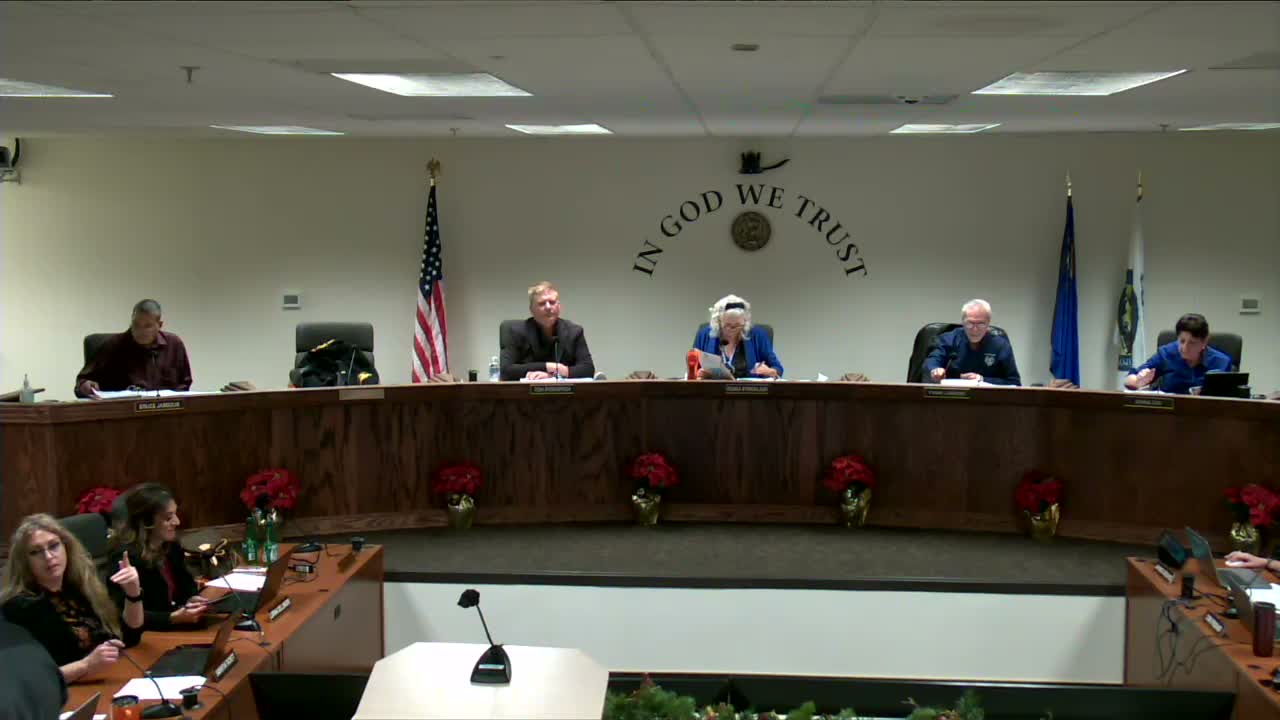
Nye County Commissioners on Dec. 17 advanced a package of revisions to Title 6 of the county code — the animal‑services and kennel rules — after one of the day’s most extended public comment periods.
The proposed changes included new definitions and a "grandfathering" clause, updated commercial‑kennel permit rules, provisions for registration and handling of vicious and dangerous animals, and a chapter that would limit the number of unspayed or unneutered animals in some areas. Animal‑shelter staff stressed changing the name from "animal control" to "animal services," and urged clear, implementable definitions so enforcement is workable.
Rescue groups, shelter employees and animal advocates urged stronger enforcement, low‑cost spay‑and‑neuter programs and clearer definitions of "dangerous" animals. Breeders and equine rescuers warned that blanket mandatory spay/neuter measures and strict permit caps could unintentionally penalize legitimate breeders and livestock owners; several speakers asked for exemptions and phased approaches for large animals and registered breeders.
Commissioners and staff agreed the draft requires more public work and clarified several provisions during discussion. The board read in and adopted certain textual amendments but left others for additional stakeholder meetings and final edits; staff was directed to convene a working group with the shelter manager and community stakeholders to refine definitions, enforcement language and grandfathering criteria.
Next steps: staff plans targeted outreach with breeders, rescue organizations, the animal shelter and veterinary community to narrow outstanding issues (definitions of "vicious" vs. "dangerous," permit thresholds, and enforcement resources) and to return to the board with a redlined draft reflecting those consultations.