Ventura County planning commission approves 328‑unit Ventura Ranch farmworker housing after split vote
Loading...
Summary
After hours of testimony and debate over wildfire evacuation and local traffic bottlenecks, the Ventura County Planning Commission approved the 328‑unit Ventura Ranch farmworker housing project on Feb. 19 by a 3–2 vote. Staff concluded objective standards were met and recommended conditions including a site‑specific wildfire preparation program.
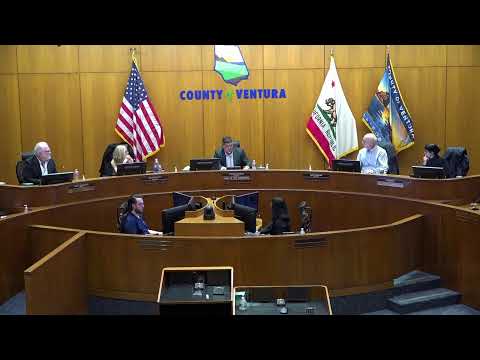
Ventura County Planning Commission on Feb. 19 approved the Ventura Ranch Farmworker Housing project, a phased, 328‑unit complex on a roughly 83‑acre parcel north of the city of Ventura, following extended public testimony and a 3–2 roll‑call vote.
Staff said the project meets applicable objective policies and standards and recommended multiple entitlements including a tentative parcel map, a planned development permit and a discretionary tree permit. Planning staff told the commission it found sufficient water pressure for the project and attached a water analysis and fire‑flow test as supporting exhibits; staff also recommended a revised condition (B‑21) to require a site‑specific wildfire preparation and evacuation education program reviewed annually with residents.
The project would develop about 20 acres of the western portion of the site into phased housing, remove five heritage trees and two oak trees (one oak to be relocated), and provide 1.19 acres of outdoor community space where 0.93 acres is required under the county ordinance. Staff filed that the units are sized consistent with the California Tax Credit Allocation Committee criteria and recommended granting requested density bonus concessions and parking reductions.
During the hearing, applicant representative Neil McGuire framed the project under the Housing Accountability Act and said, “the county must approve this project under the Housing Accountability Act” unless narrow, written objective standards demonstrate specific, quantifiable adverse impacts. Fire consultant Doug Nichols described the proposed wildfire action plan and stressed targeted evacuations, annual resident and employee training, and drills; Nichols said the Thomas Fire evacuation involved roughly “90,000 people” and emphasized the need for individual preparedness alongside public safety agency plans.
Opponents, many from the adjacent Valley Vista neighborhood, urged denial on safety grounds. They cited the site’s location in a very high fire severity area, limited ingress and egress on North Ventura Avenue and off‑ramps at Shell Road and Stanley Avenue, and alleged gaps in evacuation clearance and traffic capacity during an emergency. A common request was for a full environmental impact study and additional mitigation for dust, construction emissions and potential valley fever exposure. Carrie Glenn, a nearby homeowner, told the commission approving “over 1,000 residents in this zone is dangerous and negligent.”
Supporters — including labor unions, Ventura Housing (the city housing authority), farmworker advocates and business groups — argued the county faces a shortage of regulated, affordable housing for agricultural workers and said modern construction and mitigation measures will reduce risks. Victoria Ornsby, a representative of IUE Local 12, said the project “represents 328 affordable homes for farmworker families.” Several groups noted long waiting lists and the economic importance of retaining a stable agricultural workforce.
Commission deliberations reflected the legal tension commissioners described: several members expressed serious safety concerns and frustration that state housing law constrains local discretion, while others warned that rejecting the project could lead to legal challenges and costly litigation for the county. Commissioner Cushing moved to approve the staff recommendations; Commissioner Ayala seconded. Roll call votes were: Boydston — No; Kessely — No; Ayala — Yes; Vice Chair Cushing — Yes; Chair Sandlin — Yes. The motion carried 3–2.
The planning division incorporated an errata memo the day before the hearing to clarify condition B‑21; staff said that revision and language‑access provisions could be folded into the condition. Director Ward also noted staff and agency coordination is expected to continue, and commissioners asked staff to explore transportation referrals or studies with Public Works and Caltrans regarding on‑ramp/off‑ramp safety in the corridor. The commission advanced the project with the conditions, findings and exhibits as modified by the errata memo; the clerk of the planning commission remains the custodian of record.
Next procedural steps for the entitlements and any final ministerial approvals or recording of conditions were not specified at the hearing. The commission set its next meeting for March 5; the matter may require further agency coordination before building permits or housing finance actions proceed.