
Committee Opens Hearing on Commercial Diplomacy, Urges State Department Reforms
Get AI-powered insights, summaries, and transcripts
Subscribe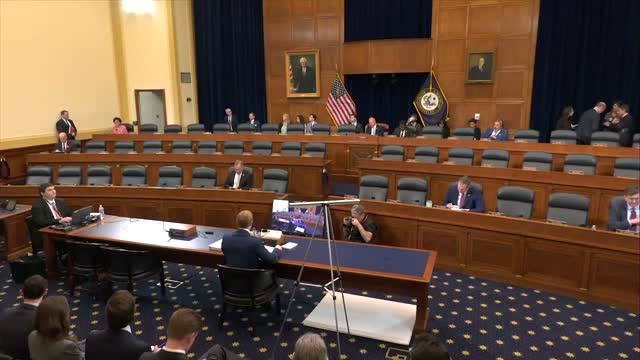
Summary
A committee member told the House Committee on Foreign Affairs that economic statecraft must be central to U.S. foreign policy and said Congress will pursue reforms — including examining whether to return the U.S. Foreign Commercial Service to the State Department — to better protect American industry and supply chains.
An unidentified member of the House Committee on Foreign Affairs opened a hearing on commercial diplomacy on the committee’s agenda, saying that the administration’s national security strategy places economic statecraft "at the tip of the spear of our foreign policy." The speaker framed economic strength as central to national security, saying, "economic security is national security."
The speaker told witnesses and the public the State Department — through its bureaus and offices of economic statecraft — should support U.S. businesses abroad, protect American industry at home and advance national security goals. Specific priorities named included enforcing sanctions, securing critical mineral supply chains, building semiconductor manufacturing capacity, expanding energy exports and strengthening transportation networks.
The remarks noted the committee led a State Department authorization process last year and that "many of those provisions are now law," without listing which provisions. The committee member said Congress will continue to pursue reforms, particularly measures to empower bureaus overseen by the Undersecretary for Economic Affairs. The transcript names Undersecretary Jacob Helberg and thanks him for joining the hearing; the remarks also refer to his work convening the 2026 Critical Minerals Ministerial, which the speaker said brought together 54 nations.
The speaker raised a policy option the committee will examine: whether returning the U.S. Foreign Commercial Service to the State Department would "reinvigorate a neglected FCS, sharpen accountability, and better align economic tools with foreign policy objectives." The committee representative did not provide legislative text or a timetable for any change.
Legislative action was also announced: the speaker said they and colleagues including Ranking Member Ami Berra and Chairman Brian Mast introduced the Bipartisan Dominance Act to promote secure, diversified and resilient critical mineral supply chains and to reduce dependence on China. The speaker described the bill’s aim in broad terms but did not provide the bill’s text or specific authorities it would create during these opening remarks.
The hearing emphasized that addressing strategic competition — including what the speaker called adversaries' efforts to "weaponize trade, investment, supply chains, and technology" — will require sustained bipartisan coordination between Congress and the administration. The committee member closed by reiterating oversight will continue and that reforms must meet a simple test: do they make the United States stronger, safer and more prosperous?