Get Full Government Meeting Transcripts, Videos, & Alerts Forever!
Get email alerts on the Mobile Home Protections topic
No spam. Unsubscribe anytime.
Residents and advocates urge Sonoma County to strengthen mobile-home protections; retirees press for COLA and health premium relief
Summary
Multiple mobile-home park residents, tenant advocates and retired county employees used the public-comment period to press the Board of Supervisors for stronger closure/conversion rules, protection from harassment by corporate owners and relief for retirees facing rising health premiums and reduced county medical contributions.
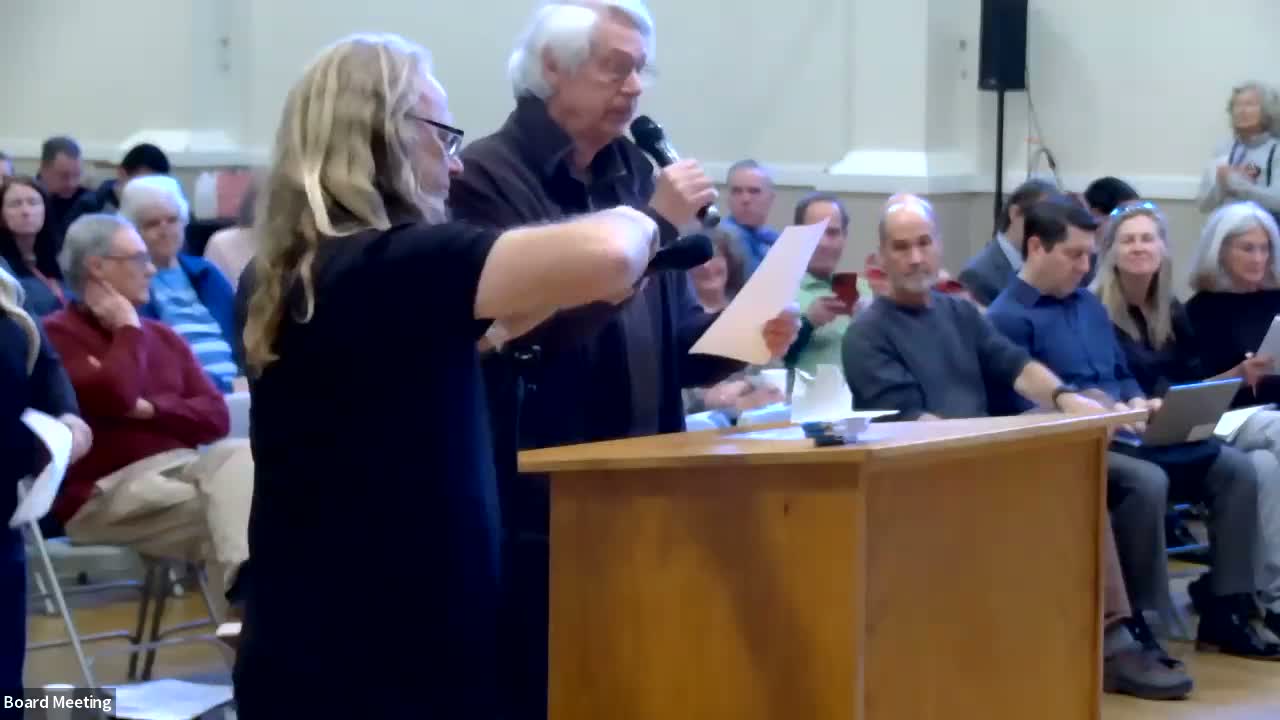
Mobile-home residents, legal-aid advocates and retirees filled the Board of Supervisors' public-comment period Tuesday to demand stronger county protections against park closures, conversion schemes and owner intimidation, and to press the board on retiree cost-of-living adjustments and rising health premiums.
Jody Johnson, introduced in testimony as the GSMOL vice president for Zone A, told the board that "closure conversion ordinances... are being weaponized in every city in our entire state" and urged Sonoma County to align its ordinances with state law (she referenced "AB 27 82" in testimony) to protect seniors, veterans and low-income mobile-home owners. Multiple speakers said owners have threatened park closure, removed parking and pursued legal action; resident Christopher Brown said Harmony Communities has sought to raise space rents dramatically and has "threatened to close our park." Theresa Perez, an Evergreen Mobile Home Park resident, said moving a mobile home would cost "over $15,000," a financial barrier for many owners.
Legal Aid of Sonoma County's Kate Fibey offered organizational support and said her office would partner with the county to "identify loopholes" in the regulations and craft stronger protections. Several speakers asked for the county to examine closure/conversion rules outside the general-plan timeline because litigation in cities such as Petaluma and Windsor is already underway.
Retirees and county employees also used the comment period to press the board on benefit issues. Ed Klyce and others described rapidly rising retiree health premiums after plan changes and reductions in county contributions; witnesses asked the board to reconsider premium-share decisions and to support state legislation referenced in testimony as "AB 16 o 1" intended to provide additional local flexibility for ad-hoc COLA adjustments.
Board response and next steps: Supervisors acknowledged the public concern. CEO Rivera said mobile-home issues are included in the housing-element program scope but that detailed work may not appear on the calendar in 2026; Vice Chair Corsi asked staff for an earlier briefing on the "state of the mobile-home legal universe" rather than waiting for general-plan scheduling. CEO Rivera and multiple supervisors said staff would provide briefings and proposed timelines and that legal and housing staff would be engaged in follow-up work.
What remains unresolved: Commenters asked for immediate ordinance changes and holds on particular acquisitions or conversions; the board directed staff to report back but did not take immediate regulatory action at Tuesday's meeting.