
San Mateo City hears midyear budget update as VLF shortfall pressures reserves
Get AI-powered insights, summaries, and transcripts
Subscribe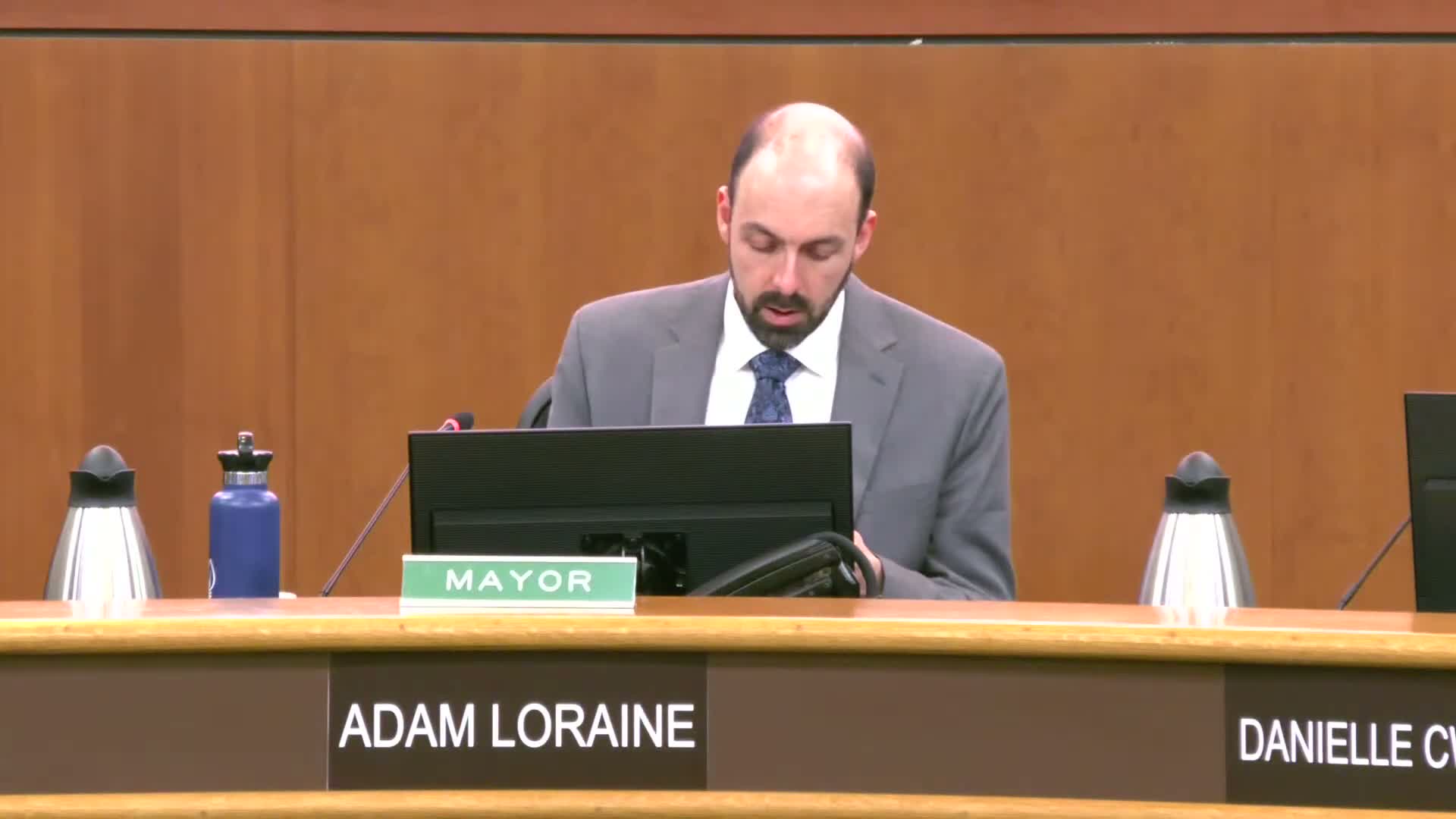
Summary
Finance Director Abby Vieser told the City Council the midyear projection for FY 2025–26 shows a $6.9 million deficit if savings and revenues materialize; a Vehicle License Fee (VLF) payment this cycle was 67% of expected and the council signaled legal and advocacy steps to recover missing funds.
San Mateo City’s Council convened a special study session on Monday evening for a midyear review of the FY 2025–26 budget, where Finance Director Abby Vieser laid out revenue shortfalls, expenditure controls and next steps on both the operating budget and capital program.
Vieser said the city closed FY 2024–25 stronger than anticipated, finishing with an audited surplus of about $1.5 million after an originally adopted deficit. The council adopted a FY 2025–26 budget in June with an expected $12 million shortfall; at midyear the administration now projects that shortfall could narrow to roughly $6.9 million if projected savings and revenues come in as forecast. "Back in June, the city council adopted our budget with a $12,000,000 deficit," Vieser said, and at midyear "we're expecting closer to $6.9 [million] as our deficit." (Abby Vieser)
The most immediate uncertainty is a shortfall in the Vehicle License Fee (VLF) entitlement that flows to cities through county and school-district allocations. Vieser said the city received 67% of the $6.6 million VLF shortfall it expected (about $4.4 million received), leaving roughly $2.2 million missing in the current payment cycle. "We only received 67% of our $6,600,000 shortfall," Vieser said, describing the resulting impact on the city’s property-tax revenue column. Council members asked for clarity on why VLF is shown under property-tax revenue; Vieser explained it is an entitlement that is funded through EREF and property-tax pools that pass through school-district accounting, making the local allocation complicated and sometimes delayed.
City Manager Alex described coordinated county-level advocacy and said the council had directed pursuing legal action to recover funds. "The council gave direction to enter into a lawsuit against the State of California because we're fighting on behalf of our residents and for our money on that 33%." (City Manager Alex) City leaders said they are also working with county staff, local legislators and a coalition of cities to press for stable long-term fixes.
To reduce expenditure pressure, the administration reported a set of sustainability levers: departmental spending controls, eight frozen positions that together yield roughly $800,000 in general-fund savings, targeted transfers to capital where appropriate, benefit-cost adjustments and continued pursuit of grants and revenue agreements. Vieser said the finance team is exploring revenue measures (including sales-tax options), downtown parking agreements and other revenue opportunities to diversify receipts.
On one-time revenue, Vieser cautioned that Measure CC revenues tied to large real-property transfers are volatile. She told the council that last year’s Measure CC receipts were unusually strong ($6.2 million) but the city plans conservatively for ongoing expected receipts at about $8–$10 million. She also highlighted recent and pending grants, citing a roughly $2.02 million grant for the Fashion Island Boulevard project (amount presented as approximately $2.02 million), a $1.2 million grant for the Lakeshore Community Day Care Center, and a $550,000 grant for the real-time information center.
Vieser also reviewed the sewer enterprise fund: midyear revenues are projected at about $96.3 million, expenditures near $62.8 million, CIP at $31.4 million, and an unrestricted sewer fund balance of approximately $304 million, helped by state revolving loan reimbursements tied to the city’s clean-water program.
Public comment included a question from Thomas Morgan about a state controller report alleging county miscalculation in an allocation formula; Vieser responded that the city had not received any county communication indicating its entitlement would change from current estimates.
Next procedural steps noted by staff: a two-year operating-budget study session on April 20 (with a preview of the five-year CIP), a first public hearing on June 1 for the FY26–28 operating budget, a second hearing on June 15 for budget adoption, and a likely consent-item midyear CIP adjustment on March 16.
The council’s discussion focused heavily on the VLF shortfall and how to present the fiscal picture to residents while pursuing state-level remedies. No new revenue measure was placed on the table during the session; staff were directed to continue outreach, refine forecasts, and bring formal items (including CIP adjustments) back to council in upcoming meetings.