Rangeley committee prioritizes zoning map and setback changes, eyes state LDs in push for housing solutions
Loading...
Summary
Members of the Rangeley Comprehensive Plan Implementation Committee agreed to focus first on proposed zoning map revisions and dimensional setbacks, and to review state legislative changes (LDs) that must be folded into Chapter 38. Staff will circulate maps and LD guidance ahead of a March 9 meeting to finalize a recommendation to the Board of Selectmen.
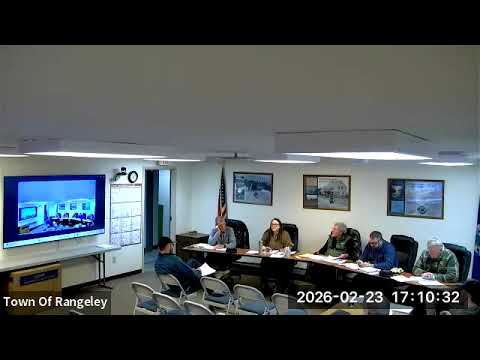
The Rangeley Comprehensive Plan Implementation Committee spent its Feb. 23 meeting sharpening priorities for addressing the town's housing shortage, centering on recommended zoning-map changes and revised dimensional setbacks to enable more housing in designated growth areas.
Committee members opened the discussion by noting that housing — including workforce and senior housing — emerged as the town's top concern during Selectmen outreach and public input. A committee speaker warned that "higher density does not necessarily lead to affordability," urging members to pair density changes with ordinance tools that require or incentivize affordable units.
The committee reviewed how recent state legislative changes (referred to repeatedly in the meeting as LD 2003, LD 1829 and other LDs) affect local rules on accessory dwelling units, dwellings-per-lot and allowable heights. A member summarized several LDs and told the group that some provisions are mandatory and must be incorporated into Chapter 38, Rangeley's zoning ordinance, while other provisions are guidance that the town may shape locally. Speaker 6 said the state presentations on March 5 would clarify which LD provisions are compulsory.
Members reached a practical three-part priority list for the next steps: first, develop and review proposed changes to the zoning map (existing vs. proposed); second, review and recommend dimensional setback updates — particularly in village and downtown commercial areas — to make many pre-1987 nonconforming lots buildable; and third, consider short-term rental registration or regulation as a policy tool. The group agreed that maps showing public water and sewer overlays are essential to set logical growth-area boundaries and density allowances.
A smaller working product is planned: staff and committee volunteers will craft a "straw-man" recommendation that packages the proposed map edits, setback table changes and a list of state-mandated ordinance amendments. That draft will be circulated before the March 9 meeting; the committee intends to vote on a recommendation at that meeting to forward to the Board of Selectmen and then the planning board for the formal hearing process.
On procedural items, the committee ratified the organizational meeting actions from Jan. 29 (including officer elections), moved to approve the Jan. 29 minutes (with at least one abstention recorded), and adjourned after agreeing next steps. Committee members asked staff to circulate one-page LD guidance summaries, Chapter 38 materials, the proposed and existing zoning maps, and LUPC short-term-rental language prior to the next session.
"It should be a living document," one member said, urging an annual or regular review cycle so ordinance language can stay aligned with state law and emerging local needs. The committee also discussed public timelines and cautioned that putting substantial ordinance changes on a June warrant may be infeasible because of required outreach and public hearings; members suggested reverse-engineering a schedule that could target either a June or a later town meeting depending on readiness.
The committee scheduled follow-up work and agreed to reconvene on March 9; staff will send the requested materials in advance so members can prepare edits to the straw-man recommendation and vote on what to send to the Board of Selectmen.